Biography
Raphaël-Louis Rafiringa
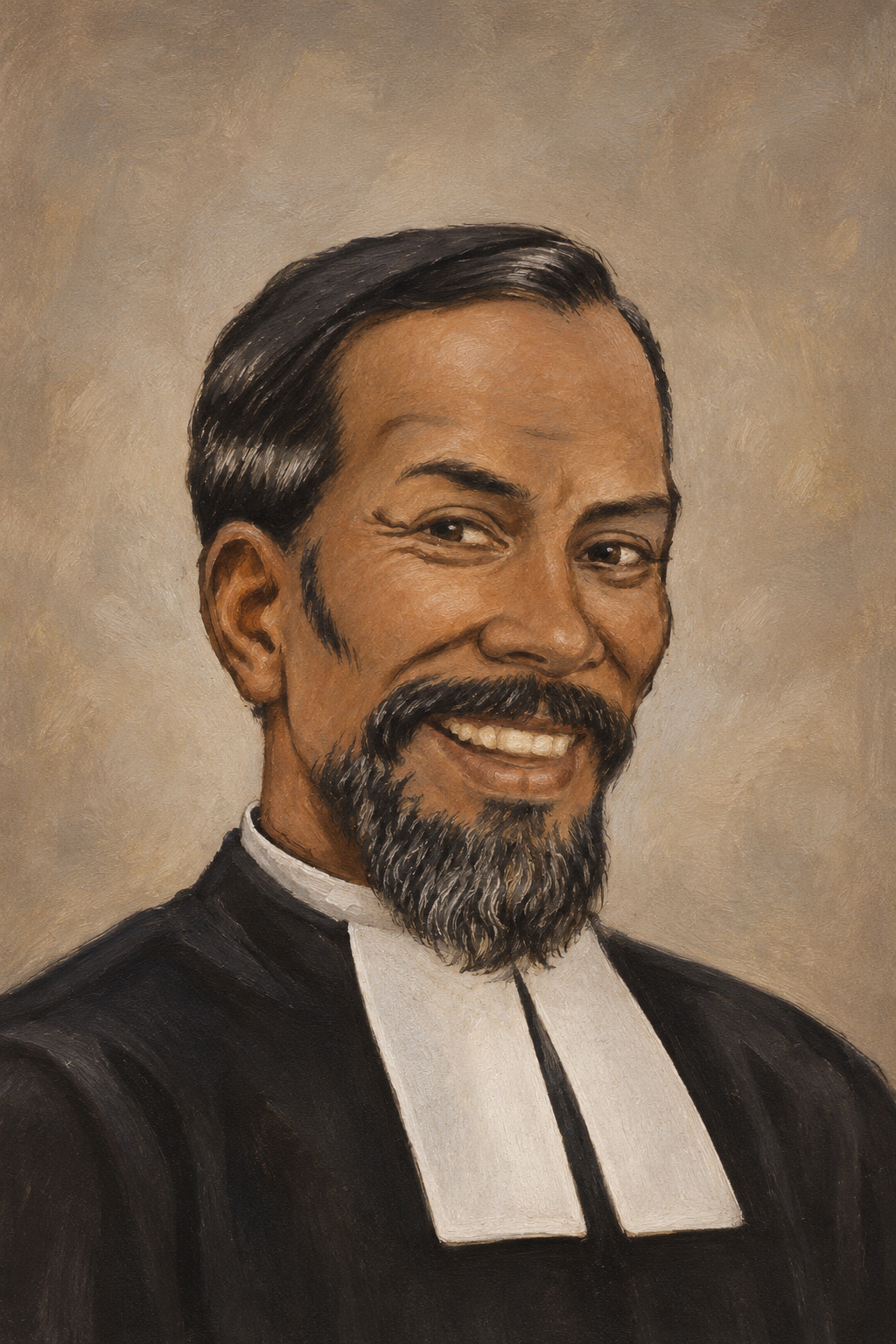
About Raphaël-Louis Rafiringa
Raphaël-Louis Rafiringa was born in Antananarivo, Madagascar, in 1856. Known as Firinga before his baptism, he became a Catholic as a young person and studied with the Brothers of the Christian Schools. Their example and teaching helped shape his religious vocation. He entered the institute and received its habit in 1878. He became a religious brother devoted to education, rather than an ordained priest. His later responsibilities would demand forms of leadership that went far beyond an ordinary daily classroom assignment.
His sister Ernestine helped draw him toward Catholic worship and schooling. He studied at Mahamasina and then Andohalo, where Brother Gonzalvien recognized his abilities. When the school needed more staff, he and other young students joined its teaching team. His first work as an educator therefore developed within the same setting in which he was still being formed. Reflection, catechism and the example of his teachers accompanied the practical demands of educating younger pupils.
War between France and Madagascar forced foreign missionaries to leave. Rafiringa remained and was entrusted with the Catholic community’s care, assisted by Victoire Rasoamanarivo. Together with other Malagasy Catholics, he helped sustain religious life until the missionaries could return. Another expulsion later brought similar responsibilities. These periods made local initiative essential. Prayer, teaching and the maintenance of community relationships continued without the ordinary presence of the foreign clergy and religious on whom the mission had previously relied.
The historical account by Bruno Hübsch describes his work with schools and a leprosarium, as well as with the committee guiding the mission. He also encouraged the Malagasy women of the Sisters of Saint Joseph of Cluny to remain together in community. His position was delicate because Catholic interests were often identified with French interests. He had to maintain a religious community within a political conflict whose meanings could not be reduced to differences of belief. The work required organization as well as personal conviction.
When his own community could resume its ordinary life, he returned to teaching and writing. Articles for parents and teachers drew upon the educational tradition of John Baptist de La Salle. Other writings advised missionaries about Malagasy customs and the need to understand the people they served. Carugno’s biography describes his concern that Christian teaching should engage an existing culture with respect. His command of language and experience as a teacher gave practical substance to that concern, particularly in the education of young Malagasy people.
He was admitted to the Malagasy Academy in 1902. His writings included poetry, plays, grammar and works of Christian instruction. Ravalitera and Raharilalao emphasize the range of that literary activity while also explaining the difficulty of identifying all his contributions. Some manuscripts were lost, and some collaborative works appeared under other names or without an author’s name. His cultural legacy therefore includes both surviving texts and the influence of work whose precise authorship cannot always be recovered. He joined scholarship to the educational tasks that had first drawn him into public life.
Hübsch also records contributions to Catholic journals, including Iraka and Ny Tsara Fanahy, and short works concerned with education and family life. Those subjects connected literary skill with the needs of readers beyond the Academy. His reputation as an effective speaker accompanied his writing in Malagasy. For a teacher whose duties included both schoolwork and community leadership, spoken instruction and the printed page offered complementary ways to reach people.
In December 1915 he was arrested in connection with the VVS secret-society affair. His papers were seized, and he spent weeks in prison. The accounts of his religious community remember the continuation of prayer during confinement. He was released in February 1916 after being declared innocent. The episode damaged his health and also contributed to the loss of manuscripts. His later years were spent at Fianarantsoa, where he continued work connected with education and religious writing. He died there on 19 May 1919.
His beatification took place in Antananarivo on 7 June 2009. Cardinal Angelo Amato later recalled the large outdoor gathering, its music and prayer, and the ceremony’s broadcast across Madagascar. He also described the unveiling of a public monument in the capital on the previous day. The setting recognized Rafiringa’s place in the country’s cultural memory as well as in Catholic devotion. Amato connected that public recognition with a life spent educating young people and writing in their own language.
Two years later, Radio Don Bosco reported the blessing of a sanctuary bearing his name at Soavimbahoaka. The celebration included the transfer of his relics and a Mass led by the archbishop of Antananarivo. The report remembered his work with Victoire to sustain the Catholic community during the missionaries’ absence. His continuing commemoration thus keeps together the teacher, the religious brother and the Malagasy leader who accepted responsibility when his community’s ordinary structures were disrupted.
Wondering how to weigh the stories and sources? Learn how to read a saint biography.