Biography
Raynerius of Split
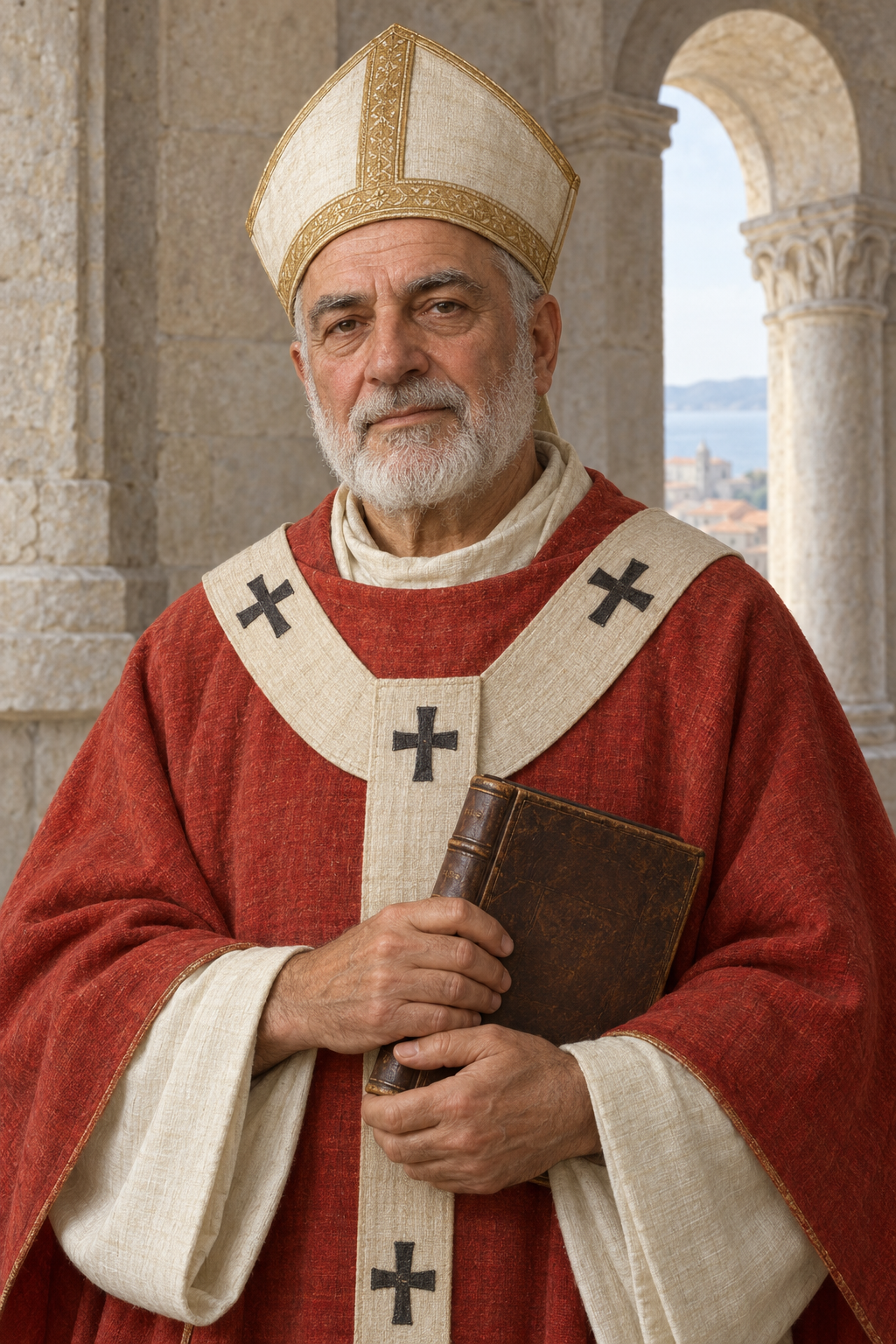
About Raynerius of Split
Raynerius of Split, known in Croatia as Arnir, began his religious life at Fonte Avellana before becoming a bishop. His early years are poorly recorded. Giuseppe Palazzini places his origins somewhere in northern or central Italy and remembers his friendship with Ubaldo of Gubbio. The surviving account is much clearer about the responsibilities and disputes of his later life than about his childhood.
He became bishop of Cagli in the middle of the twelfth century. Near the end of his ministry there, a disagreement with the cathedral clergy reached the papal court. The precise issue is uncertain; Palazzini suggests that appointments to church benefices may have been involved. While the case remained unresolved, representatives from Split arrived to request a new archbishop. Pope Alexander III transferred Raynerius to that city, usually dated to 1175.
Thomas the Archdeacon’s later history gives a memorable account of the journey. Concerned about piracy, Raynerius left valuable vessels, money and episcopal clothing for safekeeping at a monastery in Ravenna before crossing the Adriatic. Thomas describes his welcome in Split and his efforts to instruct the people, discipline the clergy and strengthen the church’s resources. The account presents a bishop whose work involved teaching and administration as well as worship.
His authority was not beyond challenge. Thomas recounts that Martin, bishop of the islands, was expelled during an illness and that Raynerius consecrated a replacement, Luccarus. When Martin recovered, he appealed to Alexander III. The pope removed the replacement and restored Martin. The episode preserves a concrete disagreement within the church and a decision that reversed an action Raynerius had supported.
Raynerius also represented Split beyond Dalmatia. He visited Emperor Manuel I Komnenos in Constantinople, where the city’s relationship with Byzantine power shaped his role. He took part in the Third Lateran Council in 1179. The Croatian Encyclopedia records these journeys alongside a regional council held during his leadership. His ministry therefore belonged to a wider network of papal, imperial and local interests, rather than the affairs of one city alone.
Those interests could be contentious. The same reference work notes that forged grants survive from this period, claiming lands for the church of Split. The dispute over property cannot simply be retold as a conflict between an unquestionably rightful owner and people with no claim of their own. Raynerius’s opponents asserted inherited rights, while the archbishop maintained that the land belonged to his church.
Historian Ivan Armanda examines the competing interpretations. He rejects the claim that Raynerius himself commissioned a forged grant, finding no evidence for it, and considers it possible that the archbishop trusted an older document. Armanda also cautions that the surviving sources do not establish precisely which documents were presented. This leaves a genuine limit to what can be said about the legal basis of the dispute.
On August 4, 1180, the conflict ended in his death by stoning. Armanda traces the account to Thomas, who wrote decades afterward. The exact location remains debated: the narrative connects the dispute with Mosor but also names Mutogras, while later devotion centers on Dubrava. These differences should remain visible rather than be combined into an invented itinerary. His body was brought to Split and buried at Saint Benedict’s monastery.
Devotion grew around that burial and around the place associated with his death. Marko Dragić’s study records gifts left in fifteenth-century wills and poems composed in Raynerius’s honor. It also examines oral traditions about the fate of his killers. Such stories reveal how communities remembered a violent event; they are not independent proof of supernatural punishment.
Formal recognition came long after his death. In 1690, Alexander VIII approved his liturgical office and named him a co-patron of the archdiocese. The concession was extended to Cagli in 1819.
The shrine at Dubrava has a history of its own. Dragić notes its first recorded mention in 1625, while leaving the date of construction uncertain. Built of cut stone and roofed with stone slabs, the small church contains two altars. Its principal altar includes an image of Raynerius with a palm, the conventional sign of martyrdom. The spring stands before that altar, linking the building’s arrangement with local devotional practice.
The Dubrava shrine remains a particular focus of that remembrance. In a 2019 interview, its parish priest described pilgrims who pray there and take water from the small spring. Devotees associate it especially with relief from skin disease. Reports of healing belong to this devotional testimony, rather than an established medical property of the water.
The same interview describes preparations for the feast through Masses for peace, families and the sick, followed by opportunities for neighbors and visitors to gather. Alongside the historical disputes surrounding his death, this local practice gives his remembrance a continuing place in community life. Raynerius is honored at the shrine through prayer, care for its surroundings and the welcome offered to pilgrims.
Wondering how to weigh the stories and sources? Learn how to read a saint biography.