Biography
Richard the Pilgrim
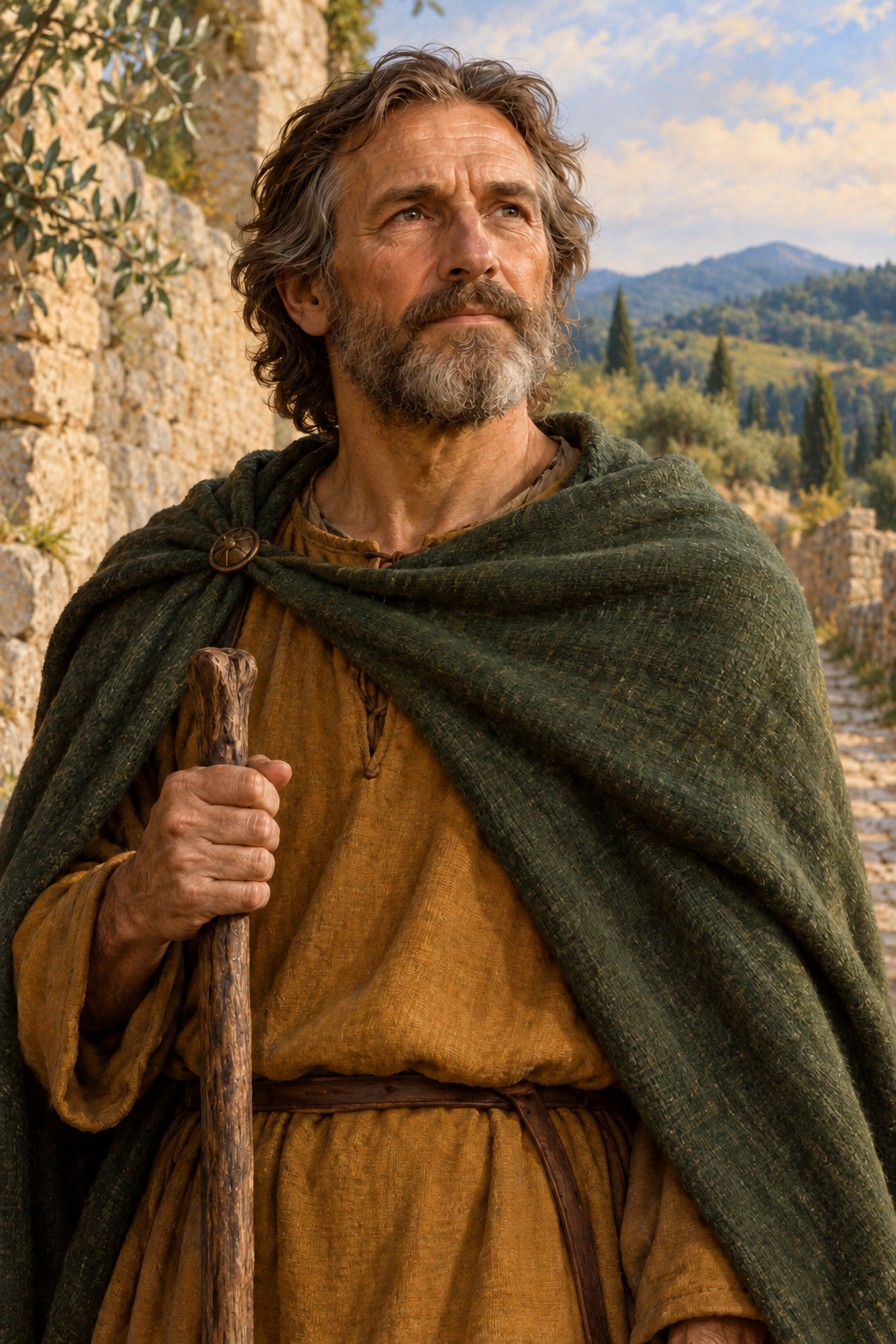
About Richard the Pilgrim
Richard the Pilgrim is the name later tradition gave to the father of Willibald and Wunibald, an English pilgrim who died at Lucca. The earliest narrative leaves him unnamed. Historian Adrian Cornell du Houx distinguishes this lay traveler from the royal figure that developed around his memory centuries later.
Hugeburc’s account of Willibald’s travels gives the father a brief but memorable place. Willibald wanted him to join a pilgrimage to Rome. He initially refused, explaining that his wife and younger children needed his protection. His son persisted, using both promises of heavenly reward and threats of damnation, until the father agreed. The account preserves a difficult family decision, not simply an eager departure.
The travelers sailed from Hamblemouth near Hamwih and reached Rouen, where they camped beside the Seine. They continued overland, stopping at shrines along the way. At Lucca the father became gravely ill and died after a short illness. His sons wrapped his body for burial and laid him in the church of Saint Frigidian, now known as San Frediano. They then continued their journey toward Rome.
The royal story emerged much later. Cornell du Houx traces a suggestion of royal ancestry to a late tenth-century office for Willibald. A narrative written in 1155 or 1156 calls the father Richard, king of the English. Relics had recently traveled from Lucca to Heidenheim, strengthening connections between the Italian shrine and German religious houses. Later writing supplied a royal life and an abandonment of kingship. Those additions belong to the history of his cult; they cannot establish that the unnamed pilgrim was a king.
Lucca’s present liturgical notice observes his optional memorial on February 7 and places his death in 721. It identifies him as the father of Willibald, Wunibald and Walburga, and records the veneration of his relics at San Frediano. This local remembrance gives him a continuing place in the church where the early narrative locates his burial.
In Otting, Germany, a parish church bears his name. The municipality explicitly identifies Richard as its patron and connects the dedication with the religious history of Eichstätt and Heidenheim. Its account describes a tower base probably dating from the fourteenth century, a later medieval nave and a Baroque sacristy. The surviving building records several periods of local devotion rather than the appearance of a church Richard himself knew.
The church’s painted decoration also remembers him within a family of saints. Marion Romberg’s University of Vienna catalogue identifies the central chancel image as the glorification of Richard, the church’s patron. Nearby images show Wunibald, Wunna, Willibald and Walburga. The catalogue dates the decorative campaign to 1739 and records later restorations. These paintings preserve how a later community understood his memory, while the older travel narrative preserves the quieter story of a father whose pilgrimage ended far from home.
Wondering how to weigh the stories and sources? Learn how to read a saint biography.