Biography
Richard Theodore Ely
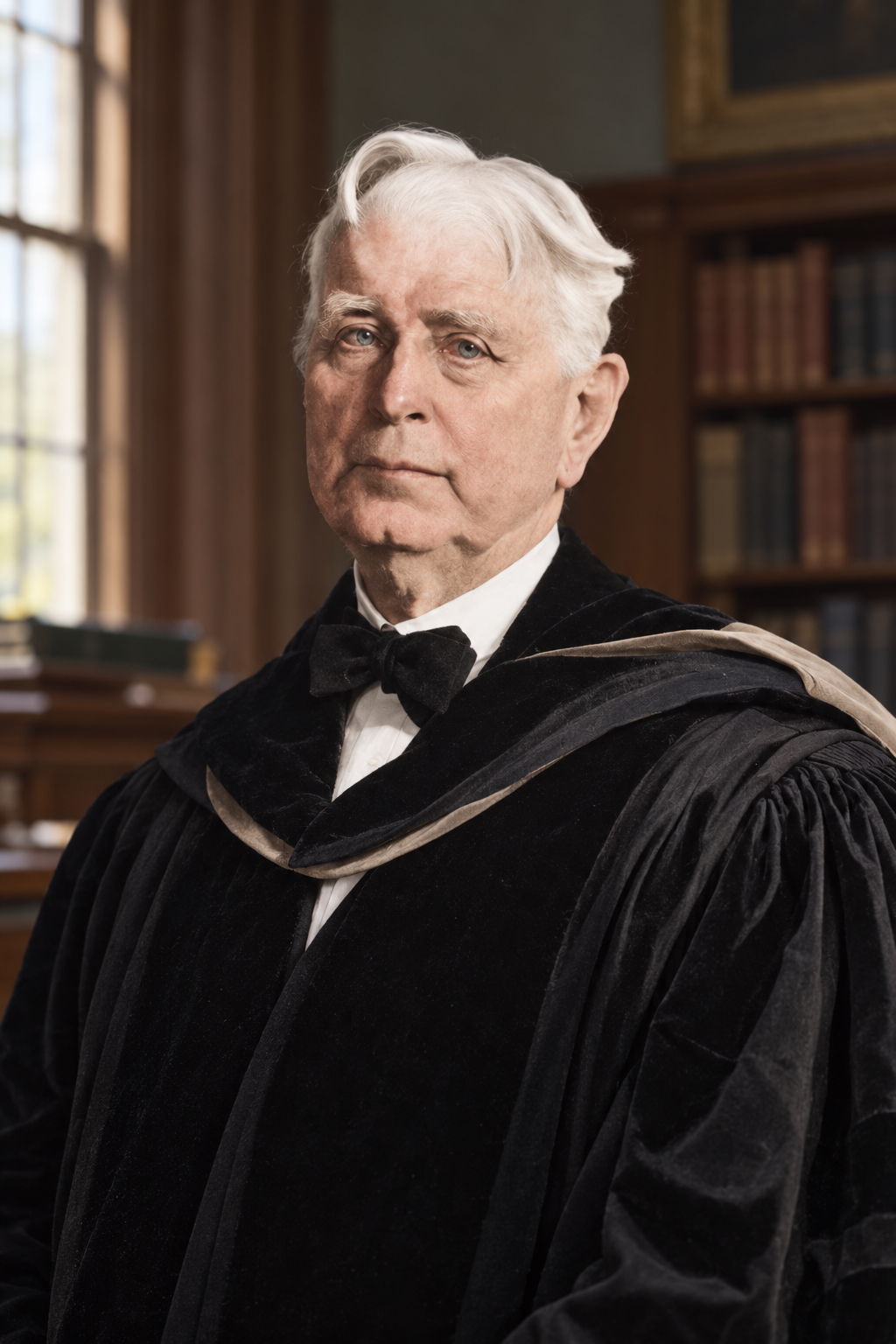
About Richard Theodore Ely
Ely was an Episcopal layman.
Richard Theodore Ely helped establish economics as a field concerned with institutions, public policy, and the distribution of wealth. His teaching and research influenced the development of agricultural and land economics. He trained students who carried that work into universities and public service, while his own writing linked economic arrangements with questions of social welfare.
Born in Ripley, New York, on April 13, 1854, he attended local schools and the normal school at Fredonia before entering Dartmouth. He transferred to Columbia and graduated in 1876. Graduate study in Germany followed. He began teaching at Johns Hopkins in 1881 and moved to Wisconsin in 1892, taking charge of its school of economics, political science, and history.
His German education encouraged an ethical and historical approach to economics. Property and contract, in this account, were institutions shaped by law and society rather than arrangements beyond human revision. At Wisconsin, he encouraged colleagues and students to connect scholarship with public service. In 1920 he founded the Institute for Research in Land Economics and Public Utilities. Its work examined the institutions affecting land use and public utilities. He moved the institute to Northwestern in 1925 and helped establish the journal that became Land Economics.
Ely’s religious writing gave this social concern an explicit Christian form. In the opening section of Social Aspects of Christianity, he argued that love of God could not be separated from duties toward other people. His reading of the judgment scene in Matthew emphasized feeding, clothing, and visiting those in need. Religious observance and doctrinal belief mattered to him, but he insisted that they could not replace the performance of social duties.
He applied that argument to ordinary economic conduct. Deceiving buyers about the value of property, withholding wages, and using superior resources to crowd out others were failures of Christian responsibility. He asked why churches devoted so much attention to theological training while neglecting the study of society. These were his claims about what faith required. They also provide a standard against which the exclusions in his own thinking must be considered.
His teaching became the subject of a public controversy in 1894. Wisconsin’s superintendent of public instruction, Oliver Wells, accused him of promoting socialism and encouraging strikes and boycotts. Ely denied the charges. After hearings, the university’s regents cleared him unanimously. Their September statement defended the freedom of investigators to pursue truth, even when their conclusions were unpopular. The case became associated with Wisconsin’s enduring language of sifting and winnowing.
The statement’s later memorial had its own contested history. A student class arranged for a bronze plaque, but the regents initially refused to install it. It was finally placed at Bascom Hall in 1915. That history concerns the university’s treatment of academic inquiry; it should not be taken as proof that every position Ely held supported equal freedom.
His political alliances also changed. The historical nomination for his Madison house records a break with Robert La Follette over American entry into the First World War. The same document connects Ely with a substantial residence designed by Charles Sumner Frost. His criticism of some university architecture did not prevent him from choosing a Georgian Revival design for his own home. The house preserves one setting of his Wisconsin career, rather than a complete account of his political commitments.
Ely’s reform record included serious exclusions. In 2020, a committee of the American Economic Association reviewed his writings and reported that he had written approvingly of slavery and eugenics, attacked immigrants, and favored segregation. The committee judged those views inconsistent with the association’s commitments to equal opportunity and fair treatment. These findings concern positions he expressed, not merely accusations made by opponents of his economic teaching.
The passage cited by the committee appears in his Studies in the Evolution of Industrial Society. There Ely presented slavery as a stage that could be considered necessary in early economic development. He argued that forced labor had helped establish habits of steady work before those habits allowed freedom to become advantageous. He also stated that free labor was more efficient than slave labor in his own time. That qualification did not remove the underlying argument: he assigned coercion a constructive role in the history of economic development. This was Ely’s interpretation, rather than an established historical necessity.
The association had named an annual lecture for him in recognition of his role as a founder and economist. Its executive committee voted to remove his name in April 2020, adopting the title AEA Distinguished Lecture Series. The change recognized that scholarly influence and contributions to reform did not erase his support for racial exclusion.
Ely remained at Northwestern until his retirement in 1933. He died in Old Lyme, Connecticut, on October 4, 1943.
His October 8 commemoration is observed in Episcopal worship alongside William Dwight Porter Bliss.
Wondering how to weigh the stories and sources? Learn how to read a saint biography.