Biography
Roberta Elizabeth Tilton
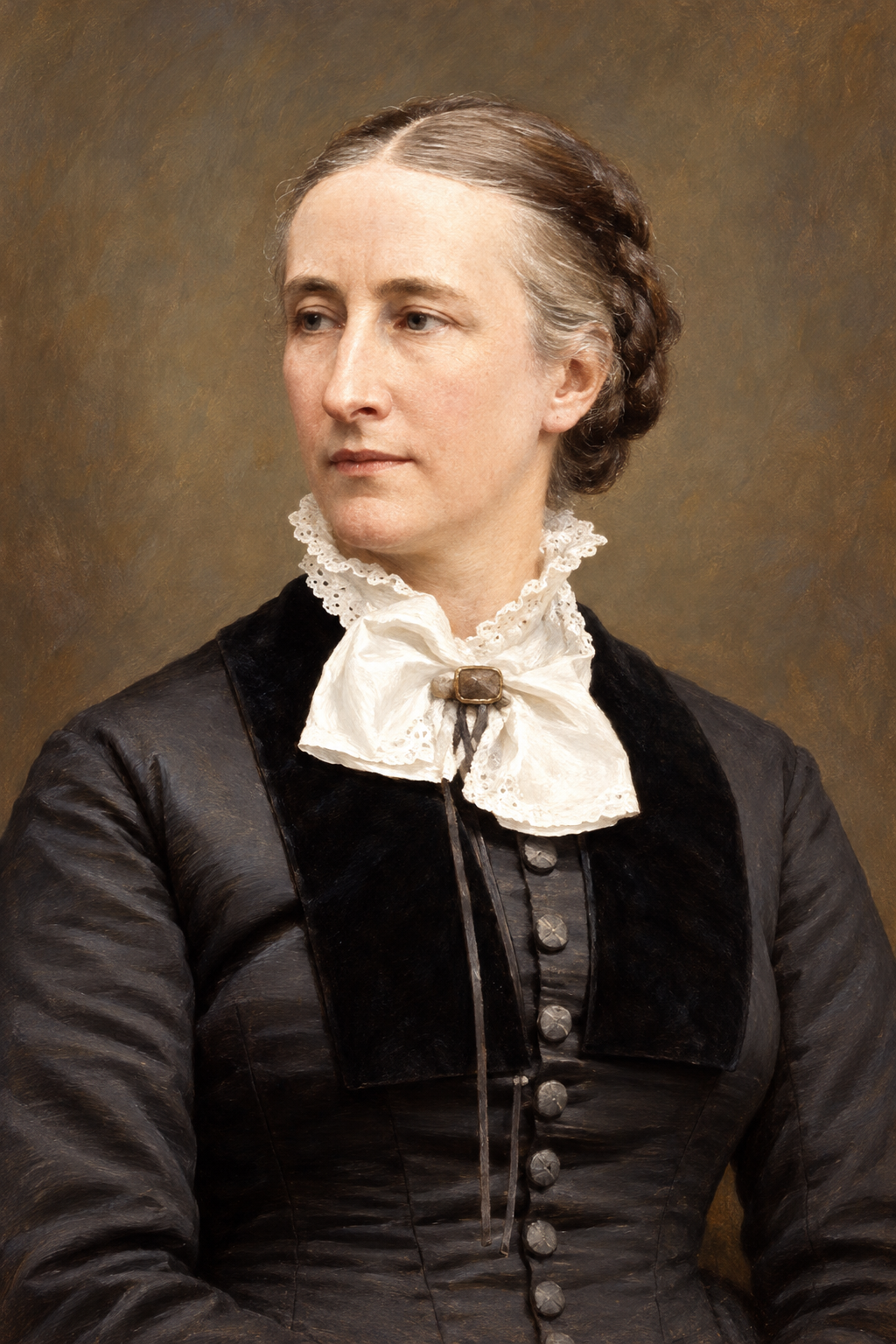
About Roberta Elizabeth Tilton
Roberta Elizabeth Tilton organized women for temperance work, charitable service, and Anglican missions. Born Roberta Elizabeth Odell in Whiting, Maine, in 1837, she married John Tilton in 1858 and moved to Ottawa in 1868. She helped establish the Ottawa Woman’s Christian Temperance Union and promoted a coffee house in the ByWard Market as an alternative to drinking establishments. Her work combined practical projects with evangelical religious convictions.
A visit to New York helped her imagine a wider organization for Canadian churchwomen. Charles William Vernon’s 1929 church history preserves her recollection of attending an American Woman’s Auxiliary meeting. At first she thought that reproducing its work in Canada would be impossible. Listening to reports from individual dioceses changed her view. She gathered information before returning home and discussed the idea with other women. The account presents the project as something developed through observation, consultation, and prayer. Vernon wrote with strong admiration for Tilton; his history preserves a useful recollection but does not provide an independent account of every detail in it.
On April 16, 1885, Tilton and six other women presented their proposal to the Board of the Domestic and Foreign Missionary Society. The Fredericton diocesan history describes the board’s welcome and the organization of an Ottawa branch shortly afterward. Diocesan and parish branches extended the work beyond the original group. The same institutional history describes the practical labor involved: members gathered school supplies, clothing, quilts, and knitted goods for Indigenous residential schools. Such work created regular tasks through which women could organize resources and sustain relationships across considerable distances.
Vernon describes how the new organization began to take shape. Its first constitution made the metropolitan bishop’s wife president by virtue of her position. Tilton became general secretary, approaching the province’s ten bishops about establishing diocesan boards with their synods’ consent. Expansion therefore required negotiation with existing church authorities.
Historian Myra Rutherdale places the auxiliary within the restricted opportunities available to women in the Anglican Church. Women could raise money, correspond with missionaries, and arrange supplies while remaining subordinate to male church authorities. As the organization grew, its officers gained influence over the distribution of funds and materials. Rutherdale describes a tension between deference to the clergy and demands that women’s work receive proper recognition. This history gives context to Tilton’s organizing without treating all members as sharing an identical view of women’s independence.
Local recollections show how national organizing also involved parish visits. In Janet Lunn’s history of Ottawa’s Church of the Ascension, Ethel Scanlon remembered meeting Tilton as a teenager and being impressed by her appearance, particularly her hat. The account records Tilton speaking at the annual meeting of the Woman’s Auxiliary at Holy Trinity in 1895. Holy Trinity was the congregation’s earlier name. The memory is modest in scale, but it preserves an encounter between an established organizer and a younger church member. Lunn also records Scanlon’s later service as Ottawa diocesan auxiliary president in the early 1950s and secretary of the Dominion Board. Her recollection thus came from someone who later held responsibilities in the same movement.
When Tilton retired from the dominion auxiliary’s executive in 1908, she directed a gift made to her toward supporting elderly women missionaries. She also worked with the Girls’ Friendly Society and helped found the National Council of Women of Canada.
Her public responsibilities were accompanied by private losses. She and her husband had adopted a son, Silas, who died before adulthood. Cook records Tilton remembering his birthday in her 1912 journal and imagining the family life he might have had. John Tilton died in 1914, eleven years before his wife.
She died in Ottawa on May 28, 1925, and was buried in Beechwood Cemetery.
The auxiliary’s missionary work also connected it to residential schooling. Rutherdale discusses a 1920 appeal seeking nurses for seventeen residential schools. That appeal came after Tilton’s retirement from the national executive, and it should not be presented as her personal decision. It nevertheless forms part of the institutional history of the organization she helped establish.
The harm associated with that school system was later acknowledged by the Anglican Church of Canada. In 1993, Archbishop Michael Peers apologized for the Church’s part in separating Indigenous children from their families, suppressing their languages and identities, and exposing many to physical, sexual, cultural and emotional abuse. His statement concerned the Church’s institutional responsibility; it was not a finding about Tilton’s individual conduct.
Her memory also appears in parish art. Writing in the Niagara Anglican in 2017, Abby Mulvihill described a window honoring Tilton at the Church of the Ascension in Hamilton. It belongs to a group of ten windows in the Chapel of the Holy Spirit dedicated to Canadian Anglican pioneers. Its inscription emphasizes the founding and service of the Woman’s Auxiliary. Mulvihill also identified a commemorative window at St. Mary’s Kerrisdale in Vancouver, showing that this remembrance extended beyond one parish.
The Anglican Church of Canada commemorates her on May 30.
Wondering how to weigh the stories and sources? Learn how to read a saint biography.