Biography
Rögnvald Kali Kolsson
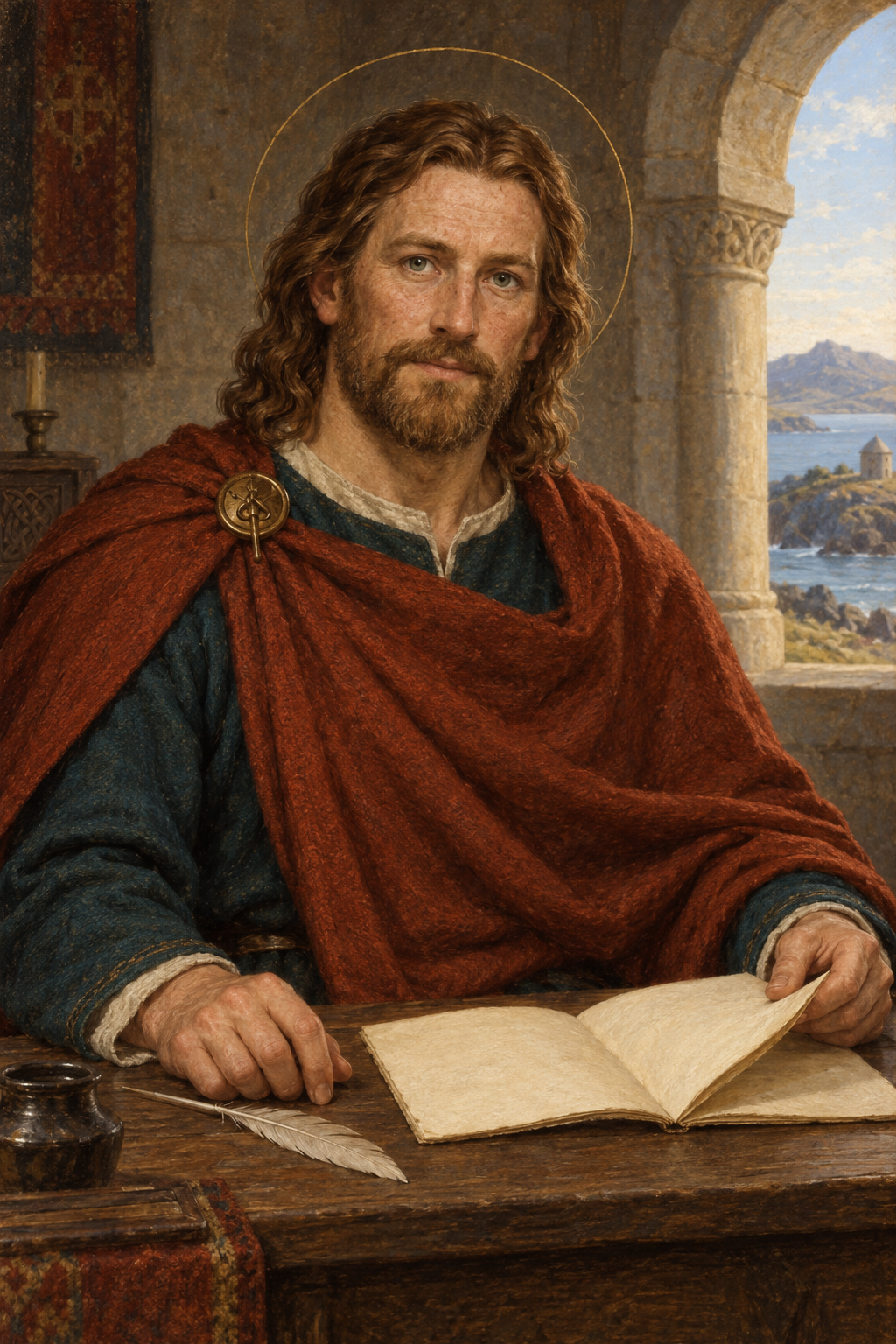
About Rögnvald Kali Kolsson
Rögnvald Kali Kolsson was a Norwegian-born earl of Orkney, a poet and the founder of Saint Magnus Cathedral at Kirkwall. The Catholic parish in Orkney remembers his original name as Kali and identifies his parents as Kol and Gunnhild. Through his mother he was a nephew of Saint Magnus. His life joined the responsibilities of a lay ruler with literary skill, travel and a lasting commitment to the church built in his uncle’s memory.
He was born in Agder around the beginning of the twelfth century. According to the saga, King Sigurd granted him a share of the Orkney earldom and gave him the name Rögnvald. His mother had asked for the name of an earlier earl, Rögnvald Brusason. The grant did not immediately give him effective control of the islands.
He secured his position in the middle of the 1130s, amid struggles involving the existing earl Paul. A young Harald Maddadsson later became his fellow earl, with Rögnvald acting as guardian. Their shared government placed family relationships and competing claims at the centre of island politics. The arrangement would be tested again when another claimant, Erlend, challenged Harald during Rögnvald’s absence overseas.
His father advised him to promise a church to Saint Magnus at Kirkwall, with endowment, relics and a bishopric. The saga presents the vow as an appeal for help, and gives Kol a part in overseeing construction.
The cathedral’s own history dates the beginning of construction to 1137. Its earliest work belonged to the period of Rögnvald and Bishop William the Old. The church grew over later centuries, so the present building cannot be treated as a complete survival of the founder’s design. Its conspicuous tall spire, for example, belongs to restoration undertaken between 1913 and 1930. Older fabric and later work stand together in the building that continues to serve Kirkwall. The cathedral’s official history also records its civic ownership: the people of Kirkwall received it in 1486, a relationship renewed after nineteenth-century repairs and restoration.
Financing the work affected landholding as well as worship. The Norwegian encyclopedia describes an agreement under which farmers paid a mark for each ploughland in return for restored hereditary ownership rights. Such arrangements show the resources required by a large stone church. Rögnvald’s religious foundation was also an undertaking within the political and economic life of the earldom.
His poetry gives a different view of his world. Judith Jesch describes a career connecting Norway, Orkney, England and the Mediterranean, with verses preserved through Icelandic manuscript culture. There is no evidence that he himself visited Iceland. The poems cross the boundaries of modern national histories, belonging to a network of people who travelled, exchanged stories and cultivated a shared poetic language.
Jesch also stresses the range of people who appear in his verse. Alongside aristocratic society are servants, monks and other less powerful figures. His poems use wit and elaborate form without simply following the usual model of praising a ruler’s military achievements. He collaborated with Hallr Þórarinsson on Háttalykill, an exploration of poetic forms. Although most scholars accept the attributed poems, their survival in later manuscripts requires care: neither a personal manuscript nor an autograph survives.
In the early 1150s he set out on a journey that took him to the Holy Land and Constantinople. The saga’s account includes armed attacks as well as pilgrimage. In Galicia it describes a siege in which fire was used against a stronghold and many people were killed. The voyage belongs to a medieval world in which religious travel and violent aristocratic expeditions could form parts of the same undertaking.
After returning, Rögnvald became involved in struggles over the earldom. He first supported Erlend and then joined Harald; Erlend was killed in 1156. Rögnvald died violently in Caithness in August 1158. Sources differ over the precise day. His death followed the hostility of Thorbjorn Klerk, who had been outlawed after a killing.
His burial and later cult gave his cathedral foundation another significance. Haki Þór Antonsson notes that little is known about the development of his cult between his death and the raising of his relics in 1192 under Bishop Bjarni. The surviving reports of miracles do not establish a detailed chronology for those intervening decades.
Antonsson considers the institutional setting of that recognition. Honouring a cathedral’s founder could strengthen its religious standing and perhaps encourage pilgrimage. This is a historical interpretation of the cult’s growth, rather than proof of the bishop’s private intentions. It also places Rögnvald’s remembrance within the continuing life of the church he helped establish: later clergy and worshippers gave his memory a public place beside that of Magnus. The surviving evidence does not support a confident reconstruction of a popular campaign pressing the bishop into recognition.
The Norwegian Catholic calendar lists his feast on 21 August. Its biography cautions that the often repeated claim of formal papal canonization in 1192 lacks surviving documentation.
Wondering how to weigh the stories and sources? Learn how to read a saint biography.