Biography
Satyrus of Milan
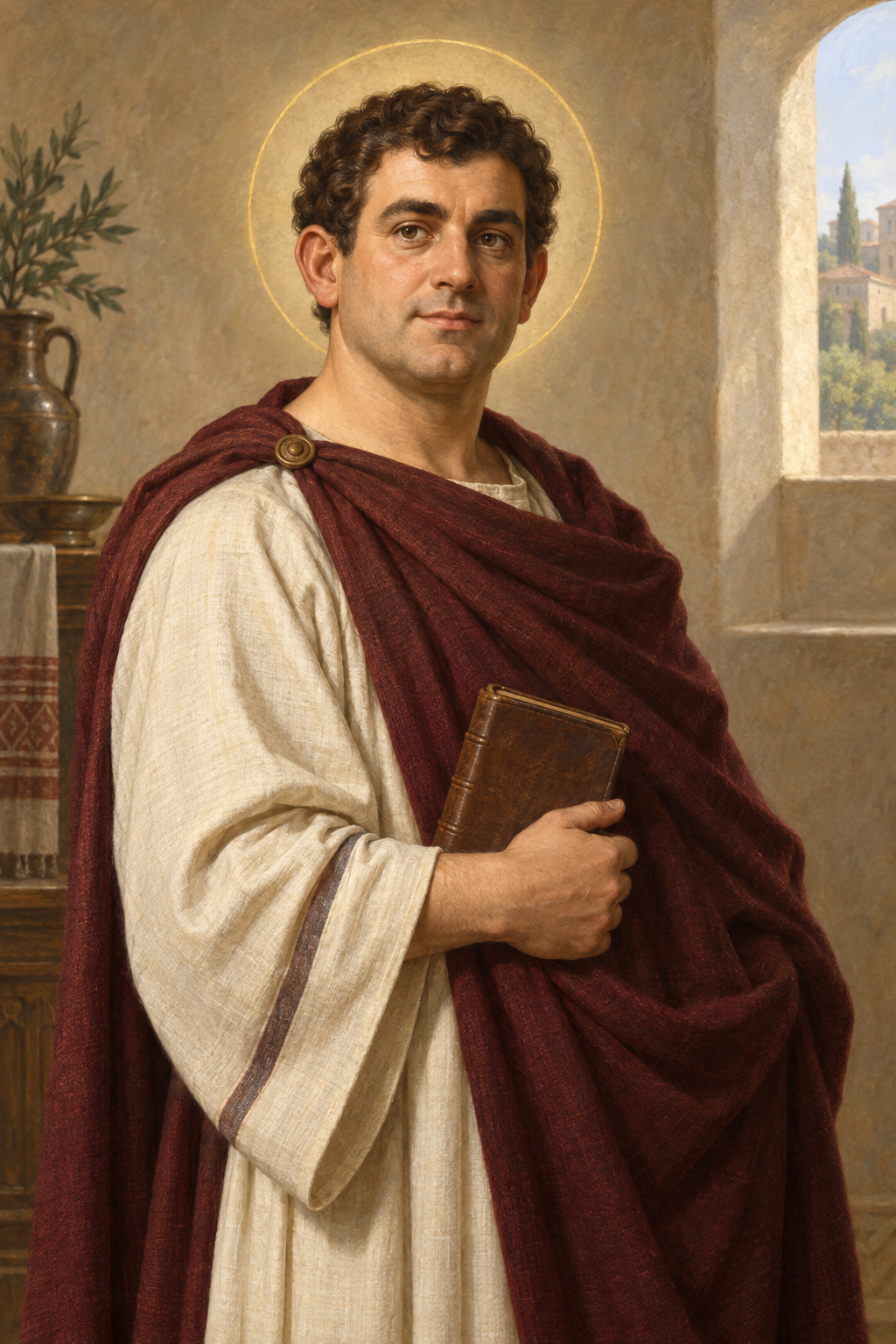
About Satyrus of Milan
Satyrus belonged to the family of Ambrose of Milan and their sister Marcellina. The Norwegian Catholic biography places him between the two in age. His life became closely tied to theirs, especially after Ambrose became a bishop. He is remembered as a layman who took responsibility for practical matters within a family devoted to Christian service.
The details of his birth are uncertain. Agostino Amore’s historical account suggests a birth around 334, while Emilia Flocchini’s account proposes 330 or 332 and leaves the birthplace open between Rome and Trier. The Norwegian biography describes literary and legal studies followed by work as an advocate and a provincial administrator. The province he governed is not securely identified in the accounts.
When Ambrose became bishop of Milan in 374, Satyrus devoted himself to helping with the Church’s administration. The basilica’s own account remembers him as a faithful collaborator joined to the bishop by deep affection. His work supported a ministry that had placed new responsibilities upon his brother, and their relationship became part of the community’s memory of both men.
An episode involving property took him to Africa. Amore relates that he went to recover money from a man named Prosper. Satyrus’s successful handling of the matter appears in the funeral account as an example of his ability and moderation. His public experience was being put to use in the management of the family’s affairs.
On the return journey he survived a shipwreck. The basilica’s account, following Ambrose, describes him tying the Eucharist in a cloth around his neck before entering the water. Having reached safety, he went to a church to give thanks. The story became a lasting expression of the trust associated with his memory.
Amore describes him as still preparing for baptism at the time of the shipwreck. He wished to be baptized afterward, but declined to receive the sacrament from a bishop associated with the Luciferian schism. He waited until he could receive it within Catholic communion. The episode connects his personal desire for baptism with concern for the unity of the Church.
Ambrose’s own words give a more personal picture of his brother. He praises Satyrus’s restraint with money, simple meals and freedom from the pursuit of wealth. Satyrus did not marry, and the account links this choice both with chastity and with his attachment to his brother and sister. Their property remained undivided, and he entrusted its disposition to them with care for the poor in mind.
The same discourse remembers him as a peacemaker within the family. Ambrose describes his brother’s fairness in disagreements and his willingness to listen. He also recalls their striking resemblance: people sometimes confused one brother with the other. These recollections place Satyrus within an ordinary human closeness of conversation, shared concerns and affection, as well as within the language of public praise.
Satyrus died at Milan after an illness, generally placed around 378. His return from overseas had brought relief to his family, followed soon by bereavement. Ambrose honored him with two discourses and arranged his burial near the martyr Victor. Those addresses preserved the principal record of his character and the events of his life.
The loss also left a lasting work of Christian reflection. In a modern study of the discourses, Bishop Irenei Steenberg emphasizes how Ambrose spoke from grief that was shared by his listeners. His brother had been a friend, counselor and partner in practical concerns. The funeral therefore brought private affection into public worship, rather than presenting an account of a person remote from ordinary attachments.
Steenberg reads Ambrose’s treatment of tears as a way of approaching Christian hope in the resurrection. The bishop acknowledged sorrow and longing while speaking about life beyond death. The affectionate memories of Satyrus were part of that reflection, not an interruption of it. His remembered life continued to matter through a work in which a grieving brother tried to speak to other mourners.
Later devotion gave Satyrus a continuing place in Milan. Flocchini traces his cult to the ninth century and notes medieval calendars that listed him on 18 September before the commemoration settled on 17 September. She also describes a long dispute over the relics attributed to him, followed by a historical and anatomical investigation in 1941. Since 1980, the basilica has displayed the remains venerated as his in a crystal urn in its first chapel on the right.
Another witness to his memory is the chapel that gave Santa Maria presso San Satiro its name. The diocesan cultural guide dates Archbishop Ansperto’s commission to 879. The chapel survives within the later church and is now called the Chapel of the Pietà. A building dedicated to Ambrose’s brother thus remained part of Milan’s religious landscape through later changes of architecture and devotion.
The sacristans of the Archdiocese of Milan honor him as their patron. Flocchini relates that association to his support of Ambrose and his remembered devotion to the Eucharist. It gives a local and practical form to his legacy: the service of a layperson whose work helped another person carry out a demanding responsibility.
Wondering how to weigh the stories and sources? Learn how to read a saint biography.