Biography
Scillitan Martyrs
About Scillitan Martyrs
The Scillitan Martyrs are known through a short Latin account of a trial at Carthage in Roman North Africa. The Acts date the proceedings to 17 July 180, during the consulship of Praesens and Condianus, and name the presiding official as the proconsul Saturninus. This is unusually early evidence for Latin-speaking Christians in the Roman province of Africa. It gives a brief exchange and a sentence, rather than a developed life story. The text is therefore best read as a record of a group’s trial and later Christian remembrance, not as a modern transcript or a collection of individual biographies.
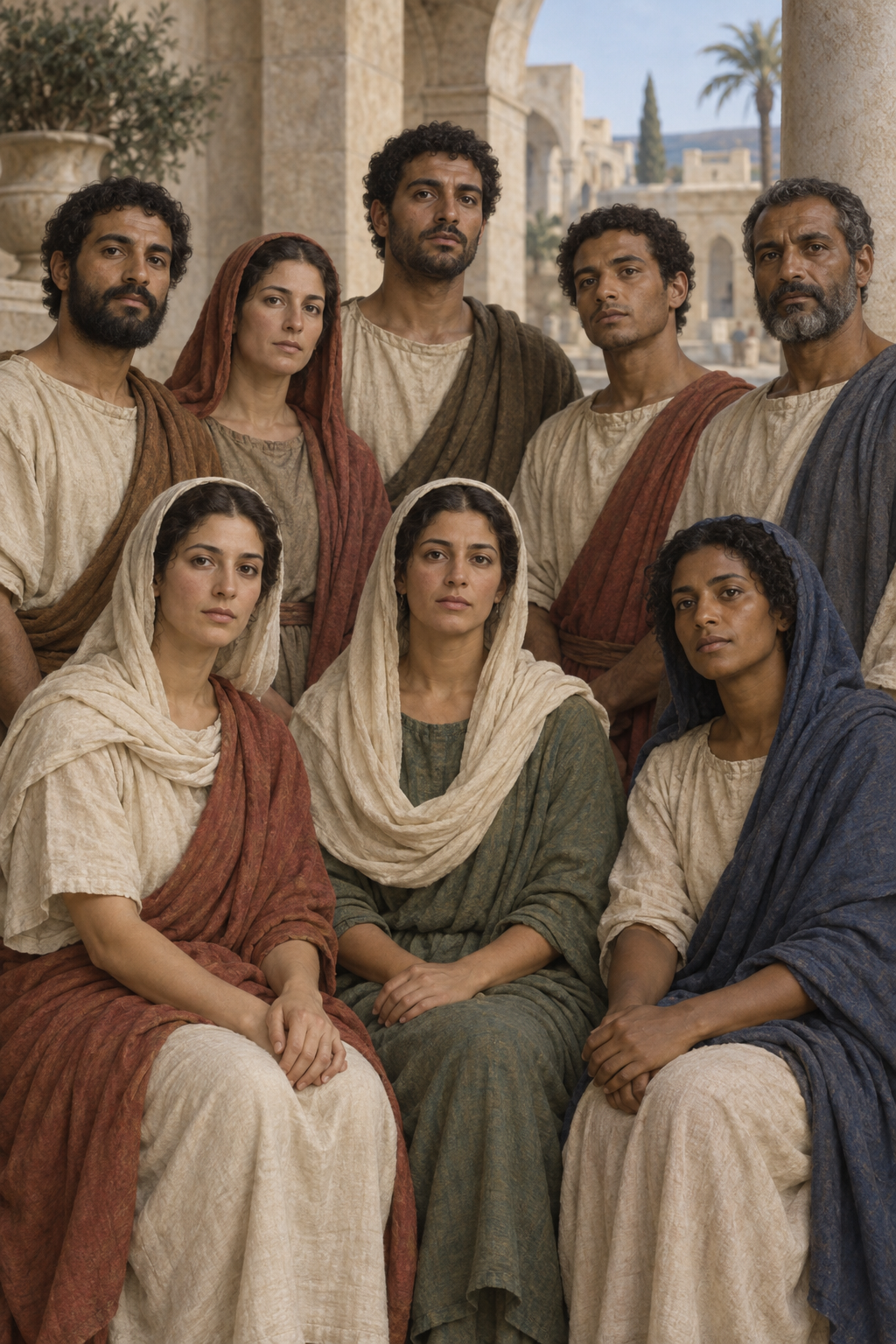
At the beginning, six people are placed before the governor: Speratus, Nartzalus, Cittinus, Donata, Secunda and Vestia. The proconsul offers imperial clemency if they return to what he calls the proper way of thinking. Speratus answers that the Christians have done no wrong and have not joined in wrongdoing. Saturninus describes his own religious obligations and urges them to swear by the emperor’s spirit. Speratus refuses. The dialogue frames a conflict over public religious conformity, loyalty to the emperor, and the Christians’ own understanding of worship.
The Acts give several short responses from the accused. Cittinus says that they fear no one except the Lord God in heaven. Donata distinguishes honoring Caesar from fearing God. Vestia identifies herself as Christian, and Secunda says she wishes to remain what she is. These lines are part of a literary and religiously shaped account, but they preserve the participation of women as well as men in the group’s confession. The text does not supply family backgrounds, ages, occupations or fuller personal histories for most of those named, so those details should remain unknown.
Speratus refers to books and letters of Paul in a container among their belongings. The exchange provides an early reference to Christian books in North Africa, though it does not describe the group’s library or the exact texts in detail. The governor offers a thirty-day delay for reconsideration. The Christians again affirm their identity. The formal sentence says that those who confessed they lived according to the Christian rite and persisted after an opportunity to return to Roman custom should be executed by the sword. The account closes with words of thanks to God and says they were immediately beheaded in the name of Christ.
The list of people is not perfectly uniform within the document. Six are named at the opening, but the sentence refers to “Speratus, Nartzalus, Cittinus, Donata, Vestia, Secunda, and the others.” The final roll call names twelve individuals: Speratus, Nartzalus, Cittinus, Veturius, Felix, Aquilinus, Laetantius, Januaria, Generosa, Vestia, Donata and Secunda. This variation may reflect an abbreviated account, a wider group than those initially interrogated, or transmission history; the source alone does not resolve the matter. The collective title “Scillitan Martyrs” is well established, but a responsible biography should explain rather than conceal the documentary discrepancy.
The source’s preservation also deserves care. The Livius edition notes that the hearing and sentence took place in a closed chamber, and that Christians must have copied the official material. It says the Latin text is based mainly on the edition by A.A.R. Bastiaensen and colleagues, with the final section following Herbert Musurillo’s 1972 edition. The text has the character of a court record, but includes a Christian redaction at its end. A 1912 Catholic Encyclopedia article similarly describes the surviving Acts as abbreviated rather than an authentic copy of judicial records and considers them probably based on an eyewitness. These observations do not invalidate the account; they identify its form and limits.
The date matters in the history of Christianity in Roman Africa. The Acts show a provincial governor applying Roman legal procedure to a group that refused a religious test and chose execution rather than compliance. Their exchange became part of the memory of Christian witness, and the Latin text is valued both for its early date and for its witness to Christian books and community in the province. No detailed account of what each person did before the arrest survives. Their shared public testimony and the fact of execution are what the document preserves most clearly.
The Scillitan Martyrs’ significance lies in this rare early testimony. It offers names, a date, an official setting, a collective refusal and the sentence. At the same time, the differing lists and the Christian transmission of the Acts caution against claiming more than the document supports. A short, source-conscious profile honors both the individuals recorded and the limits of the surviving text.
Wondering how to weigh the stories and sources? Learn how to read a saint biography.