Biography
Shemon Bar Sabbae
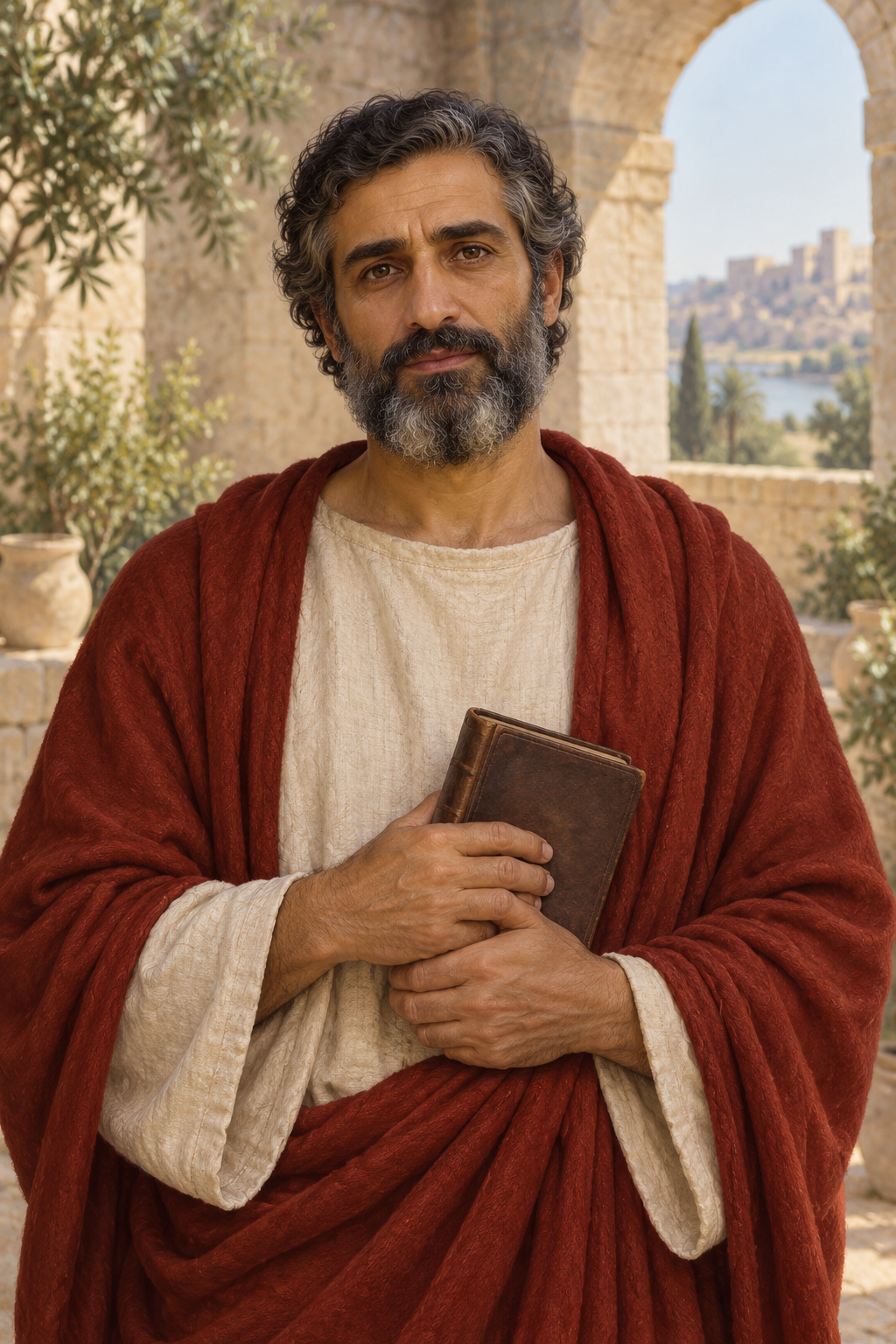
About Shemon Bar Sabbae
Shemon Bar Sabbae, also known as Simeon, was bishop of Seleucia-Ctesiphon and a martyr under Shapur II. Little is securely known about his ministry before his arrest. Lucas Van Rompay regards him as the probable immediate successor of Papa bar Aggai.
Two related Syriac works preserve that crisis: a shorter Martyrdom and a longer History. Both connect Shemon’s arrest with his refusal to collect a doubled tax from the Christian community. The conflict arose amid warfare with Rome and suspicion that Persian Christians favoured the Roman side. The narratives take him from Seleucia to Karka d-Ledan, where he confronts the king and is eventually executed.
The texts are not interchangeable records. Kyle Smith’s presentation of his edition explains that the shorter Martyrdom compares Shemon with Judas Maccabeus and his community with the persecuted Jews of the Maccabean story. The later History instead draws parallels with Christians persecuted in the Roman Empire before Constantine. These differences reveal how writers interpreted martyrdom for their own communities, as well as preserving a memory of Shemon’s death.
The Orthodox account remembers his refusal to worship the sun and his encounter with Usphazanes, a court official who had abandoned Christianity. Seeing the imprisoned bishop, the official repents and returns to his faith, despite the danger. He is executed before Shemon. The narrative then describes the bishop encouraging fellow Christians who face death with him. These scenes belong to the received martyr tradition; they should not be mistaken for verbatim records of courtroom conversations.
Even the date of death remains disputed. Van Rompay gives 341 or 344, while Smith’s publisher places the event around 339 or 340.
Martin Higgins proposed September 14, 344 rather than the traditionally reported Good Friday. These disagreements leave the year and day insufficiently secure for an exact life date.
The manuscripts also stand at a distance from the events. Van Rompay places the final shaping of the narratives in the fifth century and notes their theological development. This does not erase Shemon’s historical place, but it limits what their elaborate speeches can establish about him personally.
His memory remains visible in communities far beyond Seleucia-Ctesiphon. An Assyrian Church of the East history identifies the church of Mar Shimun bar Sabbae in Flint, Michigan, as its first church building in the United States. Construction began in 1924, with services held in the basement, and was completed in 1939. The account explicitly identifies its patron as the martyred patriarch.
In 2024, a church bearing his name was consecrated in Meroke village in northern Iraq’s Nahla Valley. Eve Sada’s Harvard research reflection describes the consecration as part of a gathering that brought local Assyrians together with visitors from the diaspora. Religious worship, language, music and shared cultural practices formed part of that communal remembrance.
In Wakeley, Sydney, a cathedral is dedicated jointly to Mar Shimun Bar Sabbae and Saint Mary. Its Sunday school describes the teaching of Scripture, church prayers and the Aramaic or Assyrian language. The dedication places his memory within the ordinary transmission of faith between generations.
Catholic and Orthodox calendars commemorate him on April 17. His story continues to centre on a bishop’s refusal to abandon his faith under pressure and on the community remembered alongside him.
Wondering how to weigh the stories and sources? Learn how to read a saint biography.