Biography
Symphorosa
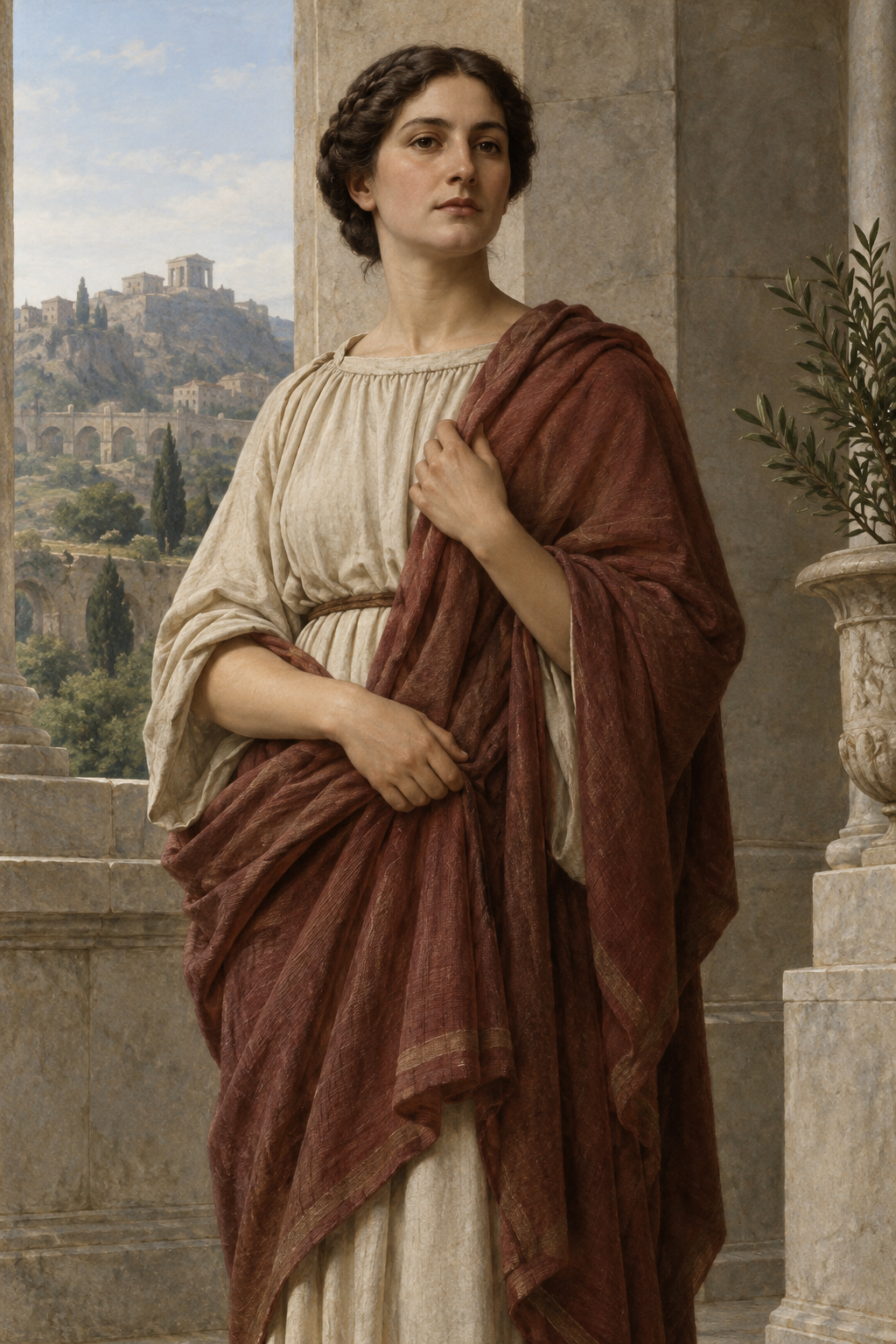
About Symphorosa
Symphorosa is known chiefly through the history of her cult and a martyr narrative whose details were already treated cautiously by modern scholarship. She is associated with Tibur, the ancient town now known as Tivoli, east of Rome. The Catholic Encyclopedia places the story near the end of Emperor Hadrian’s reign, but explicitly warns that the Passio describing the deaths of Symphorosa and seven sons has a seriously disputed reliability. No contemporary account of her life is available in the sources used here.
According to that later Passio, Symphorosa was a widow living at Tibur. It identifies her husband with Getulius, whom the narrative also presents as a martyr. It then says that Hadrian tried to persuade Symphorosa and her sons to sacrifice during a dedication at his villa. When she refused, she was tortured and drowned in the Anio with a weight around her neck; her brother Eugenius supposedly buried her. These details belong to the narrative tradition, not to independently verified biography. They are summarized here only to explain how the story came to be associated with the saint.
The same Passio gives the sons names and assigns each a different manner of death. The fifth-century Hieronymian Martyrology commemorates Symphorosa and sons on July 18, but gives names different from those in the later Acts. The discrepancy is significant. The encyclopedia suggests that the author of the Passio may have connected an existing tradition about Symphorosa with a group of seven brother martyrs commemorated on June 27, whose names match the Passio’s list. It also notes that some hagiologists have regarded the seven sons as an adaptation of the biblical story of the Maccabean mother and her sons. Neither explanation can be proved from the surviving evidence, so the family relationship and children’s names should not be stated as certain historical facts.
The cult has material and liturgical traces. The Hieronymian Martyrology, compiled in the second half of the fifth century, marks a commemoration on July 18. The Acts and the Martyrology associate the martyrs’ tomb with a site on the Via Tiburtina, outside Rome. In the seventeenth century, the antiquarian Antonio Bosio reported the remains of a basilica at a place known as “the seven brothers”; later excavations, as summarized by the encyclopedia, strengthened the identification of the church site with a burial place connected to the cult. This archaeological record is evidence for veneration and a commemorated burial site. It does not authenticate every episode or relationship in the Passio.
A translation tradition says Pope Stephen (II) III moved the relics to the church of Sant’Angelo in Pescheria in Rome in 752. A sarcophagus found there in 1610 bore an inscription referring to the bodies of Symphorosa, her husband and sons as translated by the pope. As transmitted through a much later report, the inscription is part of the history of relic devotion, not a contemporary account of the second-century events. The Diocese of Tivoli honors Symphorosa and her companions as patrons, while the broader Latin calendar remembers her on July 18.
A responsible account must therefore separate three layers: an early commemoration at a site associated with Tibur and Rome; a later Passio that supplies a dramatic family martyrdom; and archaeological and ecclesiastical traditions that show how the cult continued. The evidence establishes neither a precise date of death nor a secure list of relatives. Symphorosa’s historical profile remains deliberately short because a longer narrative would mostly reproduce disputed hagiography. Her place in Christian memory is still visible in the early calendar witness, the burial tradition on the Via Tiburtina, and the continuing July commemoration.
Wondering how to weigh the stories and sources? Learn how to read a saint biography.