Biography
Tarachus
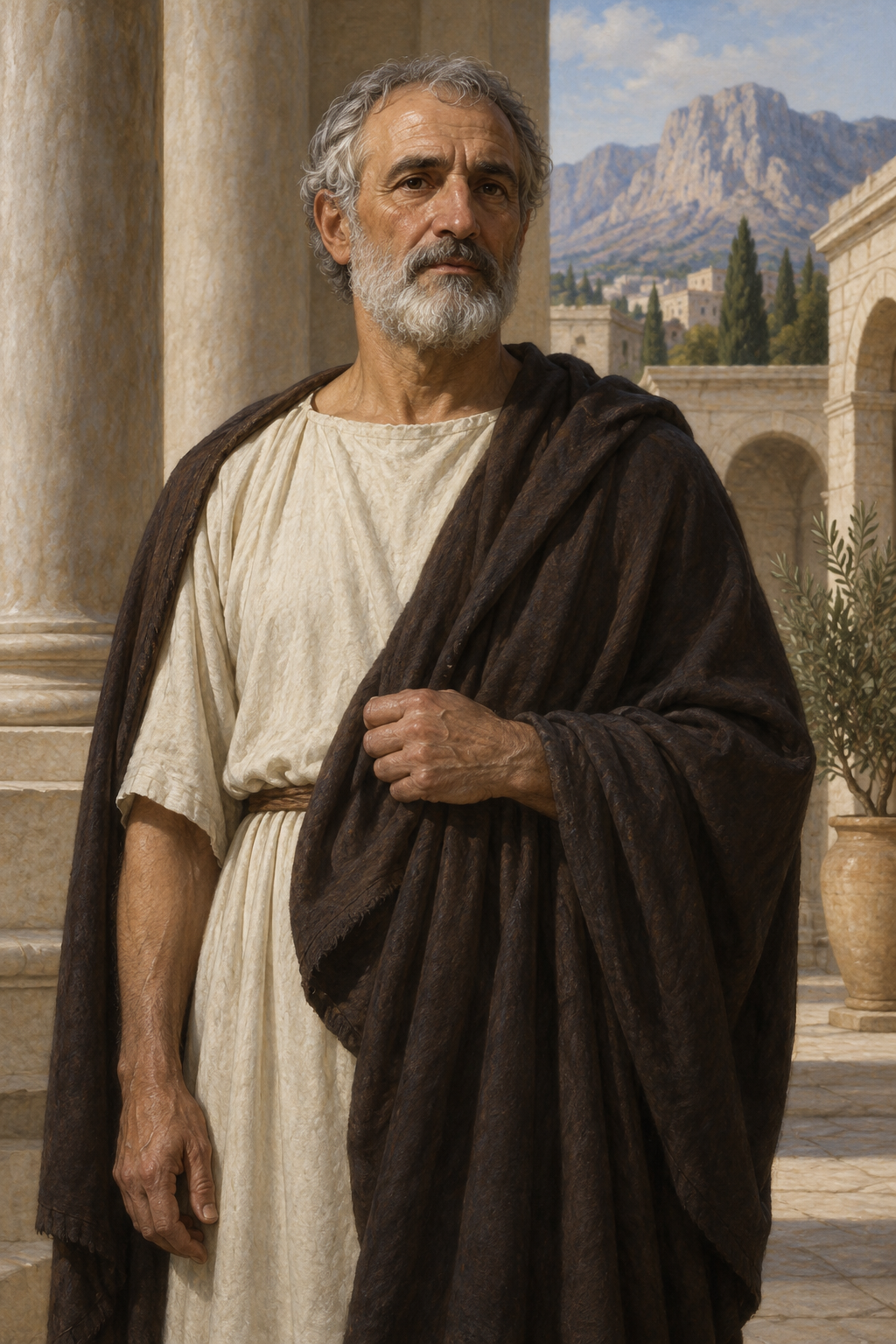
About Tarachus
Tarachus is remembered with Probus and Andronicus as a Christian martyr associated with Cilicia during the persecution under Diocletian. The Catholic Encyclopedia reports that the Hieronymian Martyrology preserves the names with a Cilician location, though on several dates. It interprets the repeated October entries as variants pointing to a single commemoration. A separate entry for Palestine may refer to an error or to a shrine. These early calendar references support the existence of a cult for the three companions, while leaving exact chronology and biography less certain.
The fuller account comes from Acts of the martyrs. In that narrative Tarachus is a native of Claudiopolis in Isauria, Probus comes from Side in Pamphylia, and Andronicus belongs to a prominent Ephesian family. The group is tried more than once in Cilician cities. The Acts describe repeated questioning and torture before a final condemnation. These details should be attributed to the Acts rather than treated as independently verified courtroom documentation. The Catholic Encyclopedia notes a long disagreement over their reliability: Ruinart regarded one account as wholly authentic, while Harnack expressed doubts and Delehaye classified the narrative among “historical romances.”
Henry Wace’s Dictionary of Christian Biography likewise emphasizes the literary and historical value of the Acts, reporting that scholars used them to study Roman judicial procedure and the movement of a proconsul through the province. It describes Tarachus as a soldier who left military service when persecution began, but that detail belongs to the Acts-based biographical tradition and should not be promoted to a secure fact. The trial narrative’s usefulness for the history of legal practice does not prove that every speech and physical detail was recorded exactly as it happened.
The Catholic Encyclopedia says the companions were condemned to death by wild animals; when the animals did not attack them in the amphitheater, they were killed with swords. This dramatic sequence is part of the hagiographic Acts. The more cautious historical conclusion is that a group remembered as Tarachus, Probus and Andronicus was venerated as martyrs in Cilicia, and that a narrative of their trial circulated. The exact place, date, and sequence of death are not secure enough to populate a detailed itinerary for Tarachus individually.
The calendars preserve distinct dates: October 11 in the Latin Church and October 12 in the Greek Church according to the Catholic Encyclopedia. The inherited Eastern commemoration on October 12 is consistent with that entry; the catalog record may use October 11 for its Roman observance. The choice of date identifies a liturgical remembrance, not necessarily a precisely known day of execution.
Tarachus’s profile should remain collective and source-conscious. The evidence supports his place in an early cult with two named companions and a received tradition of martyrdom under Diocletian. It does not support a confident reconstruction of his private life or a verbatim transcript of his trial. The companions’ Acts remain important witnesses to how Christians narrated persecution and to the Roman legal world in which such trials were remembered, but their disputed historical status must remain visible in any account.
Wondering how to weigh the stories and sources? Learn how to read a saint biography.