Biography
Terentian
About Terentian
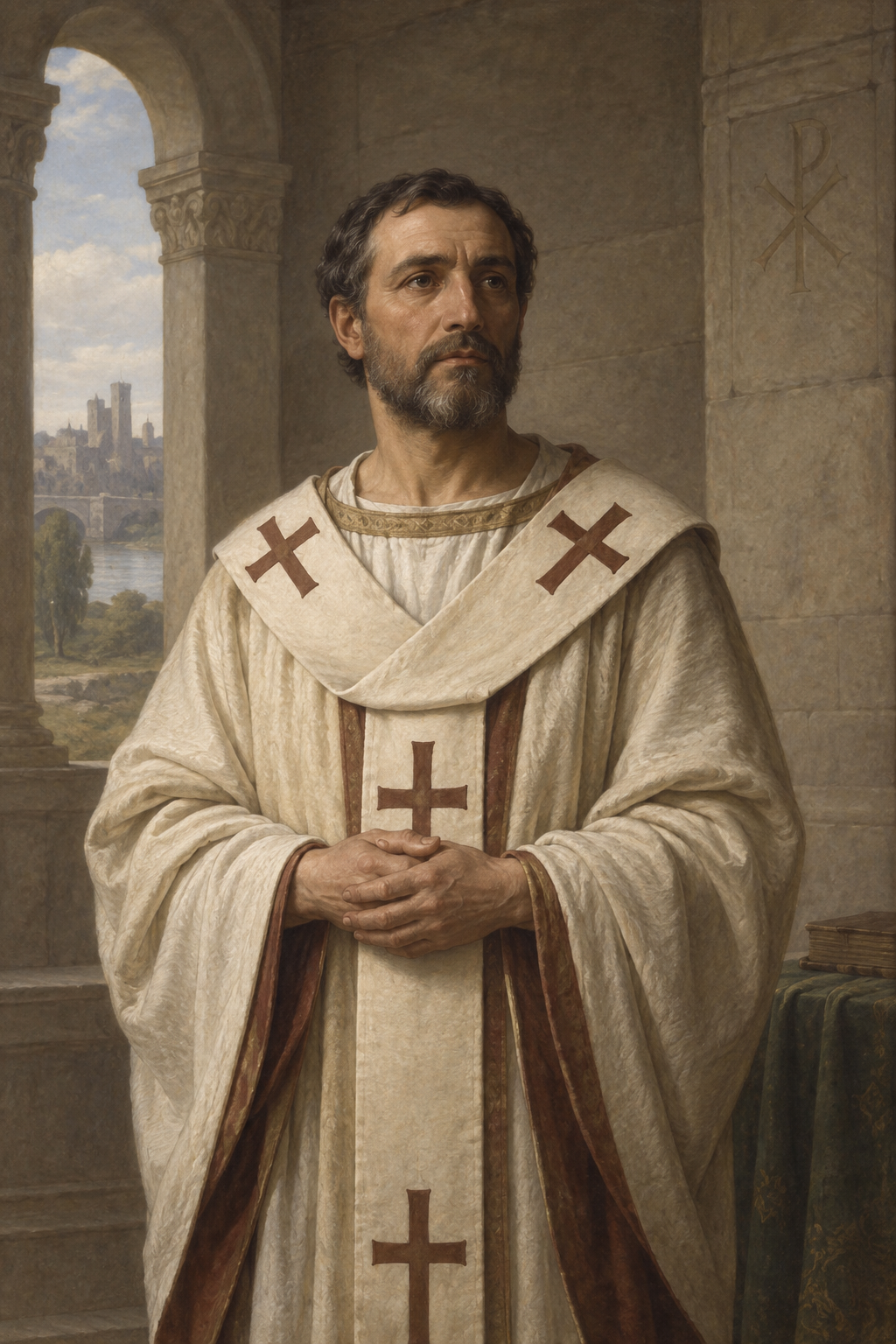
Terentian is remembered in the local church of Todi as a bishop and martyr. The Diocese of Orvieto-Todi observes his memorial on September 1 and its liturgical proper presents him as the first bishop of Todi, martyred under Emperor Hadrian. That is the received ecclesiastical account. The historical evidence behind it is later and less definite, so the local tradition should not be mistaken for a contemporary record of Terentian’s life.
The Italian bishops’ BeWeB reference to the history of Todi states that hagiographic tradition assigns Terentian the role of protobishop. It notes that the *Passio* places him in the second century but was written in the first half of the sixth century, several centuries after the events it describes. It further says that he may instead be assigned to the fourth century. The source therefore does not support an exact death year such as 118, nor does it establish that Terentian was literally the first bishop of the city. Those claims come from the later narrative and are not confirmed by contemporary evidence.
The local proper recounts that Terentian converted Flaccus, described as a pagan priest, and that the two suffered martyrdom together. It says their bodies were recovered by the priest Exuperantius and the matron Lorenza and buried at Pietrosa or Colonia, now associated with San Terenziano in Gualdo Cattaneo. These details are important to local devotion and the geography of the cult. The diocesan historical reference, however, warns generally that information about other early martyrs of Todi is late and unreliable; the Passio’s dramatic episodes should therefore be presented as tradition rather than verified history.
The cult’s continuing place in the diocese is better documented than the details of the martyrdom. Terentian’s September 1 memorial appears in the diocesan calendar and proper, and his name remains attached to a local settlement and church tradition. This establishes the saint’s lasting importance in regional religious memory. It does not resolve whether the historical bishop lived in the second or fourth century, whether he was Todi’s first bishop, or whether all the companions and burial details in the Passio are historically recoverable.
Terentian’s profile is necessarily brief. The responsible account distinguishes a present local commemoration and a long-standing tradition from the uncertain chronology and late hagiographic narrative. It leaves the birth and death dates blank, and it attributes the story of Flaccus and the burial to the diocesan proper. His significance is that of a locally venerated bishop-martyr whose cult helped shape the Christian memory of Todi, while the surviving sources do not permit a fuller biography.
Wondering how to weigh the stories and sources? Learn how to read a saint biography.