Biography
Theodore of Tabennese
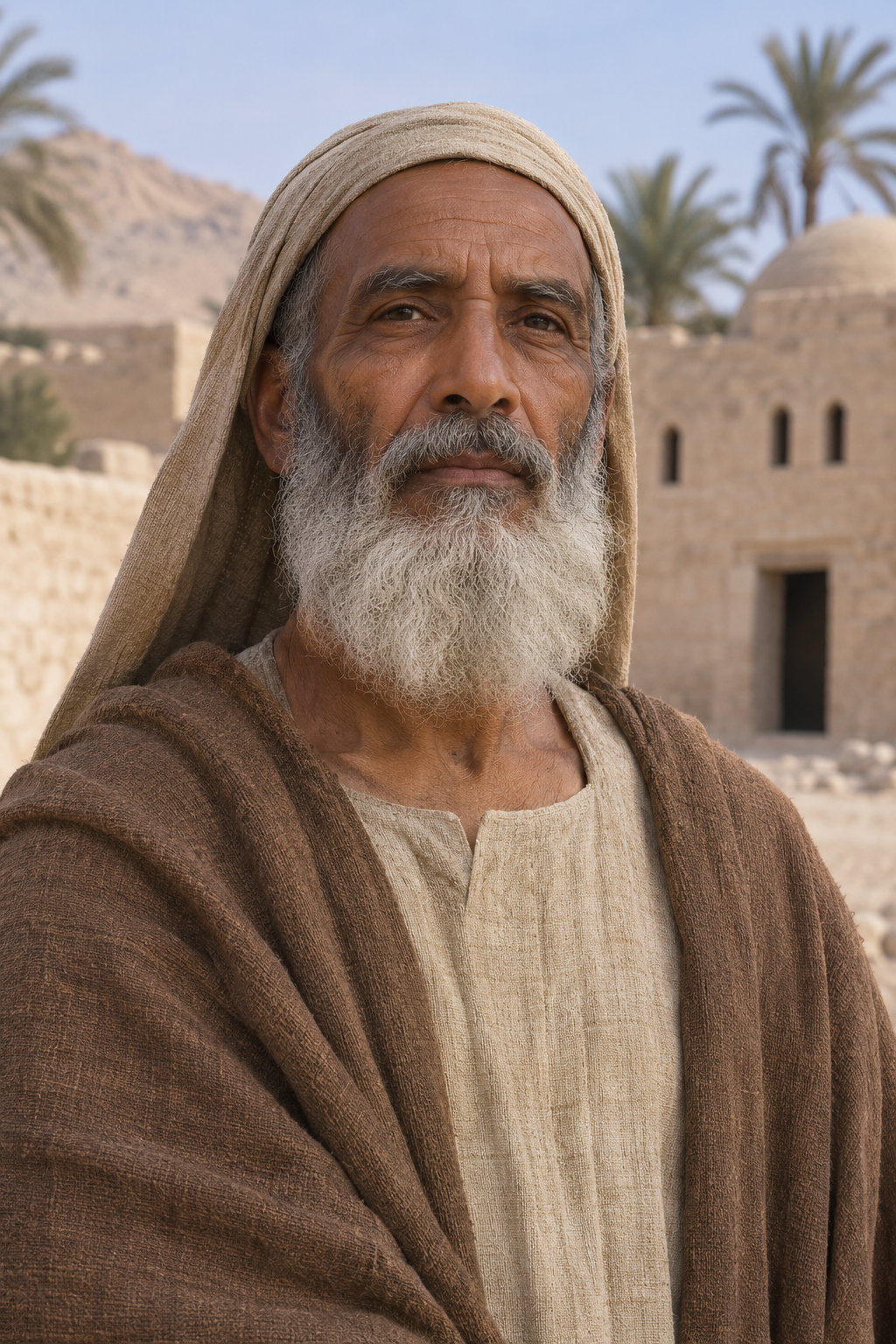
About Theodore of Tabennese
Theodore entered the Pachomian community as a young man and became one of its most trusted leaders. The sources disagree on his age at entry: the Bohairic Life says twenty, the Greek Life fourteen, another account calls him a boy, and the Letter of Ammon gives thirteen. The differences caution against a precise age. Armand Veilleux places Theodore’s arrival at Tabennese around 328 and his death in 368, dates reconstructed from the movement’s narrative chronology.
The Bohairic Life describes Theodore as Pachomius’s close disciple. When hardship or conflict unsettled the brothers, Pachomius sent him to console and strengthen them. They called him “father after their father,” a phrase that conveys the authority he acquired while Pachomius was alive. The Life portrays the bond in affectionate terms, though it is also a later community account of how leadership passed from founder to successor.
Pachomius appointed Theodore to lead the community at Tabennese. Later the founder brought him into the federation’s central administration at Pbow, where he could support multiple houses. The sources portray this as an important development in Theodore’s formation: his responsibilities grew from one monastery to the wider network. The history of this federation depended on travel, communication, and the coordination of communities rather than on one isolated ascetic settlement.
The succession after Pachomius’s death was not immediate or uncontested. Petronius first became leader, but he was already ill and died shortly afterward. Theodore then assumed the headship. When conflict later led Horsiesios to withdraw, Theodore recalled him and restored him to leadership. The Bohairic Life presents this as an act of reconciliation and continuity. Its chronology is not exact enough to settle every year, but the sequence shows the community’s memory of authority as shared and transferable.
The Letter of Ammon preserves a teaching scene. Ammon says that after becoming Christian at seventeen he spent three years at Pabau. Monks asked Theodore to speak openly about their faults, and he answered with scriptural examples concerning struggle, vigilance, and hidden thoughts. The letter is a witness to the reputation Theodore held among later Pachomian communities; it is not a stenographic transcript of a specific meeting.
Theodore’s surviving correspondence gives another glimpse of leadership. One letter, preserved in Jerome’s Latin translation, summons brothers to Pbow for Easter. A Coptic letter also circulates under his name, although its attribution is less secure. These texts show a leader communicating beyond face-to-face visits and using liturgical gatherings to renew communal ties. They should not be mistaken for a comprehensive archive of his administration.
Caroline Schroeder’s study places Theodore’s youth within broader questions about family and young entrants in Egyptian monasticism. The sources call him a boy or young man but give different ages, so his precise age at entry cannot be fixed. They agree that he joined Pachomius early enough to become a trusted disciple and later leader.
The Pachomian sources remember Theodore as a teacher, organizer, and mediator in the generation after Pachomius. The Life links him to Tabennese and Pbow and to Horsiesios’s return; Ammon preserves a teaching scene, and a letter translated by Jerome records a communal summons. The accounts are shaped by the movement’s memory, but together describe the responsibilities attached to leadership.
Ammon’s account offers a more immediate setting for Theodore’s teaching. After hearing Athanasius preach, Ammon says he sought monastic life and was sent to Pabau because the first monk he met was judged heterodox. Theodore met him at the gate, received him into the house, and sat with roughly six hundred monks beneath a palm tree. The scene places Theodore’s authority in an active community of newcomers and established brothers, rather than in a solitary spiritual encounter. Ammon also states that he had spent three years among the Pachomians before writing at the request of his correspondent. Ammon says he was directed to Theodore by Paul, through two monks carrying letters to Athanasius.
During the gathering, monks asked Theodore to address their faults one by one. Ammon recalls him answering with scriptural counsel tailored to each brother: endurance for one, restraint for another, and vigilance against hidden thoughts for others. Theodore the Alexandrian interpreted the Coptic instruction into Greek. The episode shows the multilingual character of the federation and the way its leaders used Scripture to guide communal self-examination. Because this is Ammon’s literary account, it conveys how Theodore’s teaching was remembered rather than a verbatim record of a meeting.
Ammon’s next scene has Theodore warn that pressure on the church would come both from dissident Christians and from a pagan ruler, while urging prayer for the churches. The prophecy was recorded after the events it claims to foretell, and belongs to the letter’s hagiographic portrait. It nevertheless adds a different dimension to Theodore’s remembered leadership: his teaching addressed the brothers’ inner conduct, while the narrative also depicts him as interpreting threats to the wider church.
Wondering how to weigh the stories and sources? Learn how to read a saint biography.