Biography
Timothy
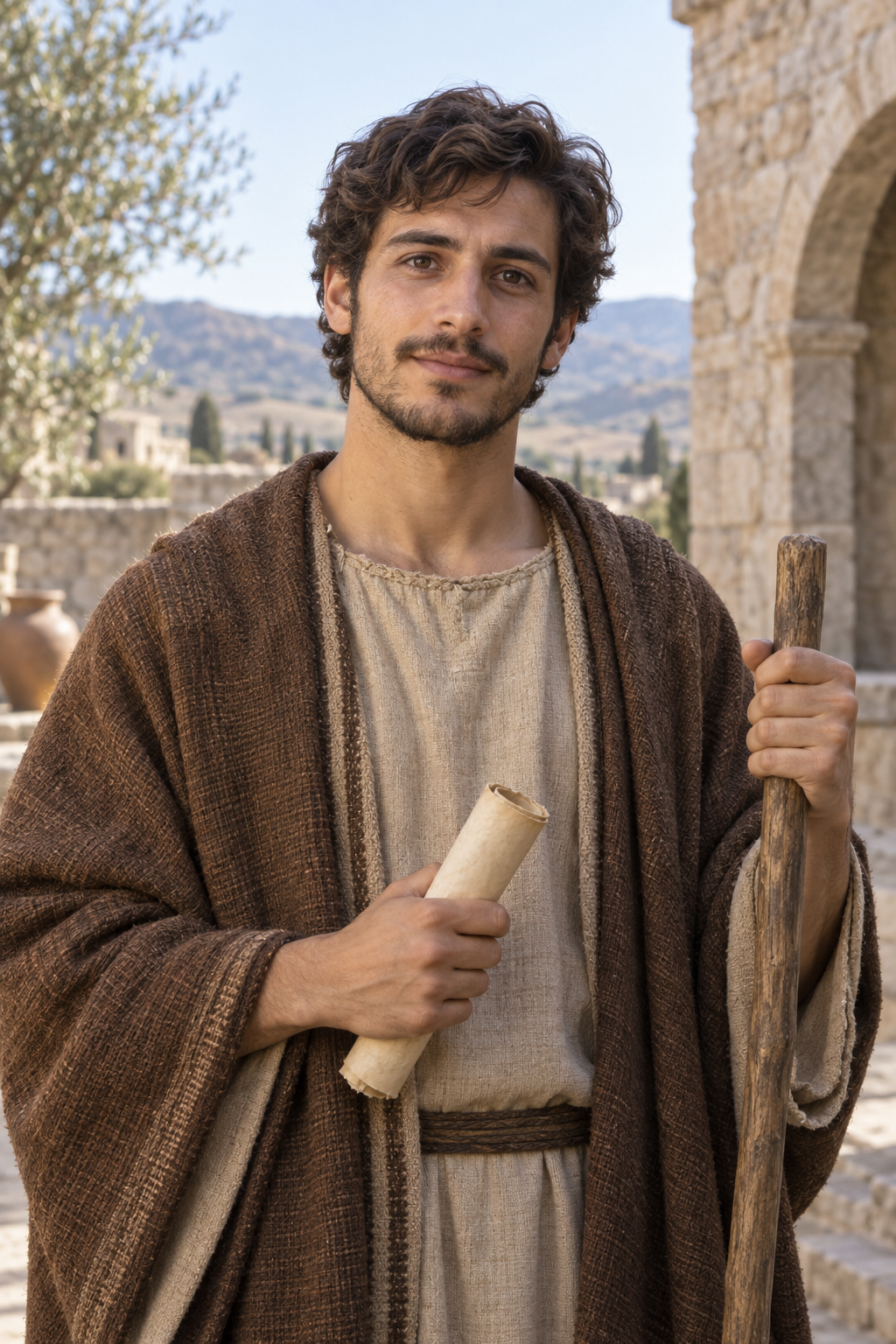
About Timothy
(886 words)
Timothy appears in the New Testament not as a figure with a self-contained biography, but as a trusted collaborator moving within Paul’s missionary work. That limitation matters. The surviving evidence gives several clear episodes, yet it does not supply a continuous account of his childhood, later years, or death. A careful portrait begins with what the texts actually say and marks the point at which later Christian memory takes over.
Acts introduces Timothy when Paul reaches Derbe and Lystra. There he meets a disciple whose mother is described as a Jewish believer and whose father is Greek. The passage also says that believers in Lystra and Iconium spoke well of Timothy. Those details place him in a mixed household and a local Christian community; they do not give a birth date or a complete family history. The later names Eunice and Lois come from the Pauline letters and are repeated by Benedict XVI in his audience on Timothy and Titus. Together, these sources explain why Timothy could become a bridge figure in communities shaped by both Jewish and Gentile backgrounds.
Paul chose Timothy to travel with him at the start of a missionary journey. Acts reports that Paul had him circumcised because Jews in that area knew his father was Greek. The USCCB note on the passage stresses the local pastoral context: the action did not turn circumcision into a requirement for Gentile Christians. Timothy’s first recorded service therefore belongs to a complicated missionary setting in which the team sought to communicate the gospel across different communal expectations. Acts next depicts the travelers passing through regions of Asia Minor, reaching Troas, and entering Macedonia. Timothy is not the central actor in every scene, but his presence in the team is part of the historical picture the text gives.
The evidence becomes more specific when Paul’s correspondence is read alongside Acts. Benedict XVI notes that Timothy joined Paul in Athens and was then sent to the young church at Thessalonica. In 1 Thessalonians, Paul calls Timothy “our brother and God’s co-worker” and explains that the mission was to strengthen and encourage the community in faith during hardship. This is more than a travel notice: it identifies Timothy as someone entrusted with pastoral responsibility for a community under pressure. The letter does not provide a diary of the visit, so it is wiser to describe the assignment than to invent its daily detail.
Timothy later appears in connection with Ephesus, Macedonia, Corinth, and the churches Paul addressed by letter. Acts says that Paul sent Timothy and Erastus into Macedonia while Paul remained in Asia. First Corinthians also speaks of a mission to Corinth, asking the community to receive Timothy without fear and to let him continue in peace. Benedict XVI gathers these references into a picture of repeated representative work: Timothy could be sent where Paul could not go, could carry messages, and could encourage communities whose relationship with Paul required care. The surviving texts do not eliminate every scholarly question about chronology, but they consistently portray him as a dependable co-worker.
Paul’s esteem for Timothy is especially clear in the Letter to the Philippians, which Benedict cites as evidence that Paul trusted him with the welfare of other believers. This need not make Timothy a flawless hero. It shows instead how early Christian mission depended on colleagues who accepted difficult, sometimes unpredictable assignments. Benedict’s catechesis draws that practical conclusion: Paul did not carry out every task alone but relied on collaborators who shared responsibility. Timothy’s importance is visible precisely in that network of service.
The traditional letters called 1 and 2 Timothy also shaped how churches remembered him. Their questions of authorship and historical setting require caution; they should not be treated as uncomplicated biographical reporting. They nevertheless help explain why the liturgical memory of Timothy is linked with pastoral care, teaching, and the handing on of faith. For this packet, the more secure narrative claims remain anchored in Acts and in the undisputed letters Paul wrote about Timothy’s missions.
The evidence grows thin after the journeys recorded in Acts and the Pauline letters. Benedict XVI explicitly says that ancient sources offer little more, apart from a reference to Timothy’s release in Hebrews. He then identifies the claim that Timothy was the first bishop of Ephesus as coming from the later *Ecclesiastical History* of Eusebius. That distinction is essential. It is fair to report the Ephesus episcopal memory as later Christian tradition; it is not fair to write it as though Acts itself had documented a complete episcopal term. Similarly, the catalog’s traditional death around 93 at Ephesus should stay marked traditional, since the New Testament does not establish those details.
Timothy’s January 26 memorial, shared with Titus in the Roman calendar, gives a liturgical frame for this memory. It does not fill the historical gaps, but it keeps before the Church a collaborator whose documented service involved travel, representation, teaching, and encouragement. His surviving portrait is modest and compelling: a disciple known well enough to be trusted with real tasks, yet known incompletely enough to invite restraint wherever later details cannot be securely verified.
Wondering how to weigh the stories and sources? Learn how to read a saint biography.