Biography
Toyohiko Kagawa
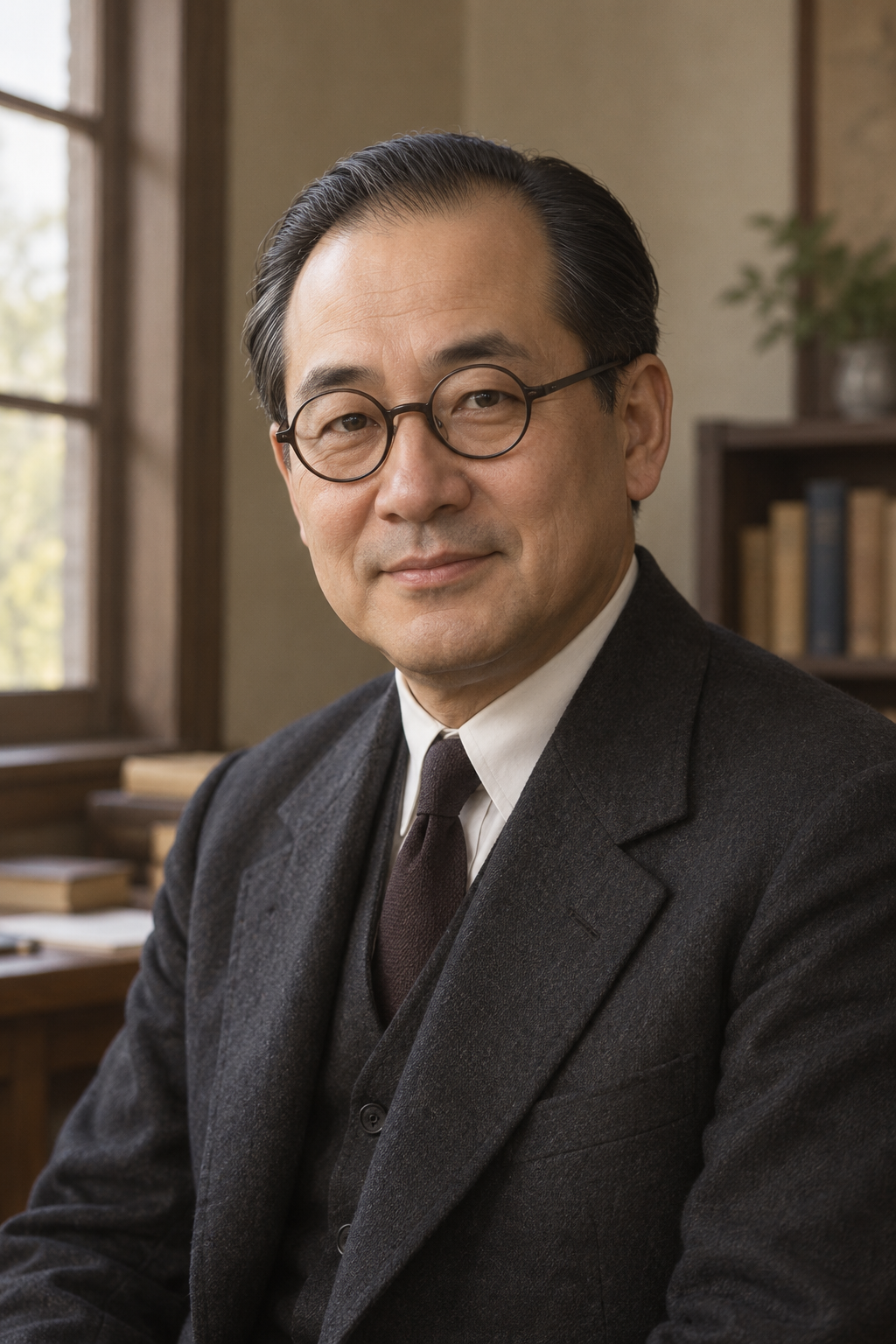
About Toyohiko Kagawa
Toyohiko Kagawa was a Japanese Christian evangelist and social reformer whose work connected faith with the conditions in which people lived. Born in Kobe, he lost his parents in childhood. American Presbyterian missionaries Harry Myers and Charles Logan became important influences, and he was baptized in 1904. He studied theology in Tokyo and Kobe. While still a student, he began living among people in the impoverished Shinkawa district, combining religious teaching with practical help. For Kagawa, the love of God revealed in Jesus called for a response involving both spiritual commitment and care for others.
Ordained as an evangelist in 1911, he remained a Presbyterian minister. His North American connections involved residence and organizing as well as speaking tours. After marrying Haru in 1913, he traveled to the United States the following year. He studied at Princeton University and Princeton Theological Seminary, receiving degrees in psychology and divinity. Exposure to labor organizing in New York broadened his understanding of collective action. Before returning to Japan in 1917, he worked for the Japanese Association in Ogden, Utah, where he helped Japanese and Mormon tenant farmers organize. Scholar Mark Mullins describes this American experience as formative for his later work.
Back in Japan, Kagawa increasingly sought ways to prevent poverty. He joined labor organizing and helped develop consumer cooperatives. Haru shared his work in Shinkawa. During the 1921 shipbuilding dispute in Kobe, he was arrested with other union leaders. Income from his successful autobiographical novel, Shisen o koete, helped meet the costs of social projects and organizing. In 1922 he and Sugiyama Genjirō founded the Japan Farmers’ Union, seeking fairer rents and more secure tenancy arrangements.
The Friends of Jesus, founded in 1921, brought prayer and social engagement together. Its members remained within existing churches while committing themselves to service beyond church walls. The movement crossed denominational boundaries and drew lay participants from varied occupations. Mullins emphasizes that it was intended to renew Christian practice, with religious devotion expressed in everyday responsibilities and organized work among people in need.
After the 1923 earthquake, Kagawa helped gather relief money and supplies and worked with colleagues in Tokyo. His later projects included schools for farmers that combined agricultural instruction with history and Bible study. A credit cooperative offered loans to people struggling to meet living expenses. These efforts addressed practical problems of work, food, and access to resources.
American audiences encountered him again through lectures and translated books. Arriving for a tour in December 1935, he was detained at Angel Island because of trachoma. Supporters appealed, and presidential interest helped secure admission with a medical escort. His 1936 Rauschenbusch lectures at Colgate-Rochester Divinity School connected Christian self-giving with cooperative economics. Japanese American communities welcomed him, while church supporters used the tour to challenge immigration exclusion. The lectures later became Brotherhood Economics.
The Federal Council of Churches sponsored the tour, linking it to its opposition to the exclusion of Japanese immigrants. In southern California, the Fellowship of Reconciliation collected several thousand pledges seeking repeal and presented them to Kagawa. The council continued advocating repeal after his departure, making the visit part of a wider campaign over American immigration policy.
His reputation for peace advocacy must be considered alongside his wartime conduct. The publisher’s account of historian Bo Tao’s research describes Kagawa’s support for Japanese expansionist policies and his propaganda broadcasts on Radio Tokyo during the Pacific War. This scholarship complicates the consistently pacifist image promoted by admirers.
There were also serious limits to his understanding of the people he served. Historian Hiroshi Sekiguchi documents racist and eugenic ideas in Kagawa’s writings about poverty and Burakumin. Kagawa attributed social conditions to supposed inherited racial qualities and argued that some people required eugenic intervention. These claims demeaned a community already subjected to discrimination. Sekiguchi shows that humanitarian activity and harmful theories coexisted in his thinking; his contribution to welfare does not make those beliefs incidental.
Sekiguchi also traces Kagawa’s changing relationship with the National Levelers Association, a Burakumin liberation organization established in 1922. He had contact with its future leaders before it was founded and participated in meetings early in its history, but later condemned the movement as its confrontational methods and political direction diverged from his own aims. Sekiguchi states that the eugenic measures Kagawa advocated were never implemented, while emphasizing the social consequences of the discriminatory ideas themselves.
Kagawa continued teaching and organizing after the war. In 1949 he became a professor at Meiji Gakuin, teaching cooperative economics and economic psychology.
His writing ranged across religious reflection, fiction, and social questions. The National Diet Library records the popularity of his 1920 novel and his international recognition, including nominations for Nobel prizes in literature and peace. He died on April 23, 1960.
The place of his death was Tokyo.
The Episcopal Church commemorates him on April 23.
Wondering how to weigh the stories and sources? Learn how to read a saint biography.