Biography
Victoire Rasoamanarivo
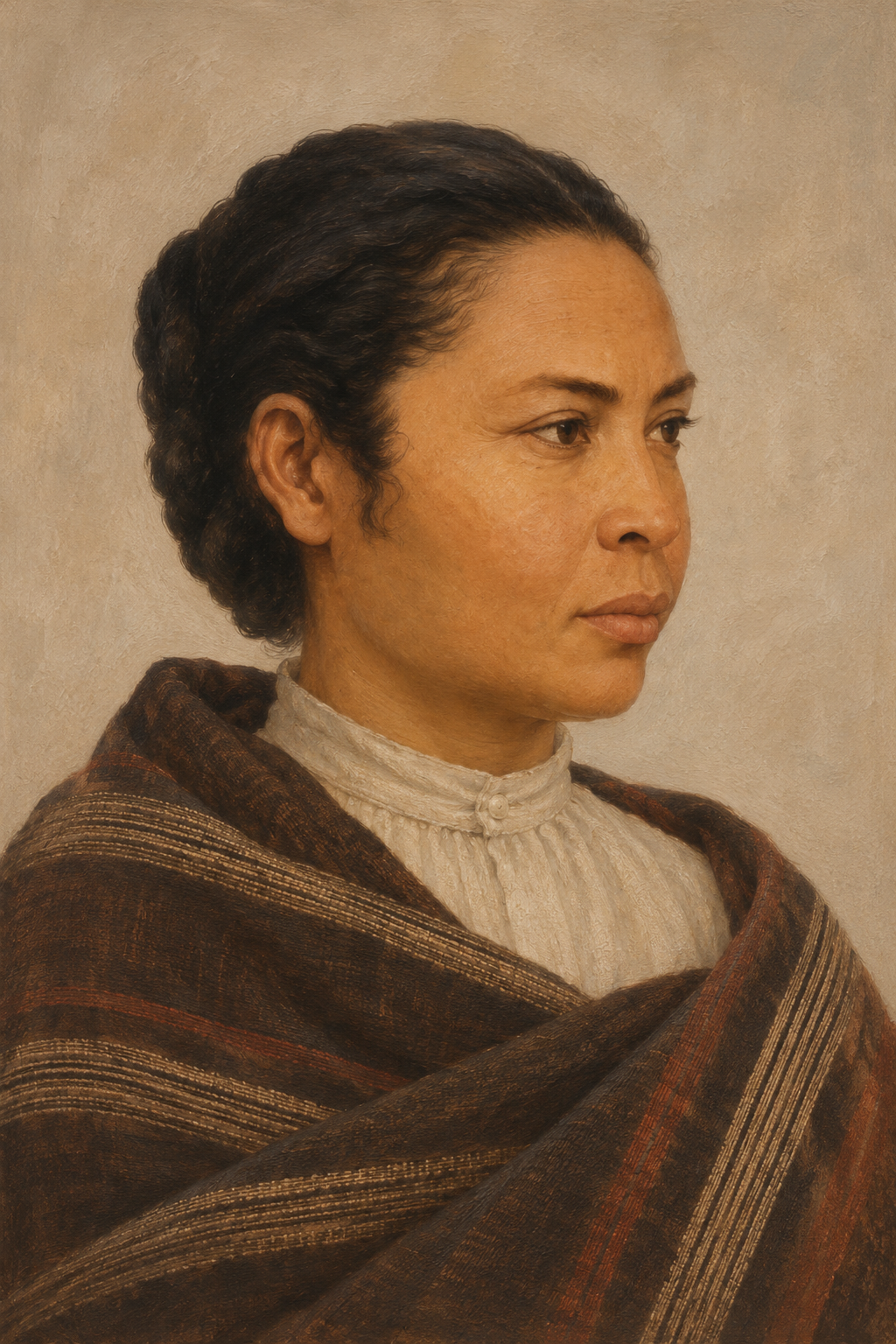
About Victoire Rasoamanarivo
Victoire Rasoamanarivo was born in 1848 into an influential family in Antananarivo, Madagascar. She entered the Catholic girls’ school opened by the Sisters of Saint Joseph of Cluny in 1861. Her attachment to that community and its teaching survived family attempts to move her to a Protestant school. She became a Catholic in 1863, receiving the name Victoire. Her religious choice was made within a family whose position connected her to the island’s political and social leadership.
In 1864 she married her cousin Radriaka, the eldest son of Prime Minister Rainilaiarivony. The marriage followed an arrangement within the family, and she insisted that it also be celebrated in church. Radriaka held an important military rank. Victoire’s later life therefore included responsibilities at court as well as within her own household. Her access to leading officials would become important when she intervened for other Catholics. The personal and public parts of her life were closely connected.
The marriage was unhappy, and her husband did not share her commitment to Catholic practice. She continued attending Mass, leading a women’s association and helping people in need. She also remained within the court circle, in which her religious priorities could appear unusual. Rabetafika’s account presents a woman maintaining a chosen faith amid strong pressures of family, status and expectation. That history describes her particular circumstances and decisions; it does not make the suffering within her marriage a requirement for other people’s religious lives.
John Paul II’s beatification homily connected her public work with a sustained habit of prayer. It remembered her finding time for worship amid other concerns and helping draw others into prayer. Her charity also involved personal contact. She visited poor people, sick people and prisoners, and offered what she had to relieve suffering. The pope emphasized that her privileged social position did not prevent her from approaching those who needed help. Her religious life had practical consequences beyond the household and the court.
The outbreak of war between France and Madagascar in 1883 placed the Catholic community in a precarious position. Foreign missionaries were expelled, and institutions associated with them became vulnerable. Before leaving, the parish priest entrusted members of the Catholic Union with the care of schools and churches. Victoire was asked to use her recognized authority and influence to support the faithful. Responsibilities that had previously rested heavily upon foreign clergy now had to be carried by Malagasy Christians themselves.
When churches were closed, she intervened to have them reopened. She attended gatherings and encouraged people to continue communal prayer despite the absence of priests. Her visits gave public support to communities that might otherwise have felt isolated. She also spoke for people facing restrictions or unjust proceedings because of their Catholic activities. Her place in a powerful family gave her a means of seeking protection for others, and she used it during a period in which religious allegiance had become entangled with political suspicion.
Delval’s historical account distinguishes Paul Rafiringa, the Catholic Union’s leader, from Brother Raphaël-Louis Rafiringa, the Malagasy religious who also assumed responsibility for Catholic life. The two did not always agree about how to proceed. Victoire sometimes helped reconcile their approaches. Members of the Union divided responsibility for districts around the capital, led Sunday gatherings and visited schools. This was shared community work, with different people contributing organization, teaching, influence and religious formation. Victoire’s importance lay partly in keeping those efforts together.
The community continued to instruct people preparing for baptism and to organize retreats and prayer. The 1989 homily recalled Victoire’s role in encouraging unity both in the capital and beyond it. Her leadership did not depend upon ordination or membership in a religious order. She was a laywoman using the relationships and responsibilities available to her. Catholic remembrance has consequently treated this period as an example of what laypeople can do when a community’s familiar structures are suddenly interrupted.
The missionaries returned after the war and recognized the community’s endurance. Victoire resumed her ordinary parish work and continued charity even as illness limited her strength. She died on 21 August 1894. Her memory remained important within Malagasy Catholic life, and John Paul II beatified her in Antananarivo on 30 April 1989. The recognition honoured a woman whose public responsibility had grown from an existing pattern of prayer, service and fidelity, rather than from any formal ecclesiastical office.
Later on the day of the beatification, the pope addressed the laity in Antananarivo. He recalled Victoire and Brother Raphaël as part of a wider history in which local Christians taught catechumens, led prayer and travelled to villages. The emphasis was on a community whose members had accepted their own responsibilities. Remembering Victoire in that setting also keeps visible the work of those who served beside her, many of whom did not receive comparable public recognition.
Francis returned to her example during his 2019 visit to Madagascar. Speaking to civil and religious representatives, he connected her faith with love for her country and its traditions, service to poor people and an attitude of dialogue. Her memory thus continues to address relationships across religious and social boundaries. Within Catholic devotion, she remains a figure through whom prayer, civic responsibility and the shared life of a people are considered together.
Wondering how to weigh the stories and sources? Learn how to read a saint biography.