Biography
Victor I
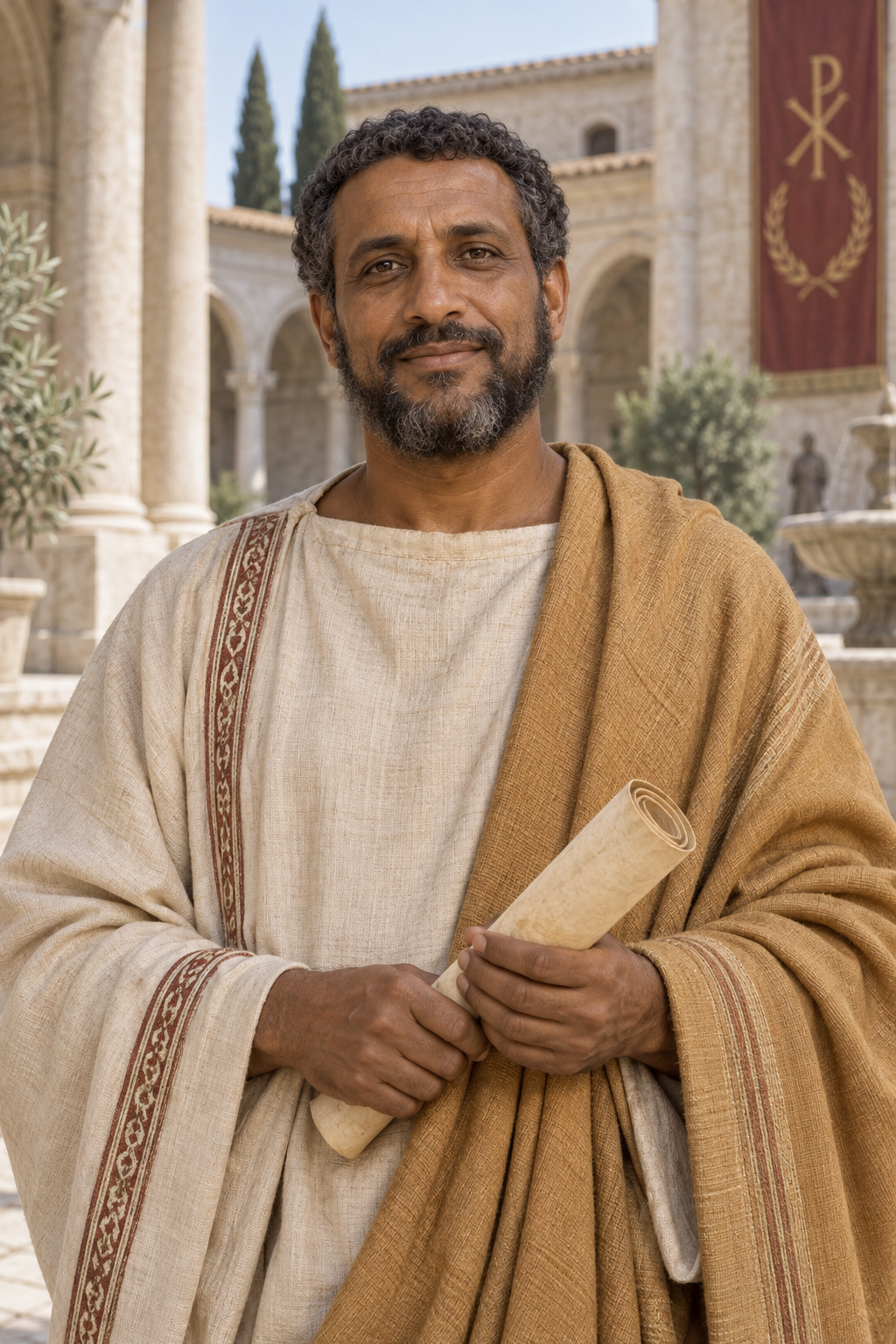
About Victor I
Victor led the church of Rome near the end of the second century. The Vatican's register places his origins in Africa and gives alternative years for the beginning and end of his pontificate. His early life remains largely outside the surviving record.
One account of his leadership concerns Christians condemned to the mines of Sardinia. The work attributed to Hippolytus describes Marcia, who had influence with the emperor Commodus, asking Victor for their names. Victor supplied a list, and Marcia obtained an order for their release. Hyacinthus carried the order to Sardinia. The episode presents a bishop working through an available personal connection to help prisoners, rather than acting alone.
The same account complicates that picture. Victor had left Callistus off the list, but Hyacinthus secured his release too. Although displeased, Victor arranged for Callistus to live at Antium with a regular allowance for food. The narrator was hostile to Callistus, so the details come through an adversary's account; even there, Victor's support is remembered.
A different challenge arose over the annual celebration of Easter. Eusebius records that churches in Asia maintained a fourteenth-day observance, while other churches ended their paschal fast on Sunday. Polycrates of Ephesus defended the inherited Asian practice in a letter to Victor. Victor attempted to exclude the dissenting churches from communion. Other bishops objected, and Irenaeus urged him not to break fellowship over the ancient custom. The disagreement involved communities that understood themselves to be preserving what they had received, not simply choosing a convenient date.
Jerome later remembered Victor as a writer on the Easter question and the author of other small works. He also recalled Irenaeus's warning against a hasty rupture between churches. That literary notice preserves the importance of correspondence in Victor's ministry, but offers little access to his personal life.
Victor also opposed Theodotus, whose teaching denied Christ's divinity. Kirsch's historical survey describes Victor excluding him from the church and notes that the resulting group continued independently. The same survey cautions that the later course of the Easter dispute under Victor is unknown. It does not establish that Victor withdrew his decision or achieved universal agreement during his lifetime.
Victor died around 199, although the ancient chronologies differ. There is no secure birth year with which to fill out a complete lifespan. His remembered career is therefore better told through these surviving episodes than through an invented childhood or a reconstructed account of his final day.
His African origin has remained important in Catholic remembrance. In Ecclesia in Africa, John Paul II included Victor among the African popes who belong to the Church's shared heritage. That remembrance places an early Roman bishop within a wider African Christian history, rather than treating Rome as an isolated world.
Wondering how to weigh the stories and sources? Learn how to read a saint biography.
Explore similar vocations
Prayers for Victor I
Victor I: sourced prayer excerpt
Sanctórum tuórum nos, Dómine, Nazárii, Celsi, Victóris et Innocéntii conféssio beáta commúniat: et fragilitáti nostræ subsídium dignánter exóret.