Biography
Victorinus of Pettau
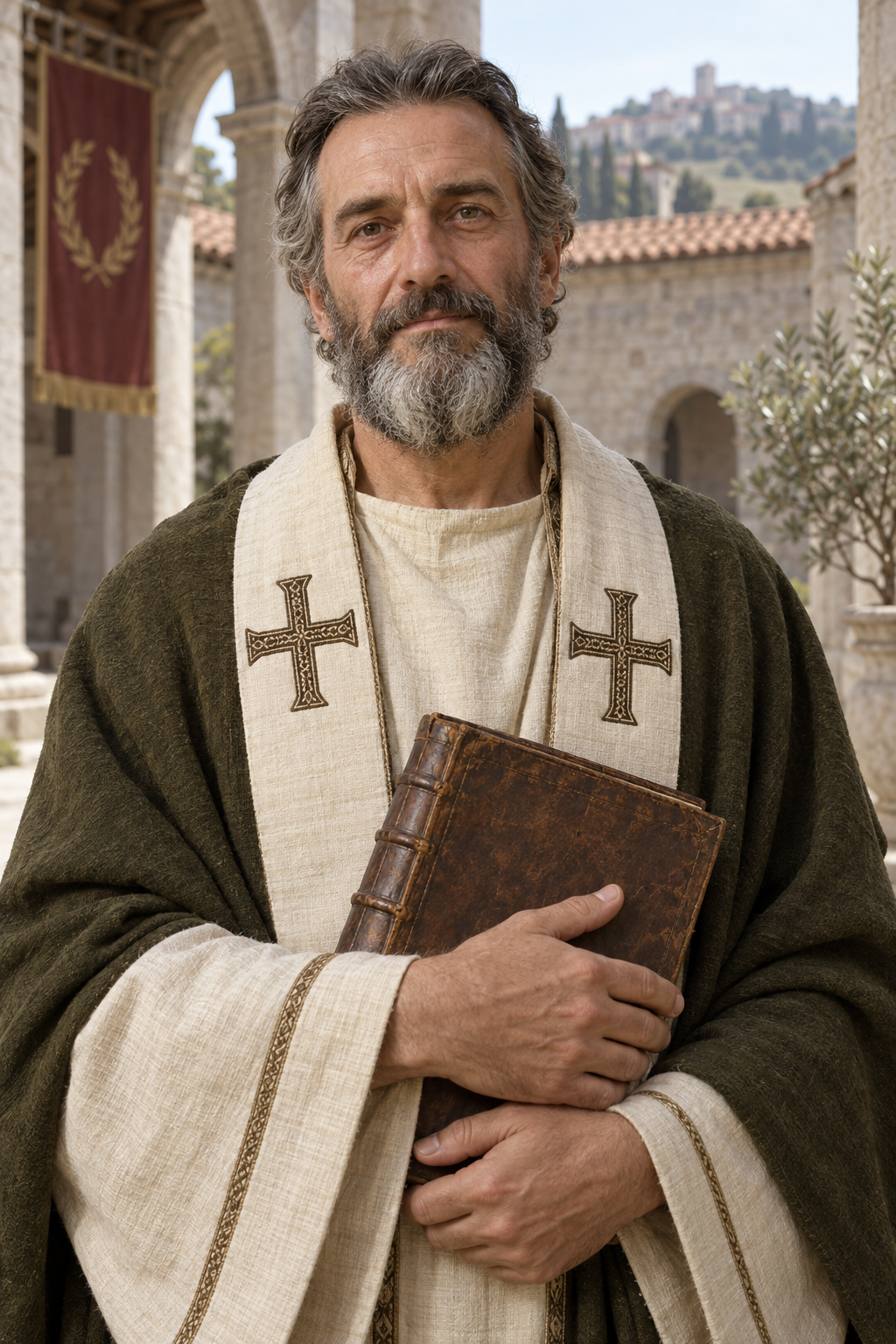
About Victorinus of Pettau
Victorinus led the church at Pettau, the ancient Poetovio, during the third century. His surviving record begins with his work as a bishop, not with a well-documented childhood. His early notice does not establish his birthplace.
He took on the demanding work of explaining Scripture in Latin. Jerome lists commentaries on Genesis, Exodus, Leviticus, Isaiah, Ezekiel, Habakkuk, Ecclesiastes, the Song of Songs and the Apocalypse, together with a work against heresies. The list suggests the breadth of his labour: he did not confine himself to a single favourite biblical book.
Victorinus drew on Greek Christian learning as he wrote for Latin readers. Martine Dulaey traces his use of earlier interpreters, including Irenaeus, Hippolytus and Origen, while stressing how little is known about him personally. She presents him as a reader who borrowed creatively, rather than merely copying his predecessors. He helped carry Greek biblical interpretation into Latin, making earlier teaching available in a different language.
In On the Creation, he considered the days of the week, the making of the world and Christian observance together. He moved between the ordinary experience of labour and rest and symbolic patterns drawn from Scripture. He urged fasting on particular days and thanksgiving on the Lord's day. The work also contains polemic against Jewish observance; that hostility should not be turned into guidance for relations with Jewish neighbours today.
His commentary on Revelation repeatedly brings its visions back to the reader's conduct. He rebukes those who investigate sacred mysteries but will not practise mercy. He calls for perseverance from people facing persecution, and for repentance from those whose Christianity has become little more than a name. Theological study and the care owed to others belong together in this teaching.
Jerome later revised the commentary, replacing its expectation of an earthly millennium. The revised ending cannot simply be read as Victorinus's own position.
Jerome could be severe about Victorinus's style. In a letter to Paulinus, he acknowledged the martyr's honour but judged that Victorinus struggled to put his knowledge into words. Yet in his dispute with Rufinus he also remembered Victorinus for an unguarded simplicity. These contrasting remarks preserve respect for the man without pretending that later readers admired every feature of his writing.
His life ended in martyrdom, as Jerome's early notice records. Clugnet suggests 303; modern discussion also records an earlier date. Neither the precise day nor the circumstances can be established securely.
Wondering how to weigh the stories and sources? Learn how to read a saint biography.