Biography
Vida Dutton Scudder
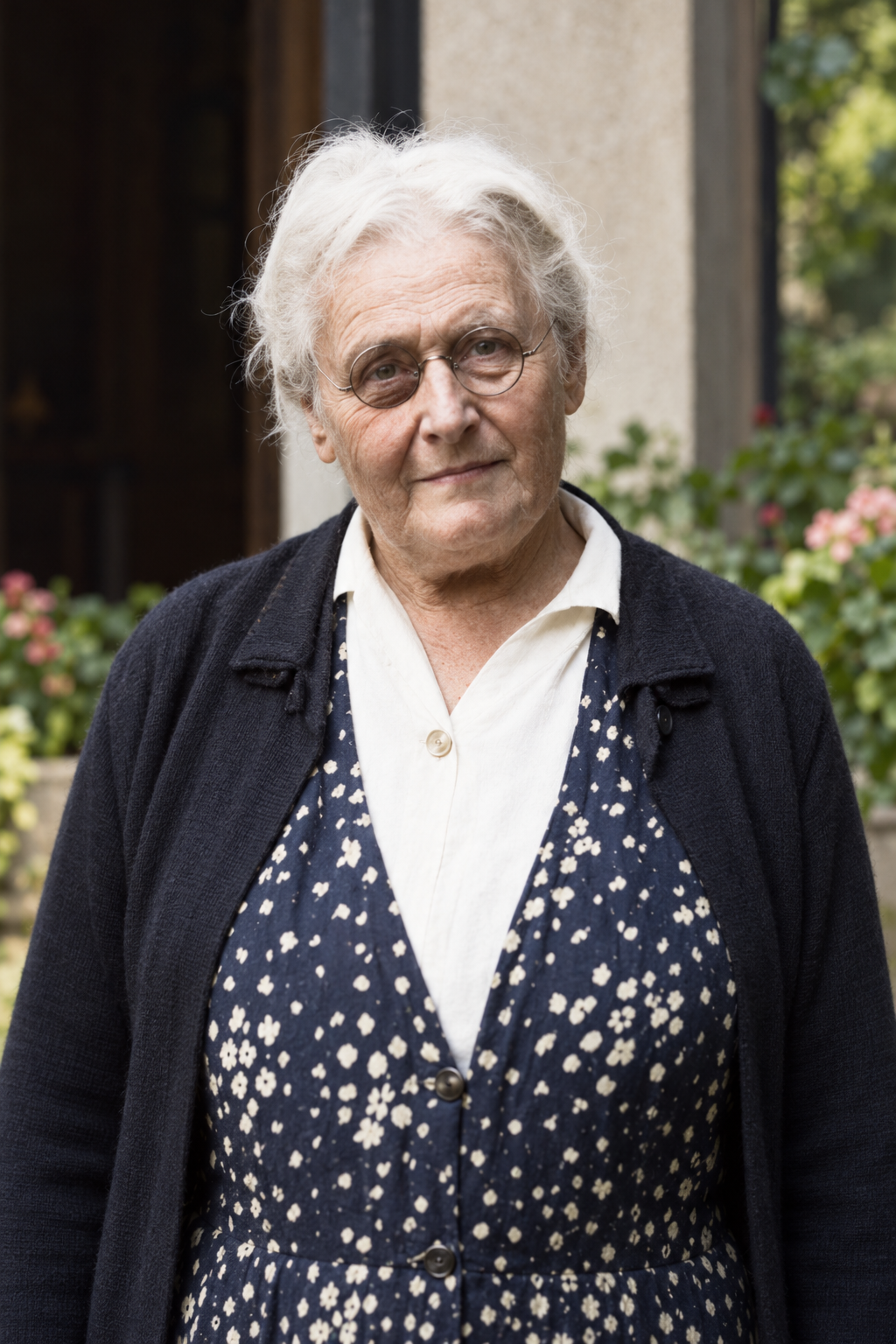
About Vida Dutton Scudder
Vida Dutton Scudder brought teaching, Christian devotion, and social reform into a demanding public life. An Episcopal laywoman and longtime Wellesley professor, she helped organize settlement work and supported workers seeking better conditions. She also studied Christian history and argued that religious belief should shape the economic choices of churches and their members.
Born in Madura, India, on December 15, 1861, Scudder was the daughter of David Coit Scudder and Harriet Louisa Dutton. After her father drowned, her mother brought her to Massachusetts. She graduated from Smith College in 1884 and continued her studies at Oxford, where John Ruskin’s lectures strengthened her interest in social questions. She began teaching English at Wellesley in 1887.
Her academic work developed alongside settlement organizing. She helped establish the College Settlements Association and worked with its houses in New York and Philadelphia. Unlike some settlement leaders, she did not become a permanent resident: teaching and responsibility for her mother shaped what she could undertake. She joined the Socialist Party in 1911.
Labor conflict made these commitments contentious. In 1912, Scudder supported striking textile workers in Lawrence, Massachusetts. Her involvement provoked criticism and calls for her removal from Wellesley, but she retained her teaching position. The controversy exposed the difficulty of combining a college career with public support for workers challenging powerful employers. Her sympathy for organized labor was expressed in action as well as writing.
In Socialism and Character, published that year, she questioned whether charitable effort could overcome conditions that continually produced suffering. The passages reproduced by the Social Welfare History Project move from individual assistance toward wages, working hours, and economic arrangements. Scudder did not dismiss personal generosity. She asked readers to consider its limits when the circumstances surrounding poor families remained unchanged. For her, the formation of character and the organization of society belonged in the same discussion.
A July 1912 letter to Jane Addams reveals the personal exchange behind this public work. Scudder thanked Addams for sending a book and asked for her judgment of Socialism and Character. She hoped Addams might join the socialists, while recognizing the importance of hearing her criticism. In the same letter she described building a home in Wellesley for herself and her mother and invited Addams to visit. Intellectual disagreement, political hopes, family responsibilities, and hospitality occupied the same pages.
Scudder had already challenged colleges to examine their financial relationships. In her 1900 Atlantic Monthly article, Ill-Gotten Gifts to Colleges, she considered donations linked to questionable sources of wealth. Public suspicion alone, she argued, need not settle the matter; institutions should investigate and explain their decisions. Nor did refusing a gift necessarily amount to an accusation against its donor. Her concern was whether accepting money would compromise educational independence and public trust.
The article resisted easy rules. Scudder distinguished direct gifts from bequests and considered the position of relatives who had inherited wealth. She also raised the possibility that support from many smaller donors could reduce dependence on a few fortunes. These were arguments about institutional responsibility, rather than a report that she had persuaded a particular college to reject a particular donation.
Her religious writing connected these questions with prayer. In the preface to The Church and the Hour, she acknowledged her own socialism without insisting that the church adopt a political system. She wanted Christians and social radicals to take one another seriously. In its chapter on social intercession, she urged prayer concerned with workers, justice, and shared conditions of life. Such prayer, in her account, belonged alongside practical effort and could not be confined to private comfort.
She also warned that enthusiasm for reform could become a substitute for seeking God. Drawing on Christian mystical writing, she defended contemplation while refusing to abandon social responsibility. Her examples were concrete: protection for children at work, relief from oppressive conditions, and reconciliation during labor conflict. She proposed that churches organize periods of prayer around specific injustices, with participants learning about the issue beforehand. People prevented by illness or disability from joining public work could participate through intercession. These were expressions of her religious conviction, not claims that the historical record can verify prayer’s effects on particular events.
Her position on war changed. Although she supported American participation in the First World War, she moved toward pacifism afterward. That development forms part of her history; describing her as opposed to every war throughout her life would erase it.
Scudder remained closely involved with the Society of the Companions of the Holy Cross, which she had joined in 1889. In later life she published autobiographical writing and continued theological study. She shared a home for decades with writer Florence Converse. She died at home in Wellesley on October 9, 1954.
The Episcopal Church commemorates her on October 10 as an educator and witness for peace.
Wondering how to weigh the stories and sources? Learn how to read a saint biography.