Biography
Virginia Centurione Bracelli
About Virginia Centurione Bracelli
Virginia Centurione Bracelli was born in Genoa on April 2, 1587. The public page should preserve her Genoese setting because city, family, marriage, widowhood, and charitable houses all belong to the same story.
She came from a noble family and married Gaspare Grimaldi Bracelli. The marriage and widowhood should be written as part of her lay vocation, not as a prologue to a monastic life.
That lay vocation is the heart of the page. Virginia used the position, relationships, and resources available to her as a widow in Genoa for works of mercy that required both compassion and practical organization.
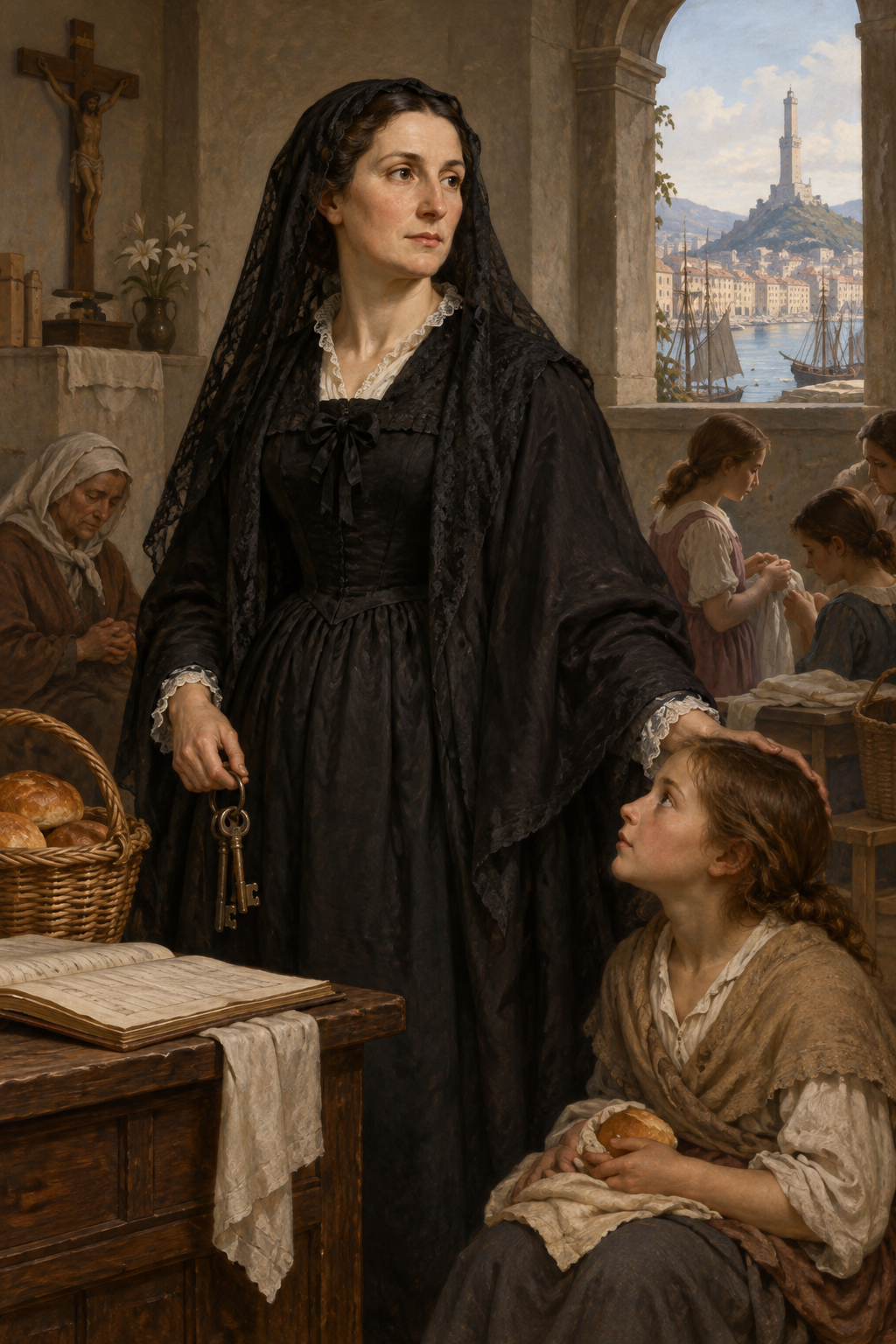
The current catalog classifies her as a layperson, and this draft preserves that classification. Her art should show modest widow's dress and veil, not a religious habit.
This is not a small visual detail. If the art made her look like a nun, it would mislead readers about the kind of holiness the page is presenting: lay charity inside civic and family responsibilities.
After widowhood, Virginia directed her resources and authority toward poor people and abandoned girls in Genoa. The page should describe that work with dignity, avoiding sentimental poverty scenes or anonymous suffering.
The people she served should be presented as neighbors, not as scenery. A bread basket, ledger, keys, and charitable-house room can suggest service while the prose protects personal dignity.
Her charitable houses and foundations should be presented as organized mercy. Keys, ledger, bread, and a charitable-house setting can suggest administration and care without turning the page into institutional history.
Administration mattered because mercy needed structure. Virginia's witness is not only that she felt compassion, but that she helped create places where protection and daily care could continue.
The Holy See biography supports the main life arc: noble birth, marriage, widowhood, charitable service, and enduring foundations. The page should keep that arc clear for readers.
That clarity will also prevent confusion with religious foundresses who entered convents. Virginia's path moved through marriage, widowhood, civic charity, and organized refuge.
The Dicastery profile provides official cause context and supports the structured identity fields. This draft uses it without adding unsourced counts of houses, sisters, or current ministries.
The Monte Calvario source can help connect the charitable tradition to later memory, but current institutional claims should remain out of the public page unless separately reviewed.
Current ministries may be valuable, but this packet does not need statistics or present-day scope. The slow-vetted page should stay with Virginia's life and the charitable tradition directly tied to it.
That choice keeps the biography from becoming a catalog of later institutions. For readers, the strongest historical point is simpler and more concrete: Virginia saw need in her own city and helped answer it with houses, order, money, and sustained attention.
The page should also avoid making her widowhood disappear behind the later foundations. Her sanctity is tied to the ordinary social facts of her life: family name, marriage, widowhood, property, reputation, and civic belonging became tools of service.
Those details matter because they show why the class "Layperson" is not merely a database value. It tells readers that Virginia's road to holiness remained inside the duties and possibilities of lay life, even as her work took a public and lasting form.
The existing catalog records death on December 15, 1651, but leaves death place blank. Genoa is the strong context, yet this draft preserves the blank field until final corroboration and approval.
That field restraint keeps the database honest. The biography can be saturated with Genoa because the life is Genoese, while the structured death place waits for explicit final evidence.
Virginia was canonized in 2003. The public page can mention that recognition, but the center should remain her lay charity: social position converted into protection, welcome, and organized service.
Canonization should not flatten her into generic sainthood. Her particular gift was making influence, household management, and civic standing serve vulnerable people.
Her witness is useful wherever influence can become shelter for vulnerable people. The page can invite readers to use status, property, and skill as tools of mercy rather than self-display.
That reader invitation should be practical. It asks what resources can open a door, pay a cost, organize a response, or make a vulnerable person safer.
Artwork should show a seventeenth-century Genoese widow in modest dark dress and veil, with keys, ledger, bread basket, charitable-house setting, and old Genoa visible through a window. Avoid monastic habit, halos, logos, modern objects, crowded poverty spectacle, exact-likeness claims, and rendered text.
The badge crop should center Virginia's face, widow dress, and keys. Background figures can remain peripheral so the small image does not become crowded or sentimental.
The final page should leave readers with a laywoman who made charity concrete: doors opened, bread shared, houses organized, girls protected, and influence placed at the service of mercy.
Wondering how to weigh the stories and sources? Learn how to read a saint biography.