Biography
Wenceslao Pedernera
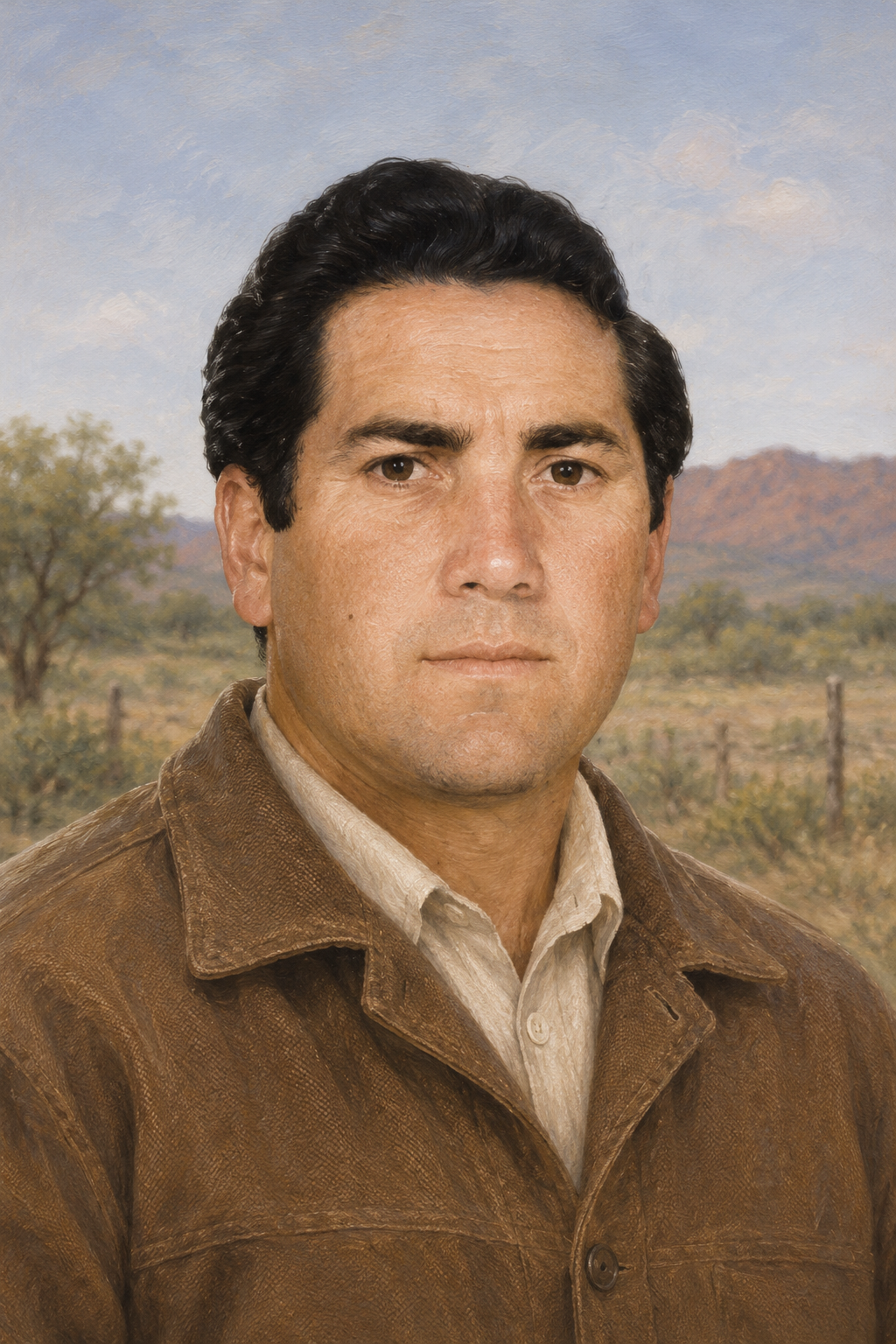
About Wenceslao Pedernera
Wenceslao Pedernera’s life was rooted in rural work and family responsibilities. He was born in the La Calera area of San Luis in 1936. His brothers Antonio and Mariano later remembered a childhood of helping their father with harvests and attending school in periods when teachers came to the countryside. They recalled a quiet, thoughtful brother who enjoyed friends and football. He played forward and scored the goals, a detail that remained vivid in their memories many years after his death.
His brothers also remembered that he brought his earnings home to help the family. Their account places generosity within ordinary household obligations rather than only in the public work of his later years. After he married and had children, he returned to visit with his wife and daughters. These are retrospective family recollections, but they preserve a view of a son, brother and father alongside the later public memory of a martyr.
Their household memories include work, friendship and religious belief.
He settled in Mendoza and worked in the vineyards associated with the Gargantini winery. In 1962 he married Marta Ramona Cornejo, known as Coca, and they had three daughters. Coca’s religious practice gradually drew him toward more active participation in the church. The diocesan biography identifies the novena of Our Lady of Carrodilla in 1968 as an important turning point. Listening to preaching and the Gospel led him into a life that included regular worship and participation in the Catholic rural movement.
Faith became something the couple shared with other families. They read the Gospel together and took part in formation connected with the rural movement. In La Rioja, the work of Bishop Enrique Angelelli linked religious life with the dignity of people who worked the land. Wenceslao and Coca joined that effort. Their service included catechesis and gathering clothing for people in need. The biography remembers him teaching practical skills such as plowing, sowing, making irrigation channels and harvesting.
The diocese’s 2023 account, drawing on family memories, describes a man attentive to his children’s schooling and willing to make time to play with them. Coca remembered responsibility, affection and concern for the household’s wellbeing. The same account records prayer and Gospel reflection before or after work. His religious commitment therefore belonged to the rhythms of a working family, rather than to a life set apart from it.
Practical help took many forms. He shared produce from the garden, lent tools and helped take sick people to a doctor, including at night. Teaching others to work the land and working cooperatively belonged to the same concern for neighbors. The diocesan account does not describe every cooperative undertaking as easy or harmonious. It acknowledges disagreement over shared work and differences of understanding that led some participants to leave. His commitment developed amid those ordinary difficulties as well as the greater dangers of the period.
The family eventually lived at Sañogasta in La Rioja. On 25 July 1976, armed men came to the house during the early hours of the morning and shot Pedernera. The later prosecution account places his wife and three daughters there at the time. His wife and a neighbor helped take him to the Hospital Eleazar Herrera Motta in the city of Chilecito, where he died several hours later. Sañogasta was the place of the attack; Chilecito was the place of death.
The judicial record also concerns what happened to the family afterward. The public prosecutor’s report describes charges arising from the unlawful detention of Coca and the children at the hospital. In December 2023, the federal trial court sentenced former gendarmerie officer Eduardo Abelardo Britos to life imprisonment for crimes against humanity, including responsibility for Pedernera’s murder. The verdict was a criminal judgment about state repression. It is distinct from the Catholic process recognizing his martyrdom.
The Catholic Church beatified Pedernera with Angelelli, Carlos de Dios Murias and Gabriel Longueville in 2019.
Later remembrance has also sought to recover the family’s experience. In an interview about her book Coca y Wence, Sister Silvia Somaré explained that covering the criminal trial led her to see a story of marriage and love that could be obscured by accounts focused chiefly on the killing. Her research included conversations with people who knew the couple. The diocesan report gives particular attention to Coca and to the life she and her daughters continued after Wenceslao’s death.
That perspective matters to the memory of a lay martyr. Pedernera’s story includes the work of his wife, their shared home, the care of children and the demands of earning a living. The book’s author presents Coca’s continuing simplicity and forgiveness as part of the history, rather than treating the family only as witnesses to an event in 1976. Remembering him through those relationships preserves the setting in which his faith and service took shape.
Wondering how to weigh the stories and sources? Learn how to read a saint biography.