Biography
William Claire Menninger
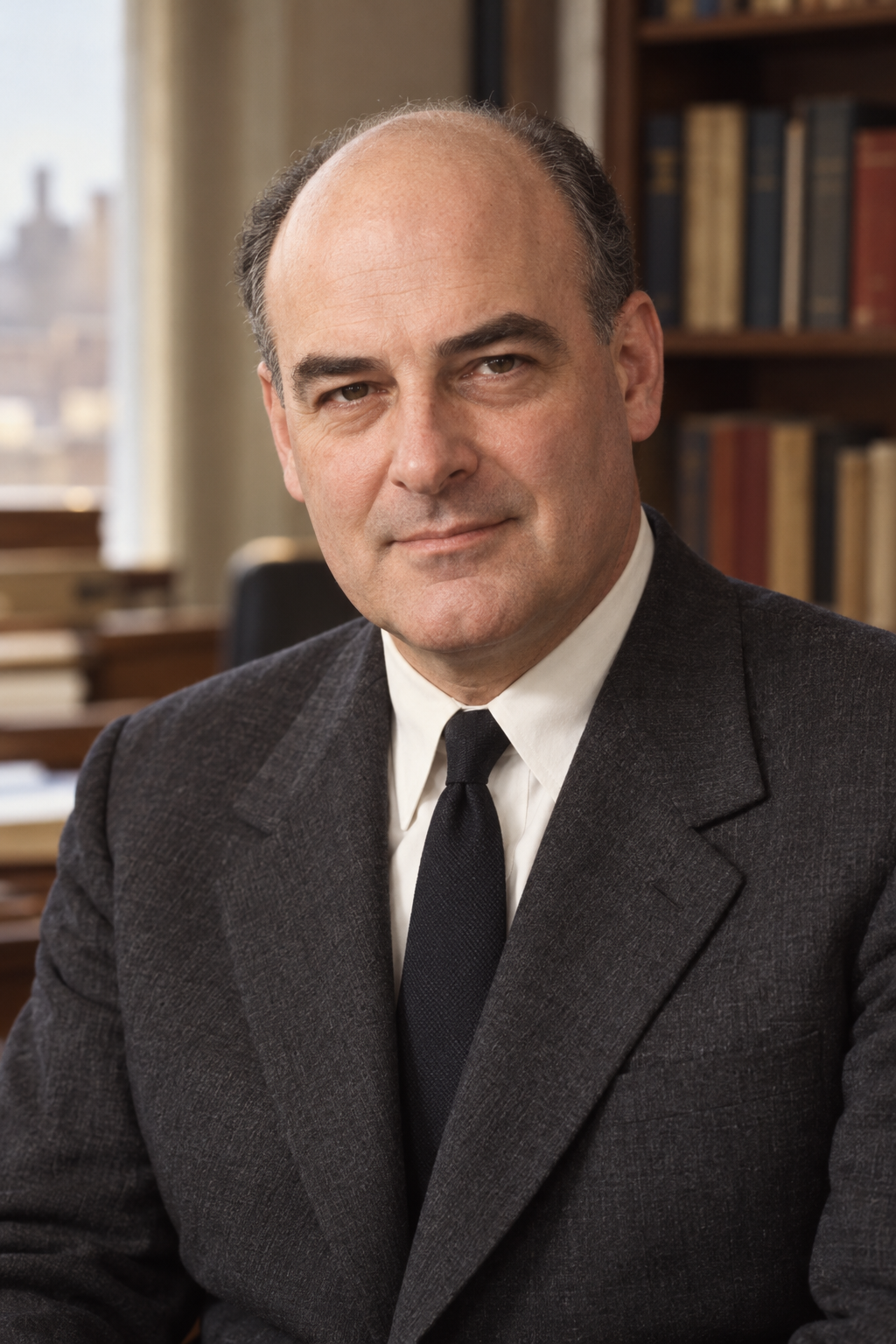
About William Claire Menninger
William Claire Menninger was born in Topeka, Kansas, on October 15, 1899. He was the youngest of Charles Frederick and Flo Menninger’s three sons. After graduating from Washburn in 1919, he studied medicine at Cornell, completing his degree in 1924. He trained at Bellevue Hospital in New York and then studied psychiatry at St. Elizabeths Hospital in Washington. His early interests had been closer to his father’s internal medicine than to his brother Karl’s psychiatry.
He married Catharine Wright in 1925, and they had three sons. At his family’s urging he returned to Topeka and joined the practice. He became interested in the effects of a patient’s surroundings and social relationships. His approach drew on observations from nurses, activity therapists and other caregivers as well as the psychiatrist. The hospital environment itself became part of the work of treatment.
The family’s institution combined treatment with education and research. William became its hospital medical director in 1930 and foundation president in 1957. His career increasingly involved explaining psychiatry to audiences beyond the consulting room. He appeared before state legislatures to advocate expanded mental health services and traveled widely on behalf of the institution.
During the Second World War he served in the Army, eventually becoming a brigadier general responsible for its psychiatric program.
In his later account of military psychiatric education, Menninger described an urgent shortage of specialists. Civilian training had often centered on institutional care, while Army doctors faced a different range of problems. Experienced psychiatrists also needed to learn military regulations and administrative procedures. His account presents the training program as a response to pressing needs rather than the execution of a complete prewar plan.
The School of Military Neuropsychiatry initially offered a short course for doctors who already had psychiatric or neurological experience. In 1944 the program changed to include twelve weeks of instruction for medical officers without previous psychiatric training. The courses combined clinical work, demonstrations and discussion with lectures. Menninger recorded the contributions of other officers who organized and directed the school. His narrative makes clear that training enough practitioners required a collective effort across hospitals and teaching staffs. By the end of the school’s wartime courses, it had trained exactly a thousand students. Its curriculum included psychological testing and clinical neurology alongside psychiatry, administrative problems and the military training required of medical officers.
After the war, he helped organize the Group for the Advancement of Psychiatry. The group formed in May 1946, drawing heavily on psychiatrists who had served in the military. They were dissatisfied with gaps in prevention, treatment and professional leadership. Menninger became its chairman, with Henry Brosin as secretary. Its ambitions extended into civilian life, including government, industry and other settings where psychiatric knowledge might be used. This was an effort to widen the profession’s public responsibilities, not simply to create another clinical institution.
He also became president of the American Psychoanalytic Association in 1946. Historian Rebecca Jo Plant describes his effort to make psychoanalysis more closely connected with medicine and more accessible to the public. He proposed that psychoanalytic institutes move toward integration with medical centers and challenged the requirement that every prospective member undergo a personal training analysis. The membership rejected his proposals. Other analysts feared that such changes would weaken psychoanalysis as a distinct discipline.
These disputes also involved exclusionary attitudes. Plant documents a 1939 letter in which Menninger disparaged psychoanalytic colleagues and described the arrival of emigrants as making the group more bizarre. His wish to make the profession more outward-looking coexisted with hostility toward people who had come from elsewhere. This evidence complicates an account of professional reform as an uncomplicated widening of welcome.
Historian Andrew Scull identifies another boundary in the Menningers’ approach: the insistence that physicians should lead mental health treatment teams. In 1946 this position hindered David Rapaport’s efforts to develop training for psychologists at the clinic. The growing field of clinical psychology increasingly sought its own professional standing. William’s story therefore belongs not only to the expansion of care but also to disputes over who could provide it and who would exercise authority.
His books included Psychiatry in a Troubled World, You and Psychiatry and Enjoying Leisure Time. Through writing and public appearances he sought to persuade people that emotional distress deserved serious attention. He died at his home in Topeka on September 6, 1966, while still president of the foundation.
His surviving papers preserve the work of an administrator, fundraiser and advocate, alongside his interests in birds, stamp collecting and Scouting. Fundraising took him away from Topeka for extended periods, connecting the foundation’s daily work with supporters in other places.
His wartime and postwar work helped move psychiatric attention beyond the hospital ward. The same history includes contested claims to expertise and power, as care expanded into new areas of public life. A March 6 service at Trinity Episcopal Church in Asbury Park commemorates him.
Wondering how to weigh the stories and sources? Learn how to read a saint biography.