Biography
William James Mayo
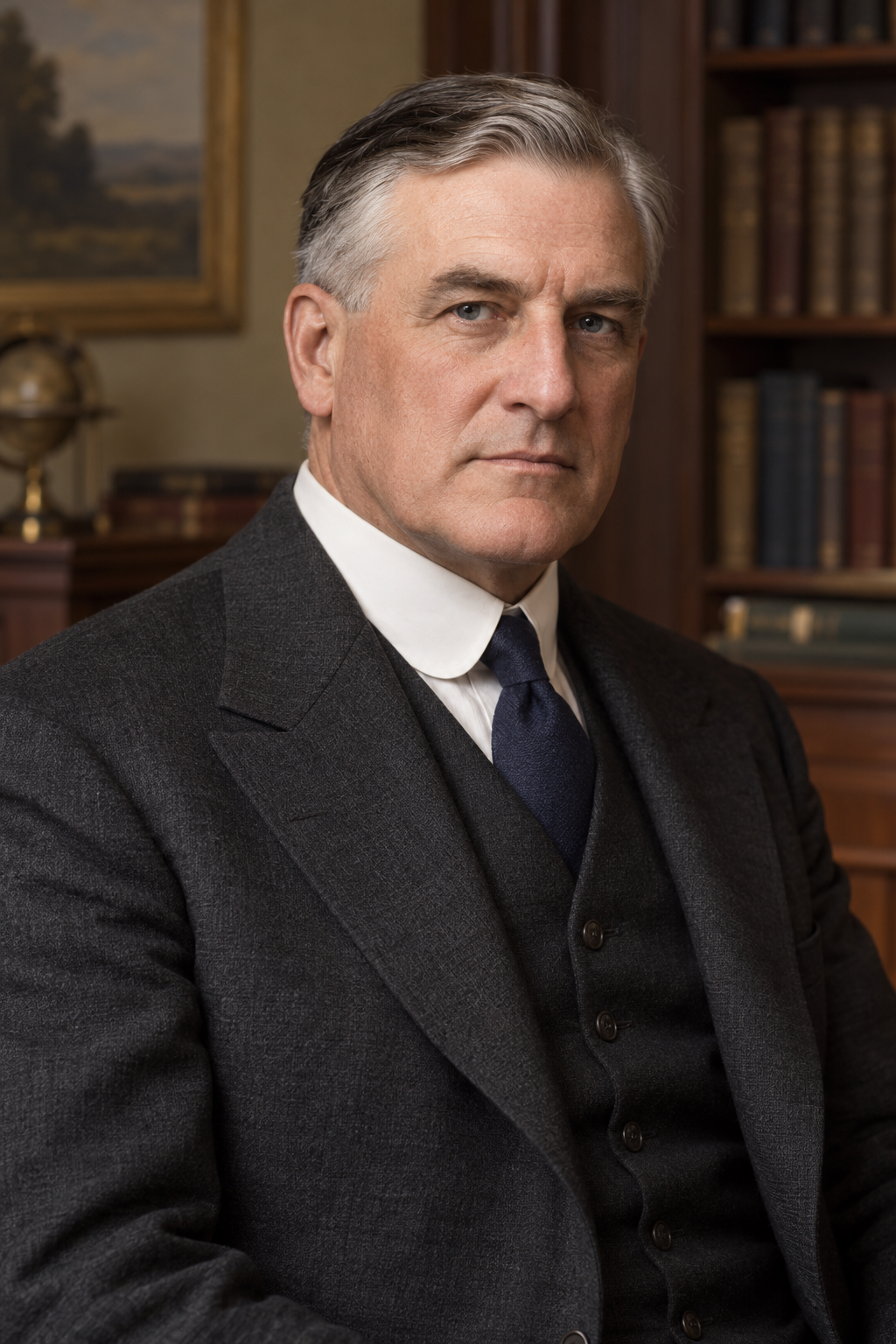
About William James Mayo
William James Mayo was born in Le Sueur, Minnesota, on June 29, 1861. His father, William Worrall Mayo, practiced medicine there before moving the family to Rochester. The boys’ early education included a troubling use of human remains: their father used the skeleton of a Dakota man executed after the war of 1862 to teach them anatomy. The younger Mayo was a child when the body was obtained. His later achievements should not obscure this history, but neither should his father’s actions be attributed to him as though he had carried them out.
Known as Dr. Will, he studied medicine at the University of Michigan and graduated in 1883. He returned to Rochester to work with his father. His younger brother Charles, known as Dr. Charlie, joined them after completing medical school in 1888. The brothers had already accompanied their father on patient visits and assisted with operations. Their professional lives developed from that early exposure, although each brought further training to the family practice.
The partnership grew within an institution that depended on much more than the two surgeons. Historian W. Bruce Fye identifies the Franciscan sisters and the development of hospital-based aseptic surgery as essential to the clinic’s origins. The sisters opened and staffed St. Mary’s Hospital in 1889. As the practice expanded, physicians with different specialties worked together around individual patients. In 1914 the outpatient practice moved to a building designed for that shared work. Fye also describes Will as a dominant figure whose expectations of professional conduct shaped the organization.
Nurses and other colleagues made the brothers’ surgery possible. The hospital employed Edith Graham as an anesthetist, and Alice Magaw succeeded her. When the volume of operations grew, the brothers moved from assisting one another in a single operating room to working in separate rooms. Their practice therefore relied on people entrusted with anesthesia as well as on the surgeons themselves. The history of this collaboration belongs alongside the more familiar story of the Mayo name.
Will developed particular expertise in abdominal surgery. His work included operations on the stomach and intestine and surgical treatment of rectal cancer. Medical leadership became another part of his career: he served as president of the American Medical Association, the American Surgical Association and the American College of Surgeons. He also served on the University of Minnesota’s Board of Regents. Together with Charles, he contributed funds in 1915 to establish the Mayo Foundation for Medical Education and Research in association with that university.
During the First World War, Will advised the United States Army’s surgical services. He had been named chairman of the Committee of American Physicians for Medical Preparedness in 1916. The brothers divided their time between Washington and Rochester so that one remained available at the clinic. This arrangement joined national responsibilities with the work they continued to oversee at home. The strain affected their health; Will suffered jaundice in 1918.
His public influence also supported harmful ideas. In a 1923 address at Boston City Hospital, Mayo linked poverty to supposed hereditary inferiority and mental instability. He defended restrictions on immigration, expressing hostility toward people from southern Europe and endorsing the exclusion of Chinese immigrants. He treated these groups as dangers to public health and national life. These arguments appeared within an address that also called for better medical research, postgraduate education, and hospital care. The combination is important: his support for improving institutions coexisted with a racial hierarchy that shaped his understanding of whom they served.
Mayo also discussed intelligence as a supposedly fixed characteristic and questioned whether education could overcome the limitations he attributed to some citizens. His account of public welfare divided people into economic assets and liabilities. The address documents these views without establishing every position later associated with the eugenics movement; it contains no explicit proposal for sterilization.
The Mayo children had grown up in Calvary Episcopal Church in Rochester, where their parents were early members. The family’s medical partnerships crossed denominational lines through their work with Catholic sisters. The parish’s history preserves both the family connection and the wider religious cooperation around care for the sick.
Will retired in 1928. Charles’s career ended later after a series of strokes. Their closely linked working lives thus came to an end before their deaths within a few months of one another.
Will died in Rochester on July 28, 1939, two months after Charles. The institution continued under colleagues whom the brothers had brought into positions of leadership.
One lasting part of their work was postgraduate education. Fye reports that the institution had trained about fifteen hundred residents by the time the brothers died. The clinic’s influence therefore extended beyond the operations performed in Rochester to physicians who carried specialized training into their own careers. Its history brings together family ambition, the sisters’ work, institutional organization and the expertise of many collaborators.
Wondering how to weigh the stories and sources? Learn how to read a saint biography.