Biography
William Alfred Passavant
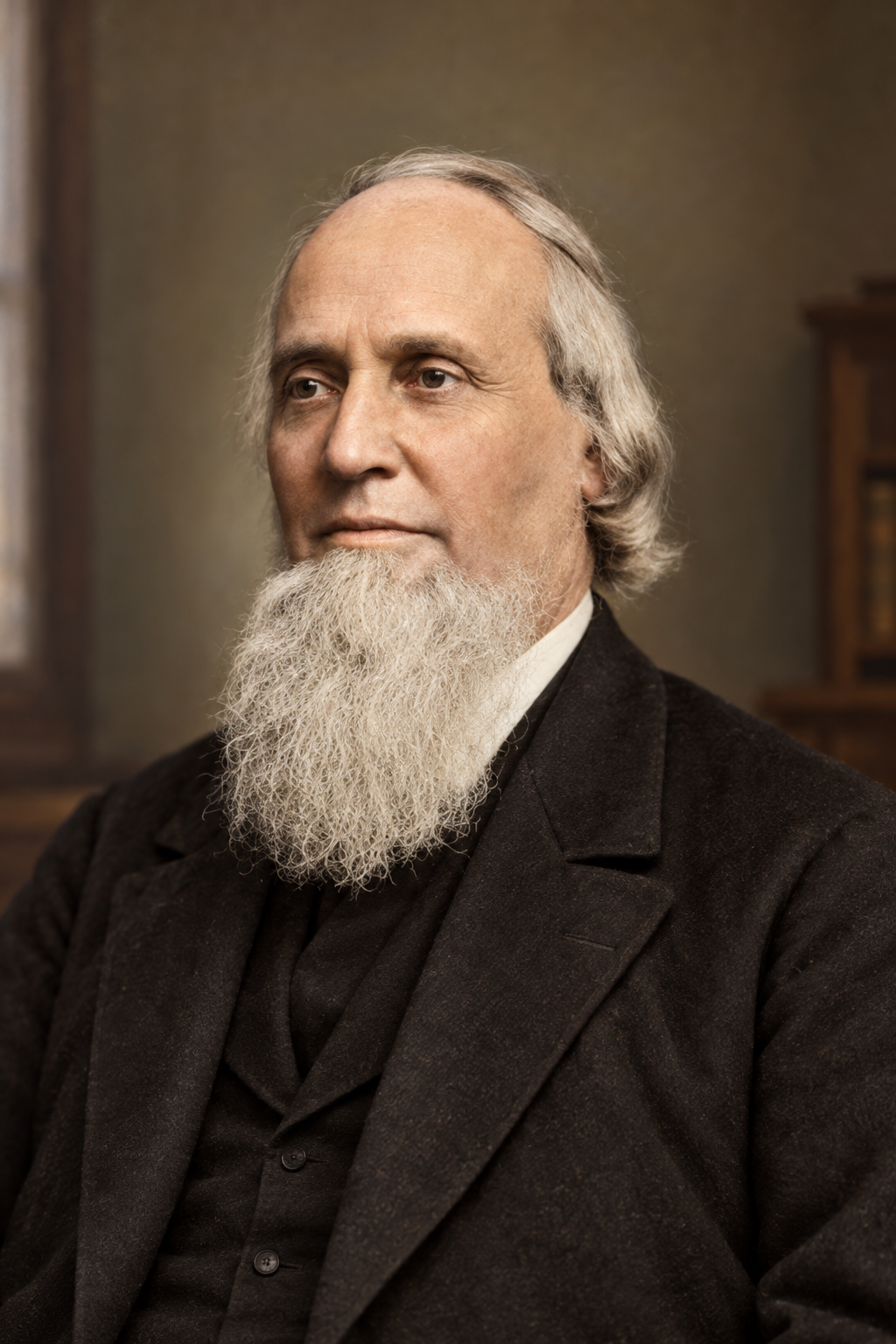
About William Alfred Passavant
William Alfred Passavant was a Lutheran pastor whose ministry brought together congregational work, publishing, education, and care for people in need. Born in Zelienople, Pennsylvania, in 1821, he graduated from Jefferson College in 1840 and was ordained in 1842. He served in Baltimore before becoming a pastor in Pittsburgh in 1844. In a later recollection of his student years, he described seeking subscribers to a German religious newspaper and walking through winter weather to visit prospective readers. The recollection connects his early interest in church publications with the editorial work that later became part of his ministry.
Eliza Walter, whom Passavant later married, remembered meeting him when he visited the minister Krauth in Baltimore. She was introduced to him at tea, and their friendship developed through further visits. Writing late in life, she recalled his unassuming manner and trust in divine help amid the difficulties of serving a modest congregation. Her account places their engagement after he had moved to Pittsburgh and returned to Baltimore for a visit. They planned to wait until he had spent a year in Pittsburgh before marrying.
Thomas H. Lane, a longtime member of his Pittsburgh congregation, remembered the difficulties Passavant faced when he arrived. The church carried a heavy building debt and had struggled to retain its pastors. Lane described Passavant encouraging the congregation, organizing its work, and helping it grow. Sunday-school teaching, regular religious instruction, and small fundraising societies were part of that effort. He also remembered care for sick and poor people, and assistance for young men seeking an education for ministry. After Saturday classes, Passavant sometimes walked with the young people over the nearby hills. The recollection also describes families outside his denomination seeking his help during illness or bereavement when their own pastor was absent. This is the testimony of an appreciative parishioner, preserved in the biography, rather than a statistical record of the congregation’s growth.
A visit to Germany in 1846 brought him into contact with deaconess institutions. These communities of women engaged in nursing and other forms of Christian service became a model for work he helped establish in America. He brought German deaconesses to serve in institutions whose reach extended from western Pennsylvania to Chicago and Milwaukee. Alongside hospitals and orphanages, he worked to organize congregations and synods. His newspapers, The Missionary and The Workman, gave him another means of communicating with Lutheran readers and supporters.
The Pittsburgh Infirmary opened in the city’s Hill District in 1849. The hospital later moved north following community fundraising and eventually became part of UPMC. Its institutional history traces the present hospital back to that nineteenth-century beginning.
A hospital report reproduced in his early biography describes four deaconesses arriving from Kaiserswerth with Theodore Fliedner. Their institution was intended both to care for sick people and to train women for service elsewhere. The report records a rule forbidding preference among patients on grounds of creed, country, or color. It also explains that admitting people with chronic illnesses meant beds could remain occupied for months. These are the institution’s stated principles and reported practices; they do not establish how every patient was treated.
Education was another part of his work. Thiel College credits his leadership in its foundation, together with the financial support of Louis and Barbara Thiel. Their gift of $4,000 in 1865 came from profits on an oil investment. Thiel Hall opened as an academy the following year in Phillipsburg, later called Monaca. Its first five students included three women, and enrollment reached thirty by the end of the year. In 1870 the institution received a college charter and moved to Greenville. The distinction matters: the academy preceded the college, and the work depended on donors and teachers as well as Passavant.
In Chicago, Passavant founded the fifteen-bed Deaconess Hospital in 1865. The Institution of Protestant Deaconesses managed it. Fire destroyed the hospital in 1871, but his involvement in medical care continued. In 1885 he opened an Emergency Hospital for people injured in the city’s factories, railroad yards, and businesses. After his death, that hospital was renamed Passavant Memorial and became a general hospital.
In a letter to his son during his final illness, Passavant described the frustration of being unable to continue his work. He reported weakness and loss of appetite, and said that his doctor had stopped his proposed visit to the Wartburg. He asked his son to take his place if he was there. The letter preserves his own account of illness and interrupted plans; it does not establish a medical diagnosis or prove his explanation of how he became ill.
He died at his home in Pittsburgh on June 3, 1894. The notice reproduced in Gerberding’s biography gives that date explicitly.
The ELCA remembers him on November 24 with Justus Falckner and Jehu Jones as pastors in North America. This entry records that Lutheran commemoration.
Wondering how to weigh the stories and sources? Learn how to read a saint biography.