Biography
Zita
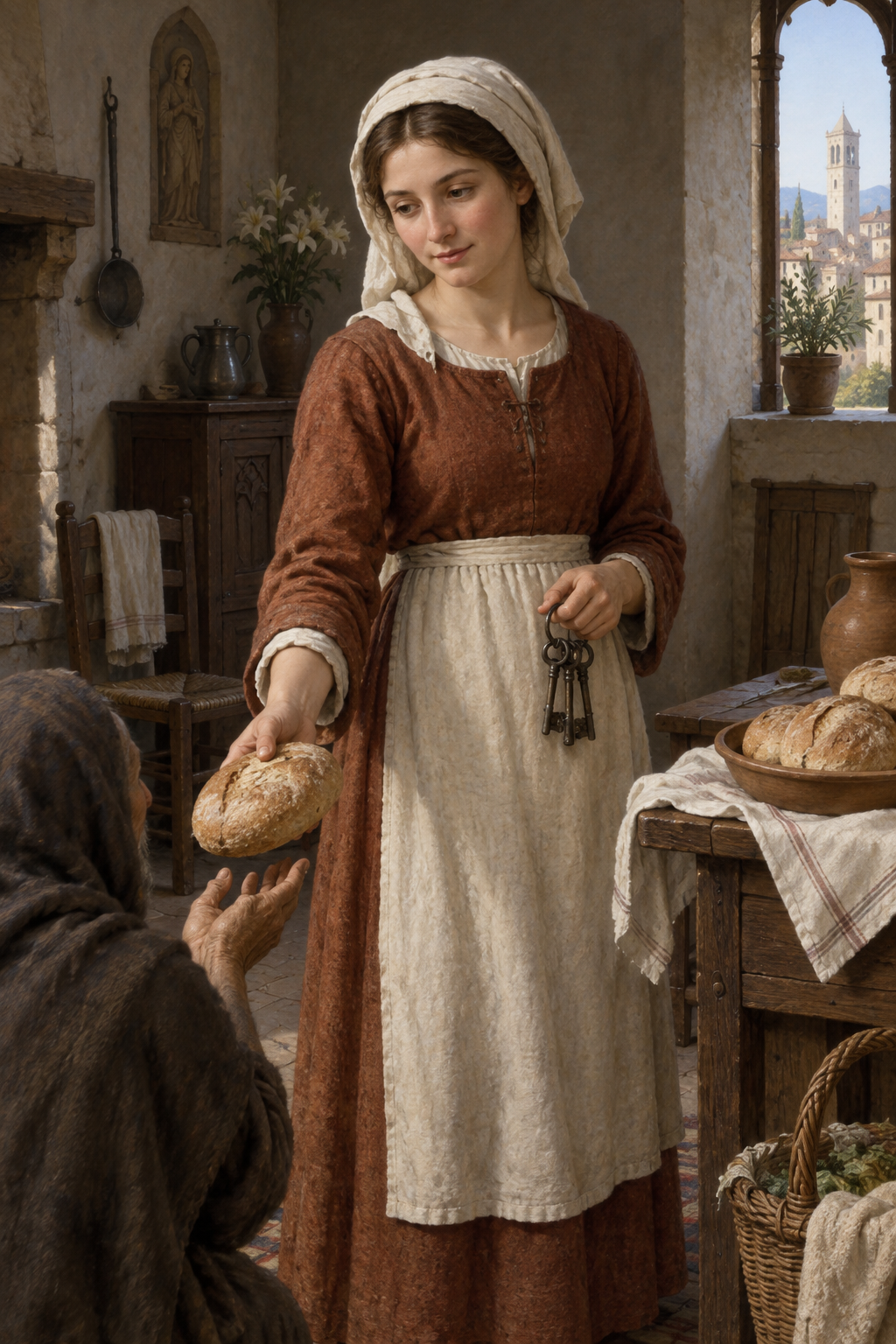
About Zita
The surviving Life of Zita is a devotional narrative written after her lifetime. Its author introduces the work as a record meant to preserve her memory and says that examples were selected rather than every event recounted. Mary Harvey Doyno's study places the Vita in the early fourteenth century and situates its composition within the parish and family context of Lucca. It is therefore useful for both the remembered outline of Zita's work and the later shaping of her cult.The Vita identifies Zita's parents and says that, at about twelve, she left her village for Lucca and entered service in the home of wealthy citizens. It describes her as remaining in that household until she was nearly sixty, caring for its members and managing domestic work. The narrative emphasizes the dignity she attached to service and her concern for poor people. Her identity as a lay domestic worker is central to the tradition; later miracle stories are not repeated as established events.In its account of Zita's final illness, the Life says she was around sixty and had been ill with fever for several days. It records her death on April 27, 1272, and describes the large crowd that gathered at San Frediano for her funeral. These are claims in a retrospective hagiography; the structured death date follows the Vita's explicit calendrical statement, while no unsupported birth year is inferred from its approximate age.Zita's story joins domestic labor, religious devotion, and care for neighbors. Doyno notes how the Life's account of work and charity shaped the unusual model of a servant saint and how the Fatinelli family promoted her cult. The biography follows that evidence without turning its devotional episodes into independently verified history.
Wondering how to weigh the stories and sources? Learn how to read a saint biography.