Biography
Aaron
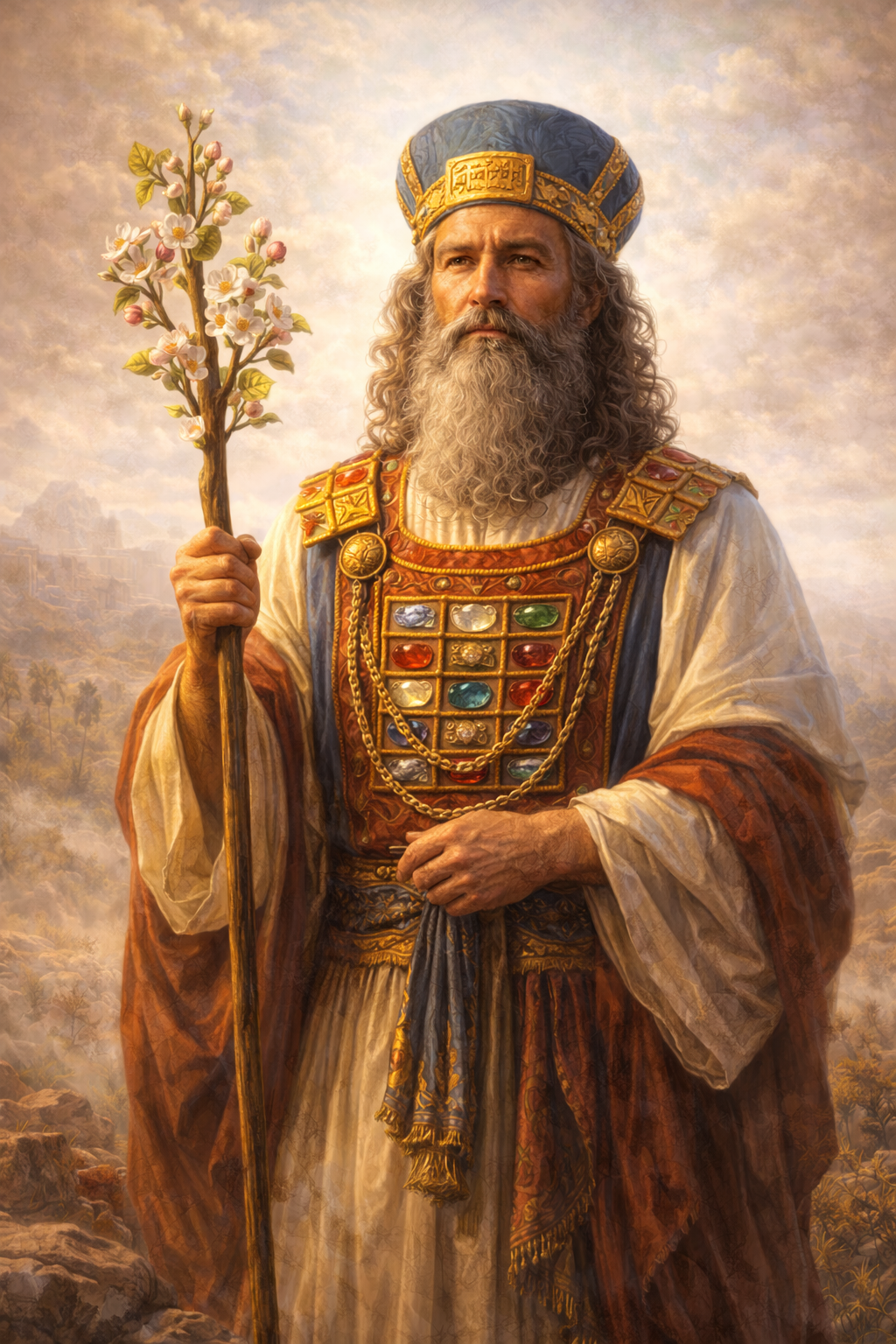
About Aaron
Aaron appears in Exodus as Moses' brother, a member of the tribe of Levi, and a leader called into Israel's departure from Egypt. The biblical books provide a sustained theological narrative, not an independently dated modern biography. Their ages and itinerary cannot responsibly be converted into exact calendar years, so the catalog leaves Aaron's birth and death dates unset. The narrative presents both consequential service and grave failures, and a careful account must retain both.
When Moses objects that he is slow of speech, Exodus says that Aaron can speak well and will serve as his mouth. Aaron meets Moses at the mountain of God, listens to the commission, and speaks to Israel's elders after they return to Egypt. The people believe the report that their suffering has been seen. This makes Aaron an early public spokesman, although Exodus consistently places the originating command with God and the leadership commission with Moses. Aaron's role is collaborative rather than independent.
Before Pharaoh, Exodus portrays Aaron participating in signs and repeated demands for Israel's release. His staff becomes a serpent before Pharaoh's court, and he stretches out his staff in several plague narratives. Moses and Aaron also relay Passover instructions to Israel's elders before the departure. These episodes are claims of the scriptural narrative and are recorded with traditional historical confidence; they are not corroborated event reports from Pharaoh's administration. The text nevertheless makes Aaron a visible participant in the community's escape from forced labor.
After the departure, Aaron remains beside Moses during crisis. At Rephidim, Aaron and Hur support Moses' hands while Joshua leads the battle below. At Sinai, Aaron, Nadab, Abihu, and seventy elders ascend part of the mountain and take part in a covenant meal. When Moses goes farther into the cloud, Aaron and Hur are left to hear disputes. These scenes depict practical support and shared responsibility, while also preparing for a later failure of leadership.
Exodus 28–29 sets Aaron and his sons apart for priestly ministry. The prescribed vestments include an ephod, breastpiece, robe, tunic, turban, and sash. The breastpiece bears the names of Israel's tribes, and its symbolism places communal responsibility over Aaron's heart when he enters the sanctuary. Leviticus 8 narrates Moses washing, clothing, anointing, and ordaining Aaron and his sons. These texts establish Aaron as Israel's first high priest within the biblical account, not as a Christian priest or bishop.
The golden calf episode sharply interrupts that commission. While Moses remains on the mountain, the people ask Aaron to make a god to lead them. Aaron collects gold, fashions a calf, builds an altar, and announces a festival. When confronted, he shifts blame to the people and describes the calf's production evasively. Exodus explicitly assigns him responsibility, so his biography cannot excuse the action as mere passivity. The episode shows how public pressure and fear can corrupt entrusted leadership.
Leviticus also records the deaths of Aaron's sons Nadab and Abihu after they offer unauthorized fire. Aaron remains silent when Moses explains the seriousness of approaching the sanctuary. Later in the chapter, however, Aaron answers Moses' criticism about an uneaten offering and Moses accepts his reasoning. The scene portrays grief under ritual responsibility without supplying Aaron's private thoughts. Leviticus 16 subsequently assigns the high priest a central role in the annual rites of atonement, including confession and offerings for priest and people.
Numbers preserves further conflict within the leadership family. Aaron and Miriam challenge Moses, and Miriam is afflicted after the divine rebuke. Aaron acknowledges wrongdoing and appeals for her healing. During Korah's rebellion and its aftermath, Aaron carries incense into the assembly and stands between the dead and the living until the plague stops. The following chapter describes Aaron's staff sprouting, flowering, and producing almonds as a sign attached to Levi's priestly office. These are traditional narrative episodes rather than independently documented miracles.
At Meribah, Moses and Aaron fall prostrate when the community demands water, but the chapter then judges both leaders for failing to manifest divine holiness. The USCCB note cautions that the precise failure is not made explicit. Numbers therefore says that neither will lead the assembly into the land. After the community reaches Mount Hor, Moses transfers Aaron's garments to Eleazar, and Aaron dies on the mountain. The text says Israel mourns for thirty days, but Mount Hor is not definitively identified and should not receive invented coordinates.
Numbers assigns Aaron an age and a date within its wilderness chronology, yet those figures do not establish a modern birth year or civil death date. Sirach later praises Aaron's priesthood, vestments, teaching, judgment, and service at the altar. That passage documents later Jewish and Christian scriptural reception while drawing on the Torah's portrait. Aaron remains significant as the remembered founder of Israel's priestly line and as a spokesman, intercessor, and brother whose service was inseparable from accountability. His story offers neither a flawless hero nor a simple warning: it preserves vocation, cooperation, grief, failure, correction, and succession within one demanding public life.
Wondering how to weigh the stories and sources? Learn how to read a saint biography.