Biography
Adalgott of Chur
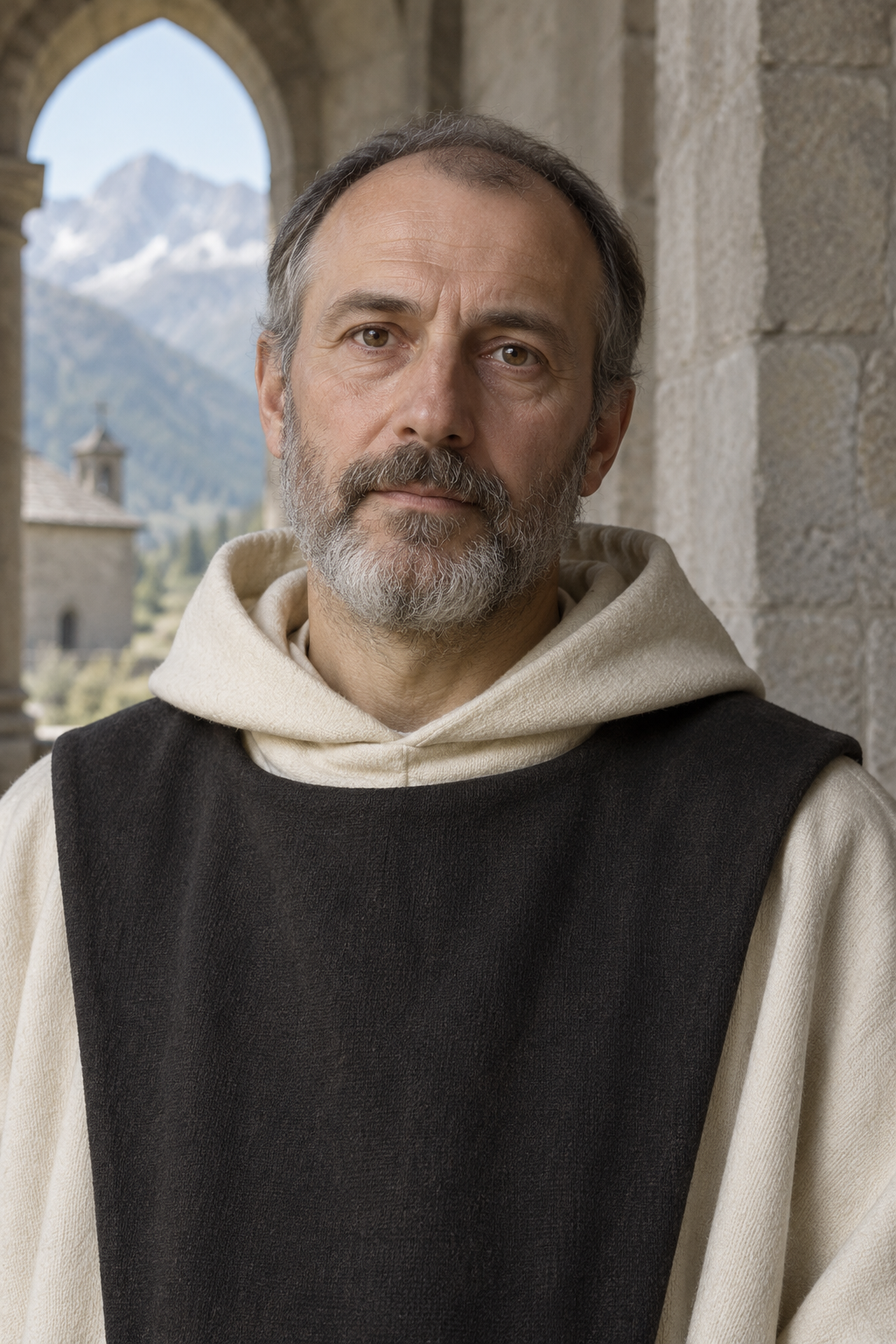
About Adalgott of Chur
Adalgott was a Cistercian monk of Clairvaux who became bishop of Chur in the twelfth century. The diocesan archive identifies him as a pupil of Bernard of Clairvaux. It also distinguishes him from the earlier Benedictine abbot of Disentis with the same name. The two lives should not be joined into a single biography.
Archivist Bruno Hübscher dates his consecration to 4 February 1151 from the oldest surviving anniversary book. He considers Mainz the probable venue.
Before 13 March 1151, he witnessed Mainz’s confirmation of Altenburg monastery.
His office also brought him into royal society. The Historical Dictionary of Switzerland records him on several occasions in the entourages of King Conrad III and Emperor Frederick I. His responsibilities therefore extended beyond the internal life of the monasteries he knew. The same scholarly entry describes him as a reorganizer of the diocese who attended to the economic position of its religious houses as well as their observance. It first attests him in 1151; that date marks his appearance in the record, not his birth.
Adalgott’s episcopal work included support for religious houses and care for people in need. A charter for the monastery of Saint Luzi in Chur expresses those purposes. Hübscher also identifies Cazis, Schänis, Müstair and Marienberg among the communities he assisted. These connections place his monastic background alongside the practical responsibilities of a bishop.
The diocesan archive describes reforms at the women’s monasteries of Cazis, Müstair and Schänis in 1156. It records a transfer to Saint Luzi that included the hospital of Saint Martin and other property and rights. The original charter is lost; the archive identifies a later authenticated copy and printed documentary editions. Adalgott’s assistance is therefore traceable without describing that copy as an original document from his lifetime.
Reform could also mean closing a community. The parish history of Mistail records that Adalgott suppressed its monastery in 1154 with papal agreement. It describes a house weakened by lost property and disorder, with a location considered unsuitable for communal life. Its church and possessions passed to Saint Luzi. This institutional account shows that his changes included redistribution and closure as well as support for existing houses.
Historian Heinrich Büttner places these changes within a sustained reorganization between 1154 and 1157. Rather than establishing a new monastery in his diocese, even one belonging to his own Cistercian order, Adalgott worked through existing communities. Saint Luzi became a particular center of this effort. At Cazis, the arrangement included oversight by a prior drawn from Saint Luzi. These were changes to the relationships between houses, not simply appeals for stricter personal conduct. Büttner connects the spiritual and material sides of the work with Adalgott’s Cistercian formation.
At Cazis, the change affected the women’s way of life. The monastery’s history dates Adalgott’s conversion of the community into a regulated Augustinian house to 1156. It reports that only a few canonesses were willing to accept the stricter observance. His reputation as a reformer therefore should not suggest that every member of the communities welcomed the changes. The Cazis account preserves a specific sign of resistance within a house he sought to reorganize.
Marienberg Abbey preserves a visible connection with his work. Its account of the crypt records that Adalgott dedicated it in 1160. The monks first gathered there for worship, including their daily prayer and Mass. The surviving crypt gives a particular setting to his remembered care for a monastic community. Its appearance has changed since his dedication: it became a burial place for monks in 1643. Removal of the tombs in 1980 revealed frescoes long concealed, helping explain why the space is valued today.
The bishop also increased the temporal resources of his church. Büttner records that in 1160 Ulrich of Tarasp transferred a substantial group of dependent officials, rights and a share in Tarasp Castle to the bishopric. The historian places the transaction within Adalgott’s work in the Engadin and Vinschgau and his cooperation with the Tarasp family. Such acquisitions made the bishop a stronger regional landholder as well as a religious leader. They belong alongside the assistance he gave to the poor, without treating territorial power itself as proof of holiness.
The Historical Dictionary identifies property in the Vinschgau, Lower Engadin, Oberhalbstein and Bergell among the gains from Ulrich’s gift. It also dates Adalgott’s veneration as a saint within the diocese to the seventeenth century. His later local cult should therefore be distinguished from the twelfth-century transactions and dedications that establish his episcopal activity. Neither the property record nor the history of his veneration supplies a documented birthplace.
Adalgott died on 3 October 1160. Chur remembers him on 4 February, the anniversary of his episcopal consecration. Hübscher’s anniversary article describes the diocesan celebration of his eight-hundredth death anniversary in 1960. His local remembrance remains connected with the monasteries he supported and the episcopal ministry recorded in Chur’s archives.
Wondering how to weigh the stories and sources? Learn how to read a saint biography.