Biography
Adela of Normandy
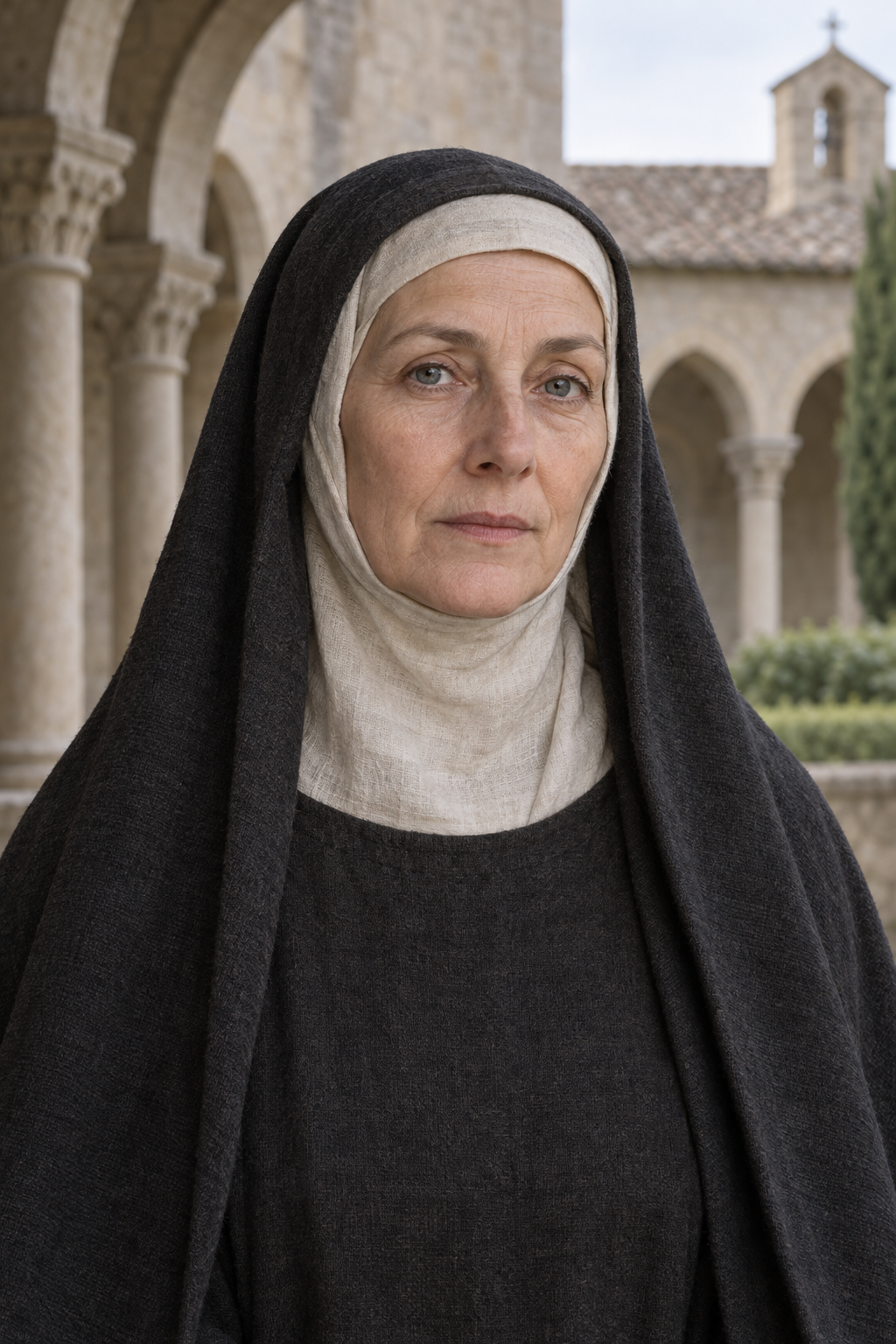
About Adela of Normandy
Adela was a daughter of William the Conqueror and Matilda of Flanders, wife of Stephen of Blois, and mother of the later King Stephen of England. The scholarly Epistolae account dates her birth to about 1067. She shared in the government of her husband’s territories and governed during his absence on crusade. Her public responsibilities continued after his death, before she eventually retired to the monastery of Marcigny.
A letter sent by Stephen from the siege of Antioch in 1098 offers a contemporary glimpse of their relationship. He addressed Adela, their children and his followers, reported on the expedition, and referred to the resources she had provided when he left. Near the end he asked her to care for her lands, children and people. His account presents her as someone exercising authority at home, while he was far away. It also celebrates the violence of the crusade, including the killing of enemies and the display of severed heads. Those claims belong to his wartime narrative; the language of religious victory should not be adopted as an impartial description or made into evidence that Adela herself witnessed those events.
After Stephen died in 1102, Adela continued to govern for her sons. The Epistolae account also records her administration for her brother-in-law Hugh of Troyes during his absence on crusade, and her participation in family political meetings as late as 1118. It places her retirement at Marcigny in 1120.
Her own surviving documents show how religious patronage and territorial government could meet. In a charter of 1104 she extended an earlier gift of forest land connected with Marmoutier and its dependency at Francheville. She described the gift as alms for herself, her deceased husband, their ancestors and their children. The charter’s religious language links works of mercy with the hope of forgiveness. It also carefully defines property, people and authority, making the donation a practical arrangement as well as an expression of devotion.
That grant included exemptions from tolls and other dues, rights to use forest resources, and arrangements for grazing animals. It assigned judicial responsibilities to the monks while retaining a way for disputed matters to come before Adela or her successors. Her officials were instructed to pursue complaints through those arrangements rather than resort to violence against the monks or their dependants. The assent of her sons William and Thibaud appears in the document. These provisions show the detail with which her patronage was put into writing and the family’s involvement in preserving it.
Another charter, issued at Chartres in 1109, records an episode in which Adela acknowledged an abuse of her own authority. After servants of the monks of Bonneval killed one of her men, she ordered a money levy on the town in retaliation. The abbot and monks produced older writings showing that the levy was not permitted. She did not immediately accept their objection and continued for a time because of her anger. The document therefore preserves conflict and resistance, not simply a picture of generous benefaction.
Adela then stated that, after the monks’ repeated appeals and the subsiding of her anger, she made amends. Before an altar and those present, she confessed her action and promised not to repeat it. Her sons Thibaud and Stephen consented to the settlement; Bishop Ivo of Chartres and abbots were among those named as present. The charter was intended to prevent her successors from treating her earlier conduct as a precedent. Its surviving cartulary copy has some damaged text, as the scholarly edition notes, but the admission of injury and the promise of correction remain clear.
Adela’s retirement did not end every concern about the religious houses she had supported. In a later letter to her son Thibaud she identified herself as a nun of Marcigny and asked him to protect an earlier grant from a renewed claim by the canons of Saint-Calais. She recalled that the dispute had already been heard and settled in her presence while she lived in the secular world. A related letter to Bishop Geoffrey of Chartres made the same request. The letters preserve her continuing concern for the settlement of obligations undertaken during her earlier public life.
Peter the Venerable wrote to her in early 1136 about the death of her brother Henry I of England. His letter distinguished what he had learned about the king’s final illness and burial from what remained uncertain about the political situation. He told her that messengers had been sent for further information and described prayers arranged by the Cluniac community. Addressed to Adela after her retirement, it shows that news of her family and the wider world still reached her at Marcigny.
Epistolae gives her death at Marcigny in 1137. Nominis commemorates her as a saint on 24 February. That commemorative date should not be assumed to establish the exact day of her death.
Wondering how to weigh the stories and sources? Learn how to read a saint biography.