Biography
Aelfric of Abingdon
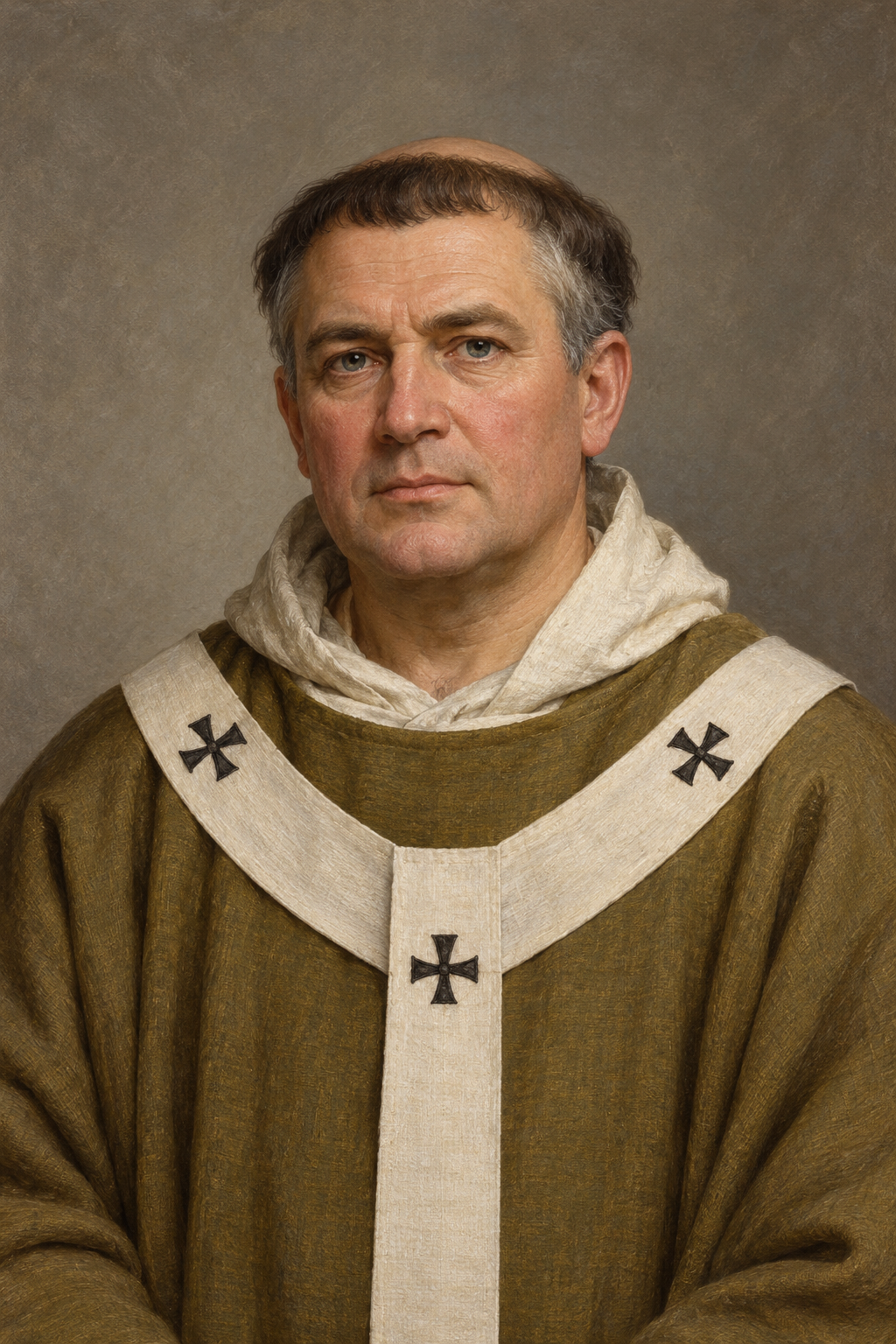
About Aelfric of Abingdon
Aelfric of Abingdon was a monk whose later responsibilities drew him into the troubled public life of late Anglo-Saxon England. Formed at Abingdon Abbey, he became abbot of St Albans and bishop of Ramsbury before moving to Canterbury in 995. He retained responsibility for Ramsbury while serving as archbishop. He was a different person from Aelfric of Eynsham, the scholar and religious writer.
He received the pallium from Pope Gregory V in Rome in 997. His period at Canterbury is associated with the replacement of secular clergy by monks, although the New Catholic Encyclopedia leaves the initiative with either Aelfric or his predecessor Sigeric. The change belongs to the history of monastic reform, but its precise attribution is uncertain.
His connection with Abingdon remained important. He witnessed King Aethelred’s charter of reconciliation with the abbey in 993, when the king acknowledged wrongdoing and guaranteed its liberties. The local historical account places Aelfric within the effort to recover lost estates and the community’s freedom to elect its abbots. An estate granted to him was later left to the abbey in his will.
That will survives in later manuscript copies, catalogued as a document of 1002–1005. It distributed land among churches, monasteries and family members, sometimes allowing an individual to use an estate for life before it passed to a religious house. It also left his books to St Albans. These provisions reveal the practical ties that connected an archbishop’s household with several communities.
The testament included military resources: a ship with equipment for sixty men went to the king, with other ships assigned to Kent and Wiltshire. It also forgave debts and ordered the release of people condemned to servitude during Aelfric’s lifetime. Yet another clause transferred two men with an estate. The document preserves both acts of relief and his participation in a society that treated dependent people as transferable property.
Aelfric died on November 16, 1005. He was first buried at Abingdon, and his remains were later transferred to Canterbury. The New Catholic Encyclopedia lists his feast on November 16 and identifies an early Life of Dunstan as a work dedicated to him. His memory therefore belongs both to the history of the cathedral and to the monastic communities whose lives he helped sustain.
Wondering how to weigh the stories and sources? Learn how to read a saint biography.