Biography
Agatha Magdalene Kim Yun-deok
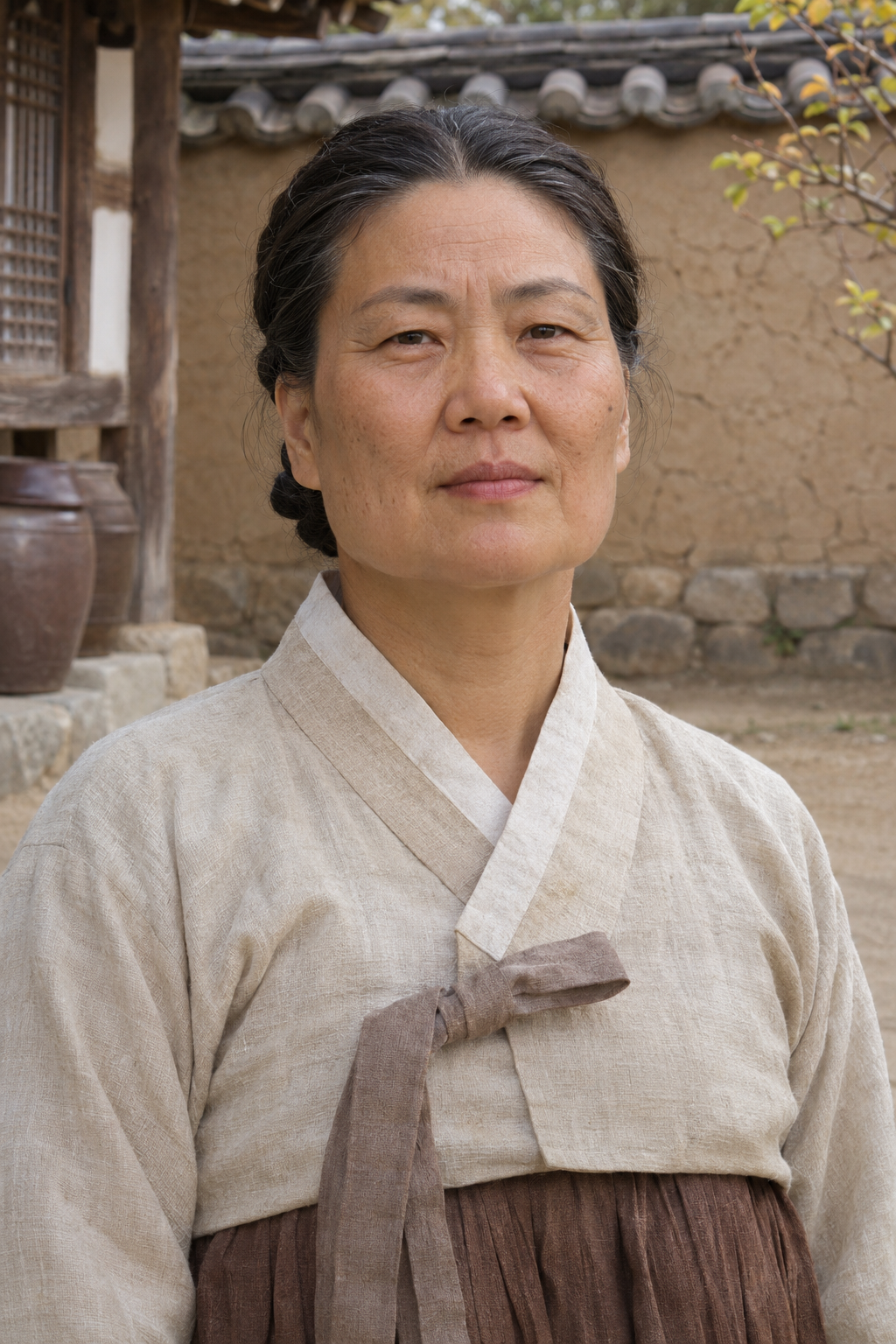
About Agatha Magdalene Kim Yun-deok
Agatha Magdalene Kim Yun-deok came from Eunjae in the Sangju district of Gyeongsang-do. The Korean bishops place her birth around 1765. She accepted Catholic teaching after hearing the Gospel preached near her home, then moved to the Catholic village of Noraesan in Cheongsong.
Historian Kim Jeong-suk’s 2020 account adds details of her family life. She married a man surnamed Kim who lived at Anbae in Yeonpung. After becoming a mother, she was known as Sundeuk’s mother. Her identity in the village was therefore connected with her child as well as with the name under which she would later enter the Catholic histories.
Her faith was shared within a wider family. Cha Ki-jin’s account says that her older sister and her sister’s husband, a member of the Pak family, also became Catholics. They practiced the religion together. Agatha was among the converts who came from Gyeongsang-do itself, unlike many of the believers who had moved into the province from Chungcheong-do. Her move to Noraesan joined her to a community that included such migrants as well as local people.
In her 2002 essay, Kim Jeong-suk describes Noraesan as a community in which believers worked the fields, shared their harvests and gathered for prayer. They sought to practice their religion together while hoping that a priest would return to Korea. Work and prayer could take place in the same fields. Kim describes villagers pausing there for the Angelus, the prayer that recalls the announcement of Jesus’ birth to Mary.
The two baptismal names attached to her also reflect the way her history was preserved. Cha Ki-jin’s study of the beatification sources explains that Daveluy’s notices used Agatha or Magdalene, while his historical memoir used Agatha Magdalene together. The editors followed the combined form. The names refer to the same woman, whose place of origin, capture and return to the provincial office form a single received life.
Agatha was arrested with other villagers while they were celebrating Easter in 1815. The Catholic encyclopedia describes more than thirty people being taken from Noraesan. The authorities sent her to the military office at Gyeongju, where she underwent repeated questioning and punishment before being transferred to the provincial government at Daegu. The bishops’ account of the prison site names several of her neighbours. Andrew Seo Seok-bong and his wife Barbara Ku Seong-yeol belonged to the village, as did their son-in-law Francis Choe Bong-han. The brothers Peter Ko Seong-dae and Joseph Ko Seong-un also lived there. Their arrests that Easter broke up a congregation in which whole families had made a home.
Kim Jeong-suk records that Agatha continued professing her faith at Gyeongju even as members of her extended family died in custody. Her 2020 article names Pak Chun-seong and Kim Sa-il among these relatives. The deaths brought the persecution into the family circle already connected with her conversion. Agatha nevertheless remained among those sent on for further examination at Daegu rather than obtaining release at Gyeongju.
The bishops’ account preserves a reply she gave when an official asked why she was prepared to die. She answered that even someone of low status and little learning could recognize the goodness of the creator and refuse to betray him. The reply did not claim unusual education or social standing. It expressed her conviction that the obligation to honour God was open to people in her own position.
Kim Jeong-suk interprets this answer as an expression of self-respect. In her reading, Agatha’s lack of formal learning did not prevent her from understanding herself as capable of practicing the same faith as more privileged people. The historian places the reply within a society that restricted women’s opportunities for learning and public speech. Kim reads Agatha’s insistence that she could recognize her Creator as a claim about her own worth.
At Daegu, however, further torture broke her resistance. She said that she would abandon the faith, and the governor ordered her release. She was just leaving the gate when Andrew Kim Jong-han arrived under guard from Andong. He spoke to her and urged her not to lose the opportunity to profess her faith. Their meeting changed the course of her departure: she turned back towards the office she had been allowed to leave. At the gate she pushed past the guards and went straight before the governor.
The Daegu diocesan account describes her returning before the governor and openly withdrawing her denial. She explained that the punishment had been too painful to bear, but that she now regretted abandoning God. She presented herself again as a Catholic and accepted the consequences of that declaration.
The governor tried to have her expelled, treating her as deranged. Agatha returned and repeated her profession aloud. He then ordered a severe beating. She lost consciousness. The bishops place her death just as she was taken back to prison. The current Korean biography places her death in late fourth or early fifth lunar month of 1815, without establishing a Gregorian day.
Wondering how to weigh the stories and sources? Learn how to read a saint biography.