Biography
Agathange de Vendôme
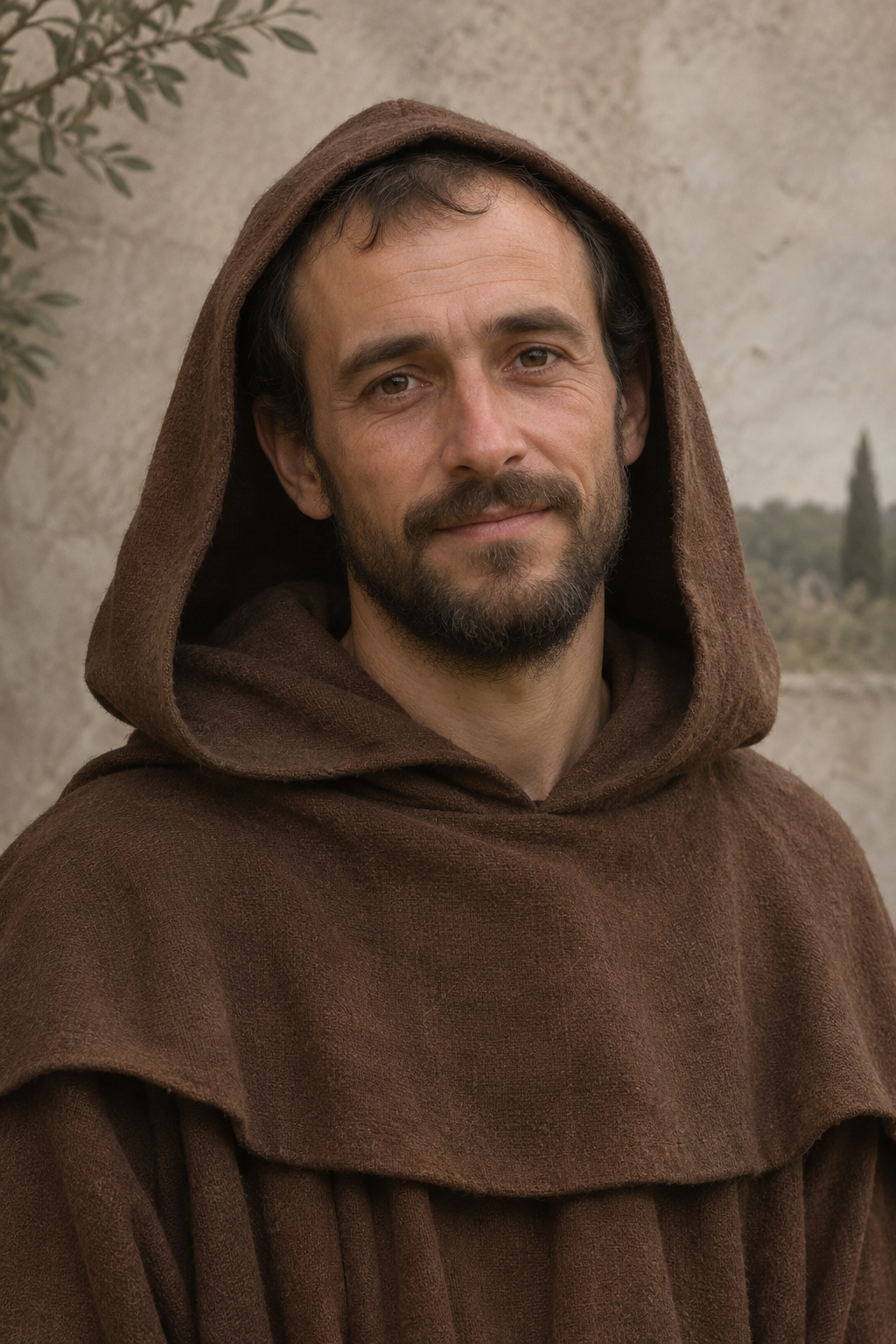
About Agathange de Vendôme
Agathange de Vendôme was born François Nourry at Vendôme in France on 31 July 1598. He entered the Capuchins and received the name by which he is remembered. His novitiate was at Le Mans, followed by philosophy at Poitiers and theology at Rennes. The same order later brought him into contact with Cassian of Nantes, the companion with whom he would die in Ethiopia. His formation continued across several French religious houses.
His father, also named François, was closely involved with the Capuchins in Vendôme and served as their syndic. His mother was Marguerite Bégon. The friars were therefore part of the family’s religious world before he entered their order.
He was ordained a priest in 1625. His first ministry included preaching in France, before he travelled east. His preparation was shaped by Capuchin teachers, including Joseph of Paris, who organized missions in the Levant. Study and preaching belonged together in that formation. Agathange’s later work required him to adapt what he had learned to languages, churches and communities very different from those of his own country.
He reached Aleppo in 1629. The city brought him into contact with Muslims and Christians of several traditions, as well as European merchants. He learned Arabic for his daily ministry and sought personal conversation with the people among whom he lived. He later worked in Lebanon. The accounts describe a missionary who understood that fluency and relationships were necessary before he could communicate his faith effectively. His work in the region preceded the years in Egypt for which his correspondence provides a particularly valuable record.
In 1633 he was sent to Cairo and became superior of the Capuchin mission. He developed relations with Coptic clergy and monks, including Patriarch Matthew III. These contacts were intended to advance reunion with Rome, but involved visits, discussion and practical cooperation. Trontelj’s study describes features of dialogue in this ministry, while distinguishing them from contemporary ecumenism. Agathange still worked within the conversion-oriented assumptions of his own time. Understanding the people he approached did not mean abandoning those assumptions.
His contacts also supported scholarly work. In 1635 he obtained a manuscript of the Psalms in five languages from the monastery of Saint Macarius for the French scholar Nicolas-Claude Fabri de Peiresc. The proposed exchange involved silver Eucharistic vessels needed by the monastery. Agathange sent the manuscript toward France, but corsairs seized the vessel carrying it. The correspondence about this lost shipment preserves another side of the friar: an intermediary between Egyptian monastic learning and European collectors of books.
A letter to the cardinal responsible for Propaganda Fide reveals a disagreement over Catholic participation in Coptic worship. Agathange had learned that the congregation rejected a permissive approach. He consulted other missionary theologians and asked for the matter to be reconsidered. His argument turned on knowledge of the circumstances in which the missionaries actually lived. He believed that decisions made without that knowledge could harm peaceful relationships and close the available paths for their work.
Historian Cesare Santus places this disagreement within a wider tension between missionaries and the authorities in Rome. Those working locally sometimes challenged decisions made without experience of their circumstances. Agathange argued that an outright ban would remove the available ways of helping the mission. Santus also notes that Roman authorities sometimes left difficult questions to local judgment rather than issuing general decisions. This context helps explain the careful practical argument in Agathange’s letter.
Other obstacles came from Catholics themselves. Odden’s account records objections raised against reunion because of the conduct of prominent Catholics in Cairo. Agathange complained to Rome that his requests for disciplinary action had not been answered. The episode places an ethical difficulty beside the doctrinal arguments. In his mission, what Catholics did could undermine what they taught. His concerns therefore extended to the credibility of his own community’s witness as well as to disagreements with other Christians.
In 1636 the Ethiopian mission was entrusted to Franciscan missionaries, and Agathange was appointed to lead a group. The travellers were deliberately divided into pairs for prudence. He and Cassian left Cairo at the end of 1637 and entered Ethiopia wearing the clothing of Coptic monks. Their preparation and letters of introduction did not secure their safety. They were discovered, detained and eventually taken to Gondar. The hoped-for mission became an experience of imprisonment before it could develop into sustained work.
The Catholic account remembers both friars refusing to renounce their faith. They were put to death at Gondar on 7 August 1638. Their shared witness was later honoured by Pius X. Agathange is remembered as a blessed priest and martyr, alongside the companion whose final journey he shared. His surviving correspondence also preserves the less dramatic work that preceded it: learning, listening, arguing for prudence and trying to maintain relationships across divisions among Christians.
Wondering how to weigh the stories and sources? Learn how to read a saint biography.