Biography
Agostina Livia Pietrantoni
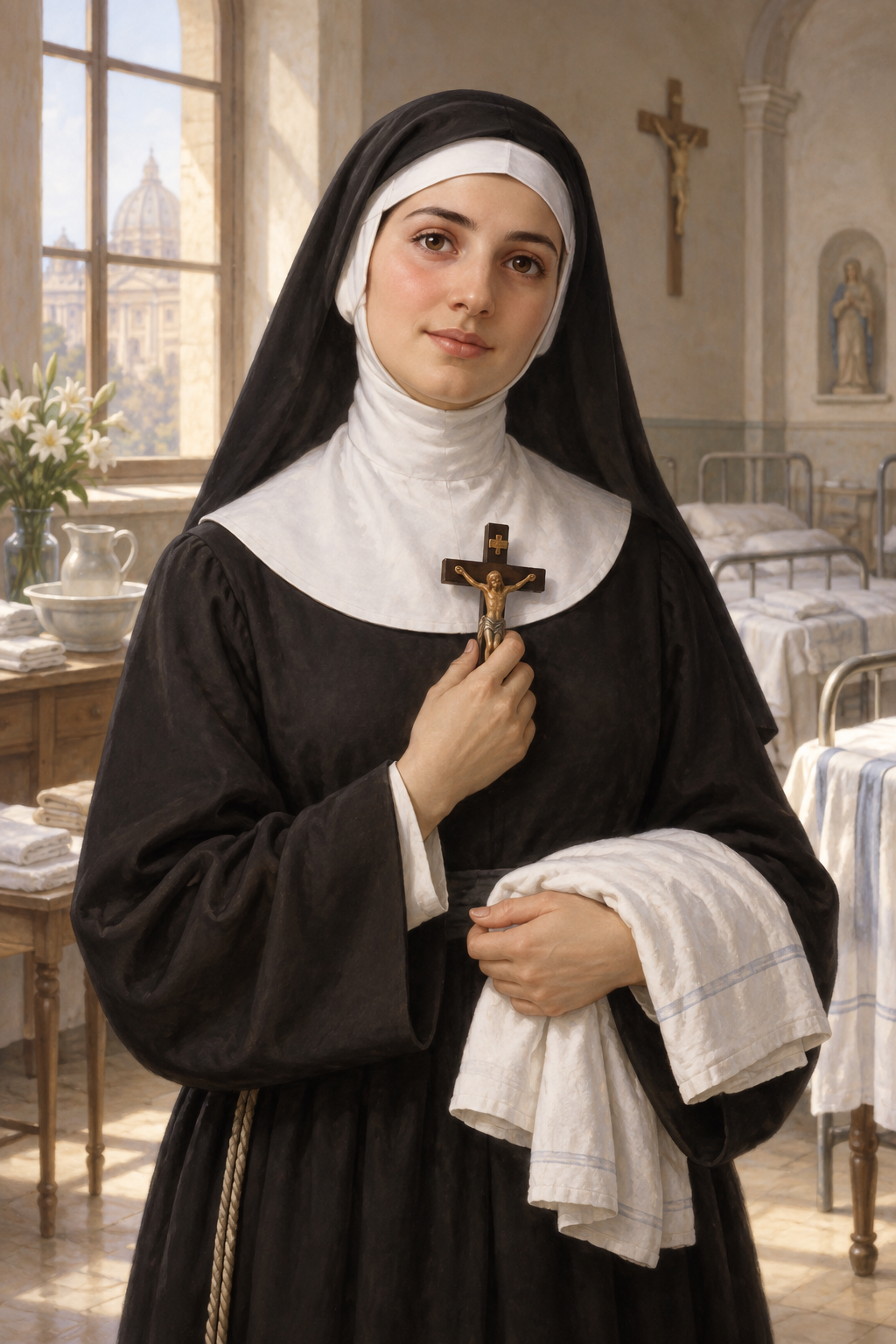
About Agostina Livia Pietrantoni
Agostina Livia Pietrantoni was born in Pozzaglia Sabina on March 27, 1864, and the Dicastery for the Causes of Saints says she was baptized there the same day. The places her in a large rural family whose parents, Francesco Pietrantoni and Caterina Costantini, worked their own land and rented plots. The source presents her early life as poor, hardworking, and deeply religious.
Her childhood should not be romanticized. The official biography says she knew little leisure and little regular schooling, because she helped at home, cared for younger children, worked in the fields, and began laboring as a child. It also reports that other girls recognized her ability to guide and teach them. Those details support a profile of early responsibility without needing invented scenes.
The family setting matters because it explains the ordinary discipline behind her later religious life. She learned to serve before she had a public ministry, first among siblings and neighbors and then among other working girls. The Dicastery account does not present her as a precocious public figure. It shows a young woman whose spiritual seriousness grew inside rural poverty, physical labor, family prayer, and practical care.
As a young seasonal worker, Livia traveled with other girls for the olive harvest near Tivoli. The source says she took moral and religious responsibility for her companions during difficult months away from home. This event is useful because it shows the same pattern that later shaped her nursing life: practical work joined to quiet care for others.
That seasonal labor also keeps the portrait human. Agostina's sanctity did not begin in a hospital corridor. It began in small acts repeated under pressure: helping, carrying, traveling, keeping prayer alive, and encouraging companions whose work was hard. The final page can use those details to prevent her from being reduced to the single violent moment of her death.
Livia entered the Sisters of Charity of Saint Jeanne Antide Thouret and received the religious name Agostina. The catalog's class of religious sister is therefore well supported. Her profile should present her vocation as service, not as an escape from poverty. The official source repeatedly ties her consecrated life to love of God expressed through the sick and poor.
Agostina was assigned to the Santo Spirito hospital in Rome. The Dicastery profile notes that she first served among children and later, after a serious contagion from which she recovered, worked in the tuberculosis ward. The public page can name the hospital and the ward because they are central to the official account of her charity.
The hospital setting needs careful wording. The source describes a tense environment in which religious signs were restricted and the sisters' presence was pressured. Agostina's witness should be described through her actions rather than through polemic: she cared for patients, prayed, endured difficulty, and continued serving those who were hardest to love.
The final episode must be handled with restraint. The Dicastery says Agostina died on November 13, 1894, after being attacked by a patient at Santo Spirito. It also preserves the tradition that her last words included an invocation to Mary and words of forgiveness. The page may summarize that witness, but it should not linger over weapons, wounds, or the assailant's personality.
Her death does not stand alone as an isolated tragedy. It is the last moment of a life already shaped by patient service. The official profile says she was not yet thirty when she died, and it connects her witness to fidelity in charity. The summary should therefore lead with her nursing vocation and only then name the death context.
The existing date fields are strong. Birth on March 27, 1864, death on November 13, 1894, and the November 13 liturgical memorial are all supported by the Dicastery page. Pozzaglia Sabina and Rome are likewise supported as birth and death places. No approximate-date flag is needed for these fields.
Her beatification and canonization can provide recognition context. The Dicastery page records beatification by Pope Paul VI on November 12, 1972, and canonization by Pope John Paul II on April 18, 1999. These should be presented as later ecclesial recognition, not as the center of the biography.
The canonization context is still useful because it shows how the Church received her life. John Paul II canonized her in Saint Peter's Square with other saints, and the Dicastery page preserves that recognition alongside the older biographical narrative. The public profile can mention this briefly, while keeping the central thread on her service to the sick and her final act of forgiveness.
Agostina's public profile should invite readers toward ordinary works of mercy. Her sanctity was not built on a public office, a school, or a written theology, but on hidden discipline: family work, seasonal labor, religious obedience, hospital service, and forgiveness. That shape makes her a strong patronal figure for caregivers even if no formal patronage field is added here.
Artwork should therefore be quiet and hospital-centered. A young Sister of Charity with a crucifix and nursing cloth in a late nineteenth-century ward matches the sourced identity without depicting violence. The badge should preserve the face, white coif, dark habit, and nursing symbol so the image reads as charity rather than martyr spectacle.
Wondering how to weigh the stories and sources? Learn how to read a saint biography.