Biography
Albert of Jerusalem
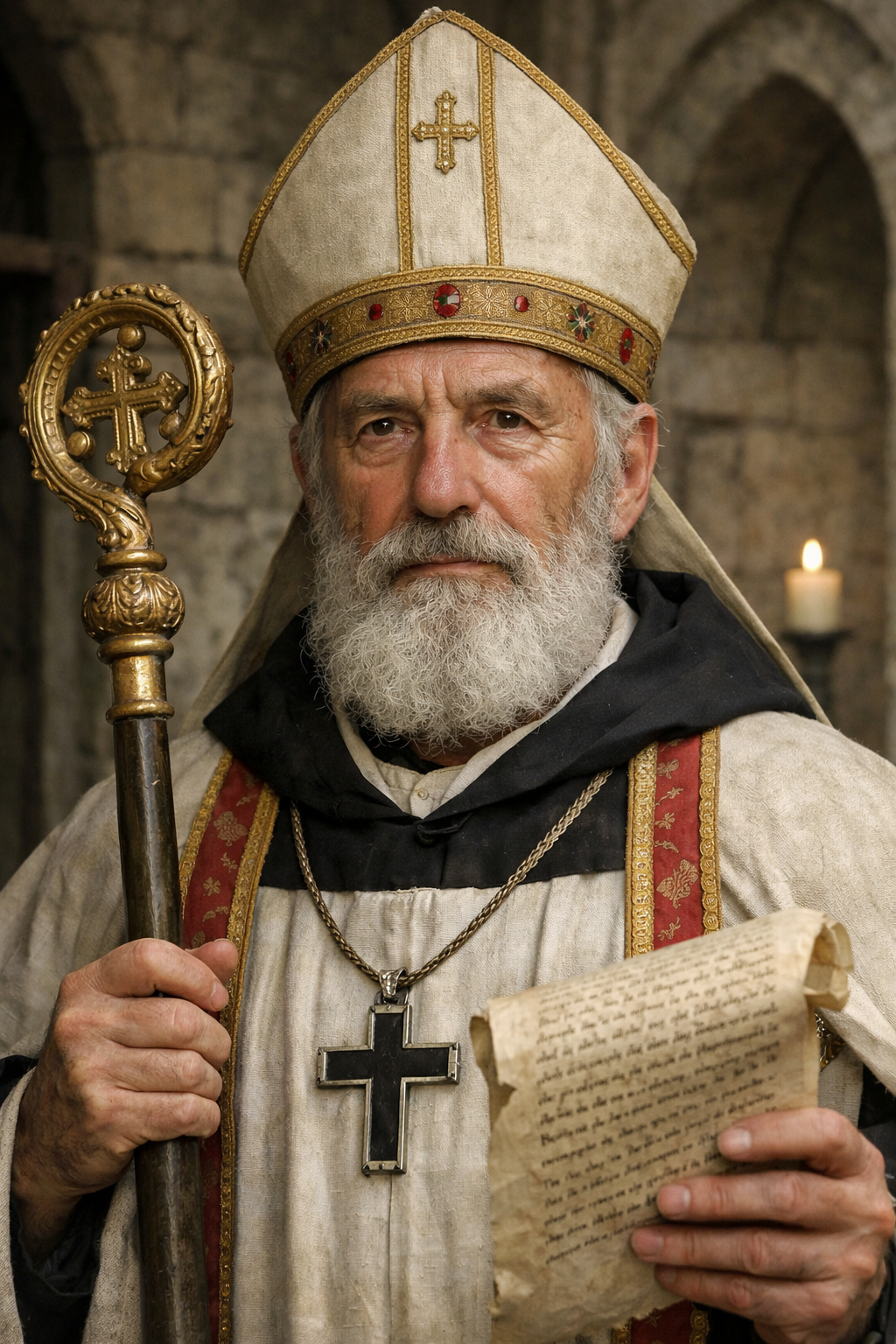
About Albert of Jerusalem
Born around 1150 in northern Italy, Albert entered the Canons Regular at Mortara before becoming a bishop and patriarch. He joined the Canons Regular of the Holy Cross at Mortara around 1170. The community gave him his first setting for religious service, before the responsibilities of a bishop or patriarch. By the early 1180s, he was undertaking missions for Popes Alexander III and Lucius III. These journeys began a lasting part of his vocation: working on difficult questions entrusted to him by others.
After his appointment to Bobbio in 1184, Albert was soon transferred to Vercelli. He remained there for twenty years. His work included the practical needs of clergy and their education: he maintained three teachers who taught without charging, covering theology, grammar and writing. He also held a diocesan synod in 1191, bringing discipline and the ordering of church life into his episcopal work.
Albert sought protection for his church’s resources as well as its worship. At his request, Emperor Henry VI issued a privilege in November 1191 confirming Vercelli’s possessions and rights. Its provisions concerned fields, vineyards, waterways, mills and other property, along with rights of transport and jurisdiction. The emperor also prohibited secret alienations of church property and authorized the bishop to buy and transport millstones. Albert’s responsibilities thus reached into the material arrangements on which the church depended, not only the ceremonies held within it.
He was called beyond his diocese to help resolve disputes. The Carmelite Order’s biography credits him with arranging peace between Pavia and Milan in 1194 and between Parma and Piacenza in 1199. His experience of organized religious life found another outlet in legislation. He wrote statutes for the canons of Biella and served among the advisers involved in preparing the Humiliati’s rule. Different communities presented different needs; his contribution was not confined to a single group of followers.
Albert’s dealings with imperial authority continued alongside his service to the papacy. In 1197 he headed an embassy charged with negotiating with Pope Celestine III. The negotiations failed, and he returned to Vercelli later that year. The episode shows a limit to the peacemaker’s work: receiving the confidence of powerful people did not ensure that he could reconcile their interests.
In 1204 the canons of the Holy Sepulchre elected Albert patriarch of Jerusalem. Papal appointment followed in 1205, and he reached the Holy Land in early 1206. Jerusalem was under Muslim control, so he made his residence at Acre. He also served as papal legate, carrying responsibilities that extended beyond the local church. His new ministry continued to involve mediation, now amid the competing interests of the eastern Christian territories.
One assignment concerned an earlier agreement between the ruling families of Cyprus and Jerusalem. In March 1206, Innocent III instructed Albert to examine a treaty covering marriages between their children and arrangements for the county of Jaffa. The pope did not simply order him to approve it. Albert was to investigate its terms and judge whether it served both public and private benefit before requiring its observance. The assignment placed careful inquiry ahead of enforcement: his authority was to be exercised through an assessment of the agreement, rather than automatic acceptance of the request brought to Rome.
During his patriarchate, hermits living near a spring on Mount Carmel asked Albert to give written shape to their way of life. His response addressed their leader as Brother B.; the fuller name Brocard belongs to later tradition. The rule of life directed the brothers to choose a prior from among themselves and provided for separate cells. It placed the prior near the entrance, where he could receive arrivals and attend to what they needed. Albert’s instructions joined the hermits’ solitude to the responsibilities of living together, with an elected superior answerable for the community’s practical order.
Albert’s eastern work also belonged to the politics of crusading. In 1213 he acted as intermediary for a papal letter to the Ayyubid sultan al-Adil, urging the surrender of Jerusalem against the prospect of a Christian expedition. This was negotiation under military pressure, not an uncomplicated story of peaceful coexistence. Historian Christine Gadrat-Ouerfelli also proposes Albert as the possible author of a report on the region’s rulers and resources, while acknowledging that the attribution cannot be proved. He was summoned to the forthcoming Lateran council but did not live to attend it.
On September 14, 1214, Albert was killed at Acre by the former head of the Hospital of the Holy Spirit, whom he had removed from office. His long career ended violently, but the short rule he had given the hermits remained. The received Carmelite Rule includes modifications approved in 1247, after his death; it should not all be read as his original wording. The Carmelites honor him as bishop and legislator, remembering a man whose service joined religious life, administration and the demanding work of settling disputes.
Wondering how to weigh the stories and sources? Learn how to read a saint biography.
Explore similar vocations
Prayers for Albert of Jerusalem
Albert of Jerusalem: sourced prayer excerpt
Show them ways to live together in peace.