Biography
Alexander of Bergamo
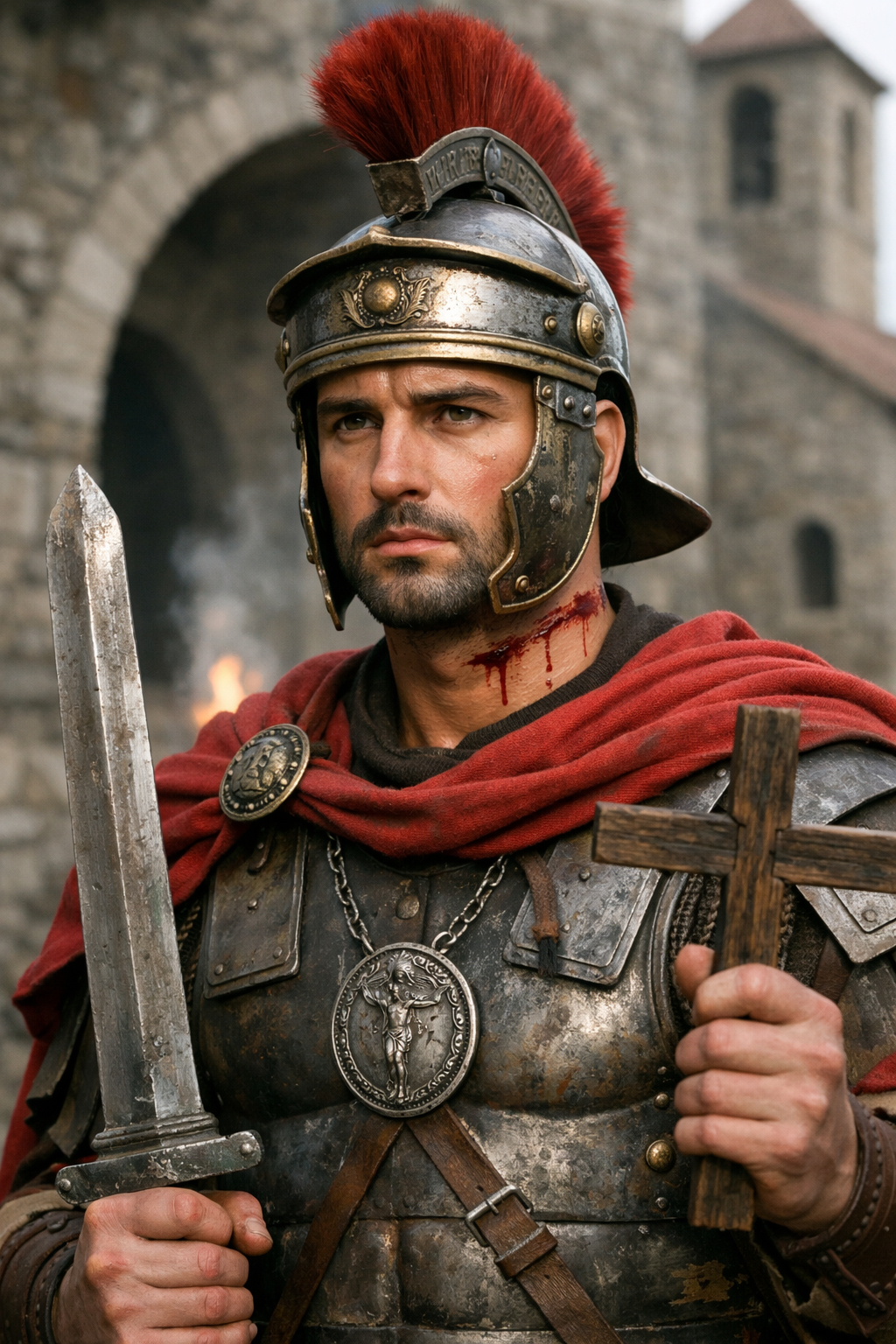
About Alexander of Bergamo
Alexander is remembered as the martyr and patron of Bergamo, but no contemporary narrative preserves his life. The record begins more securely with the community that honored him than with personal details about his origins, family, or military career. BeWeB describes the beginnings of Christianity at Bergamo as uncertain and places its arrival there probably in the second half of the third century. It presents Alexander's role as the city's evangelizer as tradition rather than established biography.
The familiar story comes from late Passions. In those accounts Alexander is a standard-bearer in the Theban Legion. He survives the legion's destruction near Agaunum, escapes into northern Italy, and is arrested at Milan. The Bergamo diocesan account says that he escapes imprisonment, reaches Como with the help of Fidelis, is captured again, and ultimately reaches Bergamo, where he is beheaded. These episodes belong to a narrative whose earliest form the diocese dates to the ninth or tenth century. They cannot establish a third-century itinerary, named companions, or military rank.
Even the year of Alexander's death is unsettled. The Passion gives August 26, 303, while the diocesan discussion says that 298 is considered more probable. Neither date rests on a contemporary record. Bergamo may have preserved the memory of a martyr named Alexander, but the chronology and dramatic details remain traditional. His feast is therefore a liturgical observance, not proof of the day on which he died.
Material evidence for his cult is clearer. The diocesan history says that an ancient basilica outside Bergamo's walls was dedicated to Alexander by at least 774. BeWeB considers the antiquity of the cult a reason to allow for a historical core, while noting that the basilica associated with his tomb was destroyed in 1561 and direct confirmation is lacking. Lanzoni likewise treated the traditions critically. The burial associated with Grata and the Theban Legion connection remain received traditions, not established facts.
Bergamo's continuing observance is not similarly obscure. The diocese identifies Alexander as patron of city and diocese and celebrates his solemnity on August 26. Churches, civic memory, and worship have kept his name attached to Bergamo across centuries. His significance lies in that durable local remembrance and in the distinction his story requires: an ancient cult may preserve a real martyr's memory even when later storytellers supplied details that historians cannot verify.
Wondering how to weigh the stories and sources? Learn how to read a saint biography.