Biography
Alice of Schaerbeek
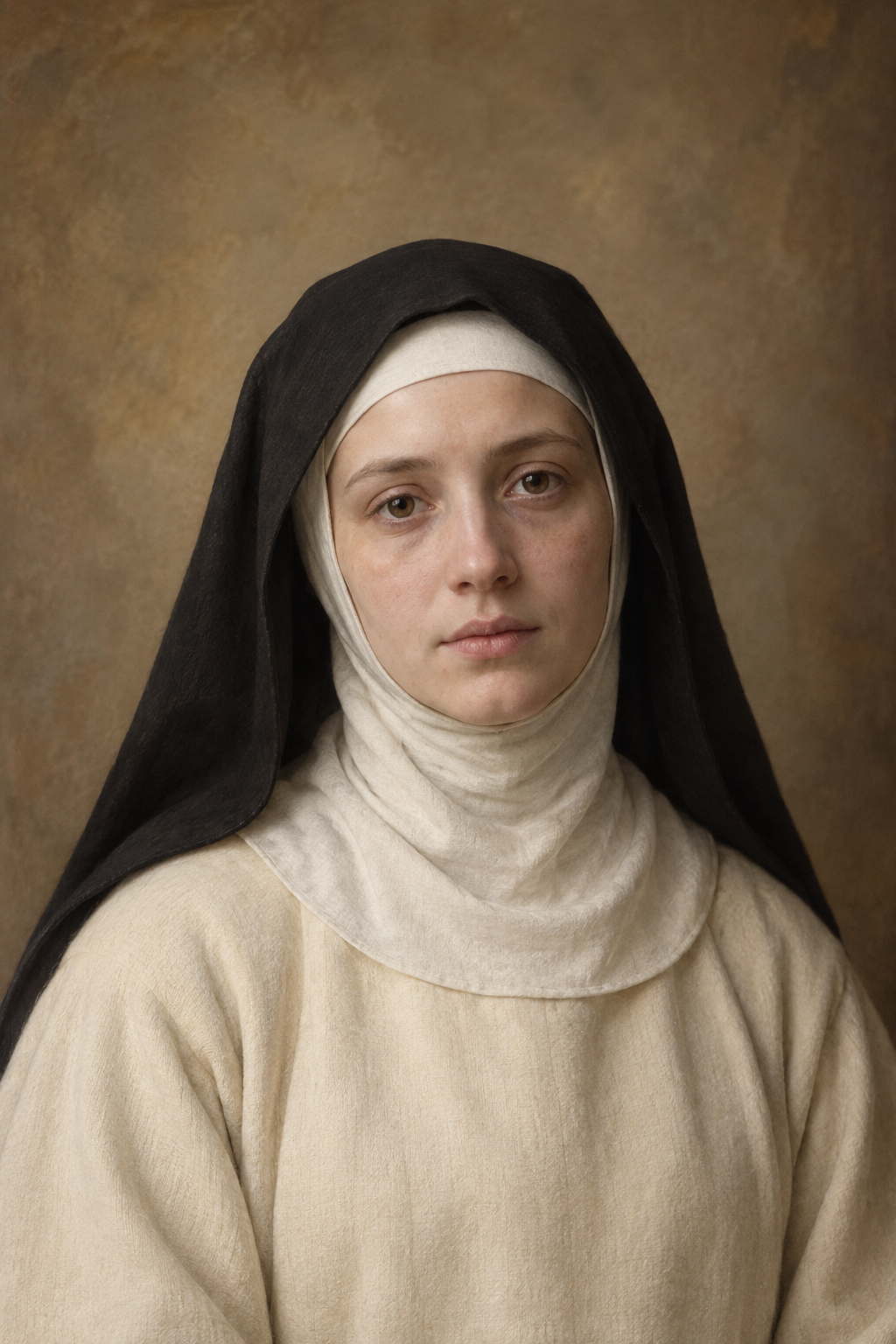
About Alice of Schaerbeek
Alice of Schaerbeek was a Cistercian nun at La Cambre near Brussels. Her surviving life is a medieval religious narrative, written after her death rather than a diary of her own. The scholarly catalogue Narrative Sources dates its composition to about 1260–1275 and leaves its author uncertain. It lists both an anonymous chaplain and Arnulf of Villers as possible authors. Its account of Alice therefore needs to be read as hagiography, with the author’s spiritual purposes in view.
The early life describes the grief of Alice and her community when illness forced her to live apart. Its author presents the illness as an occasion of union with Christ rather than punishment for a crime. Another episode recounts her sadness when she could receive the Eucharistic bread but not drink from the chalice, because others feared contagion. The consolation described in response is a religious vision, not an independently verified occurrence.
In a conversation with her sister Ida, the narrative has Alice explain her suffering as prayer for others. Near its end, the author describes severe bodily illness and loss of sight, while emphasizing her continued singing of God’s praises. These passages preserve the religious meaning given to her experience. Their language does not establish a modern diagnosis or make suffering a requirement for holiness.
Cistercian scholar Chrysogone Waddell studies the life’s recurring images of place and light. As Alice’s physical movements become more restricted, the author depicts her concern for others as widening. Waddell treats this as a carefully developed literary and spiritual structure. He also notes uncertainty in the chronology of her final illness. A precise birth year cannot safely be derived from the ages and intervals repeated in later accounts.
Her remembrance also has a history. Waddell distinguishes the authorization of her cult for the Italian Feuillants in 1702, its extension within the Cistercian tradition in 1870, and its extension to Belgian dioceses in 1907. These are stages of liturgical recognition; they should not be compressed into a modern canonization date. He notes that different communities have kept different feast days.
Nominis’s Roman Martyrology entry identifies Alice as a saint and places her death at La Cambre in 1250. It lists a local feast on 11 June. The Cistercian Order’s 2025 directory gives an optional memorial on 12 June. These distinct observances are recorded separately. They preserve her place in the Church’s memory without suggesting that every Catholic community keeps the same celebration.
Wondering how to weigh the stories and sources? Learn how to read a saint biography.