Biography
Alto of Altomünster
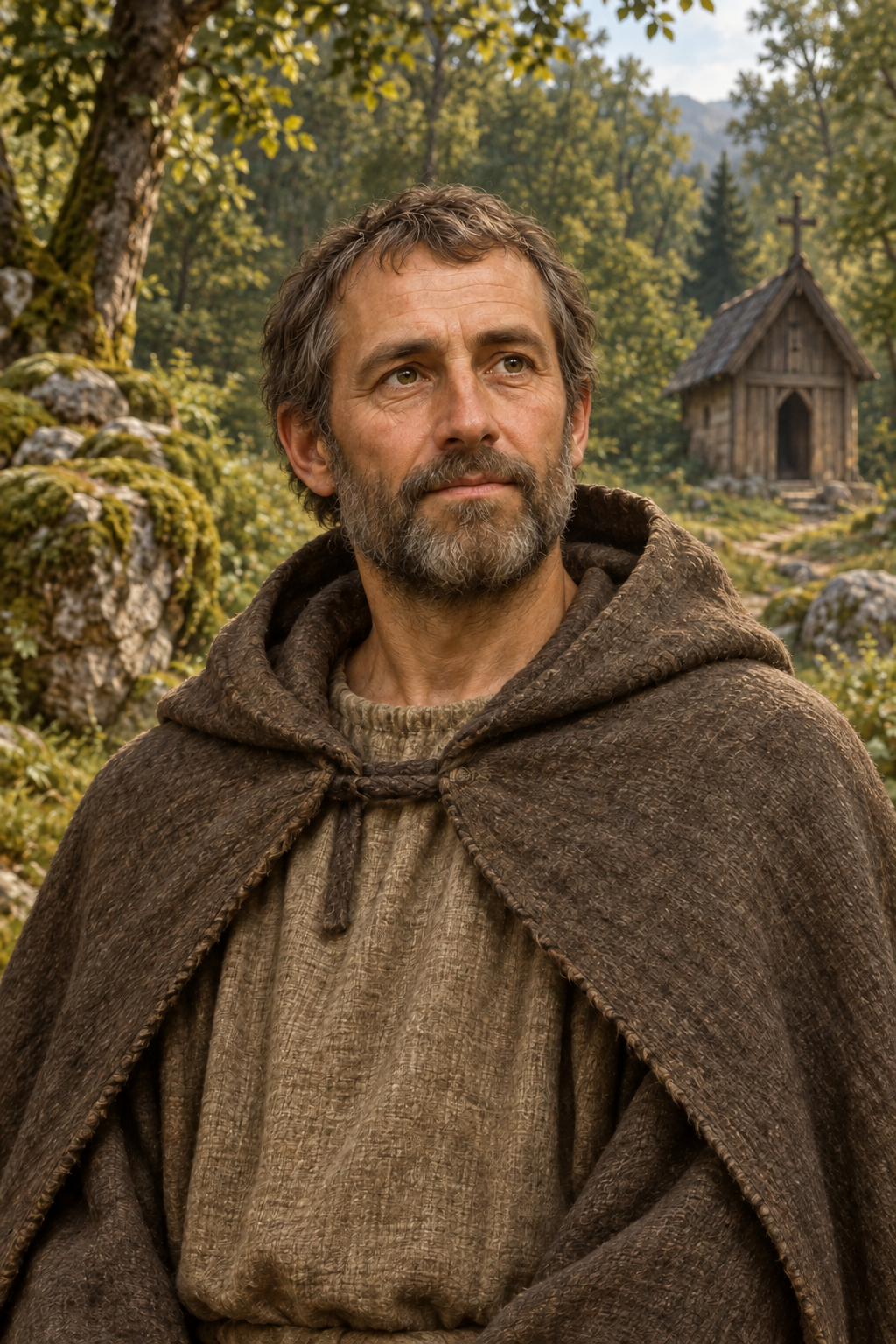
About Alto of Altomünster
Alto of Altomünster is remembered as a hermit at the beginnings of a community in Bavaria. His feast is kept on 9 February. The archdiocese’s account places him in the eighth century but distinguishes his life from historical evidence. His birthplace and life dates remain uncertain.
The fullest early life was written by Otloh of Saint Emmeram in the eleventh century, long after Alto’s lifetime. Its catalogue places the work between 1056 and 1062. This distance matters: the surviving narrative expresses the concerns of a later community as well as its memory of a founder.
Otloh presents Alto as a man who left his homeland for Bavaria, lived in a wooded area and worked for his livelihood. He says King Pippin gave him land, which Alto and his supporters cultivated. Religious companions gathered around an oratory. These are elements of the received foundation story, rather than a contemporary record of Alto’s actions.
In that story Alto asks that women be admitted to the church, so they can pray while their husbands are away at work. Boniface agrees, though the narrative reserves a nearby spring from women’s use. Otloh later defends the nuns’ right to its water after the community changes. The account thus carries a later dispute about access alongside its remembrance of Alto.
Otloh says written accounts of Alto’s virtues and signs had been stolen. Historian Walter Pötzl cautions that the resulting life relies heavily on familiar hagiographic themes. A charter witness named Alto the recluse has been linked with the saint, but this does not securely settle his identity or establish an Irish origin.
Pötzl traces definite veneration to a Freising missal written after 984, where Alto appears on 9 February as a confessor. Later calendars show his remembrance spreading through religious houses. Such evidence establishes a medieval cult while leaving many details of the person behind it unresolved.
Later images gave Alto a bishop’s insignia, a knife or a chalice. Pötzl distinguishes the stories about miraculous tree-felling and a child appearing above the chalice from Otloh’s life. These attributes belong to the development of his veneration; they cannot establish that Alto was a bishop or that the pictured miracles occurred.
Wondering how to weigh the stories and sources? Learn how to read a saint biography.