Biography
Amadeus of Lausanne
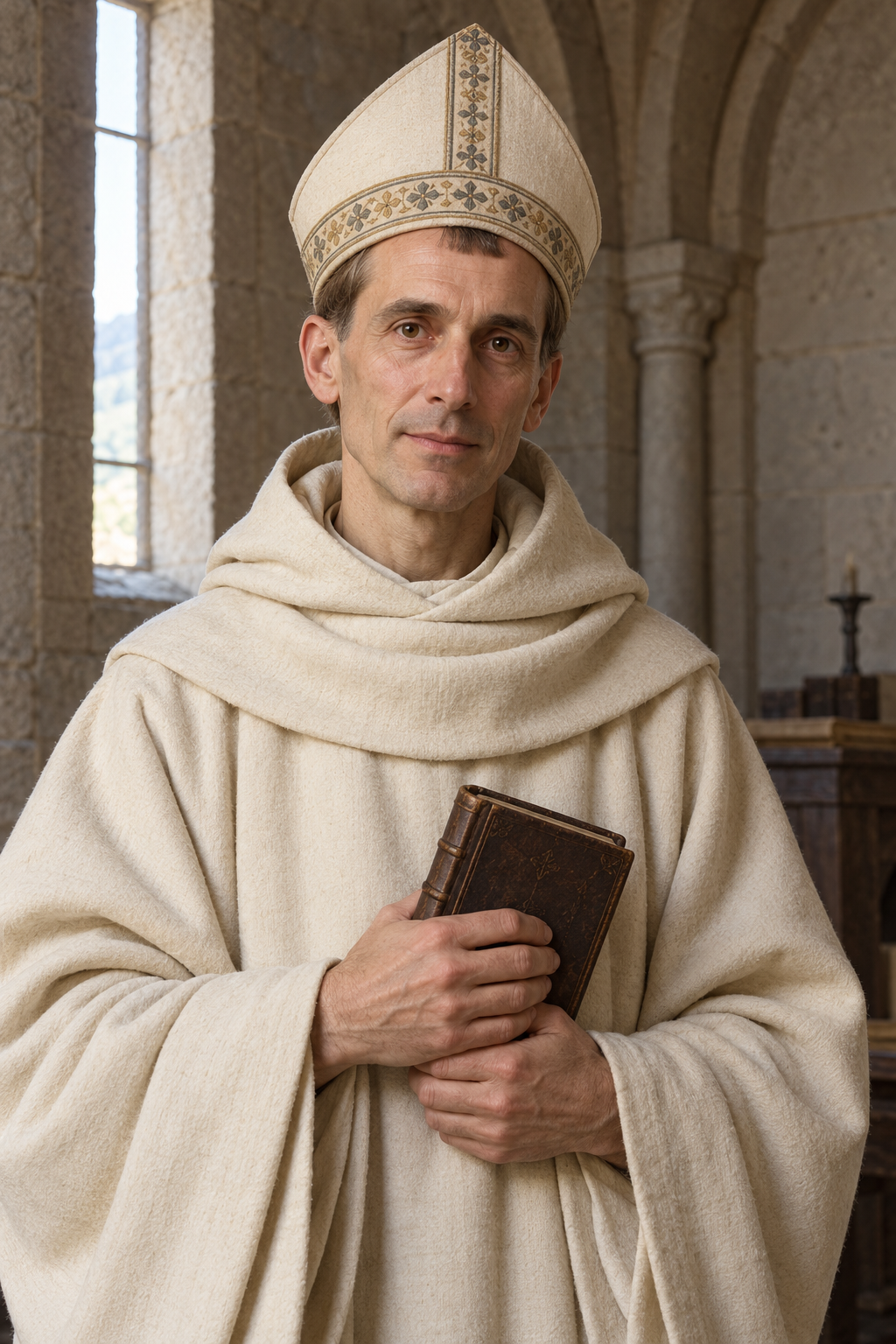
About Amadeus of Lausanne
Amadeus of Lausanne was a Cistercian monk who became a bishop in a time of conflict between church leaders and powerful nobles. Born around 1110 at Chatte in the Dauphiné, he was the son of Amadeus of Clermont the Elder. His education took him through Bonnevaux and Cluny and then to the imperial court in Germany. Around 1125 he entered Clairvaux, and around 1139 he became abbot of Hautecombe. He served as bishop of Lausanne from 1145 until 1159, carrying the influence of Cistercian reform into his episcopal ministry.
At Clairvaux, Amadeus lived under Bernard’s direction before taking responsibility for Hautecombe. Chrysogonus Waddell places his abbacy during the community’s move to a new site and the construction of its buildings. The work also involved strengthening the Cistercian way of life in a monastery that had only recently joined the order. His later episcopate brought heavier demands. Waddell describes a pastoral letter written from exile in which Amadeus recalled trying to protect a man who was murdered while held in his arms.
Amadeus also became guardian of Humbert III after the death of the count’s father, Amadeus III of Savoy. His public responsibilities brought him into contact with imperial politics, although the Historical Dictionary of Switzerland cautions that his supposed service as chancellor is uncertain. Conflict with the nobility, especially the count of Geneva, forced him into temporary exile.
His eight Marian homilies reveal the kind of religious education he wished to offer. In his review of their modern edition, Anselme Dimier describes a theology directed toward contemplation and growth in love. Amadeus read Scripture on historical, moral, and mystical levels. Dimier also identifies limits in his method: some interpretations stretch the meaning of the biblical passages, and the writing sometimes becomes weighed down by rhetoric and digressions. The homilies nevertheless show a substantial literary formation.
The collection has a deliberate spiritual pattern. As the publisher of its modern French edition explains, Amadeus connects seven events in Mary’s life with the seven gifts of the Holy Spirit. He draws on the list in Isaiah, reversing its order, and compares these mysteries with the steps of Jacob’s ladder. Preacher and listeners are invited to ascend those same steps.
Dimier draws attention to the union of maternal and religious love in this teaching. For Amadeus, Mary’s love for her child and her love for God meet in the same person. Her love for other people flows from that relationship with her son.
The form in which these texts survive also calls for care. Waddell cautions against simply imagining their polished Latin being recited unchanged to an audience unfamiliar with that language. He considers it possible that preaching in the listeners’ own language preceded the literary form now preserved.
Amadeus died at Lausanne on August 27, 1159; his tomb and remains were rediscovered there in 1911. His cult was confirmed in 1903 and 1910. His commemoration varies by calendar: Chambéry, Maurienne, and Tarentaise observe August 30, while Annecy observes September 1.
His writing continued to have a place in Catholic teaching centuries after his death. In the apostolic constitution Munificentissimus Deus, issued on November 1, 1950, Pope Pius XII cited Amadeus among earlier witnesses to belief in Mary’s bodily Assumption. The cited passage connects her heavenly glory with her relationship to Christ: she had borne him, fed him, and cared for him with a mother’s love.
Wondering how to weigh the stories and sources? Learn how to read a saint biography.