Biography
Ambrose of Milan
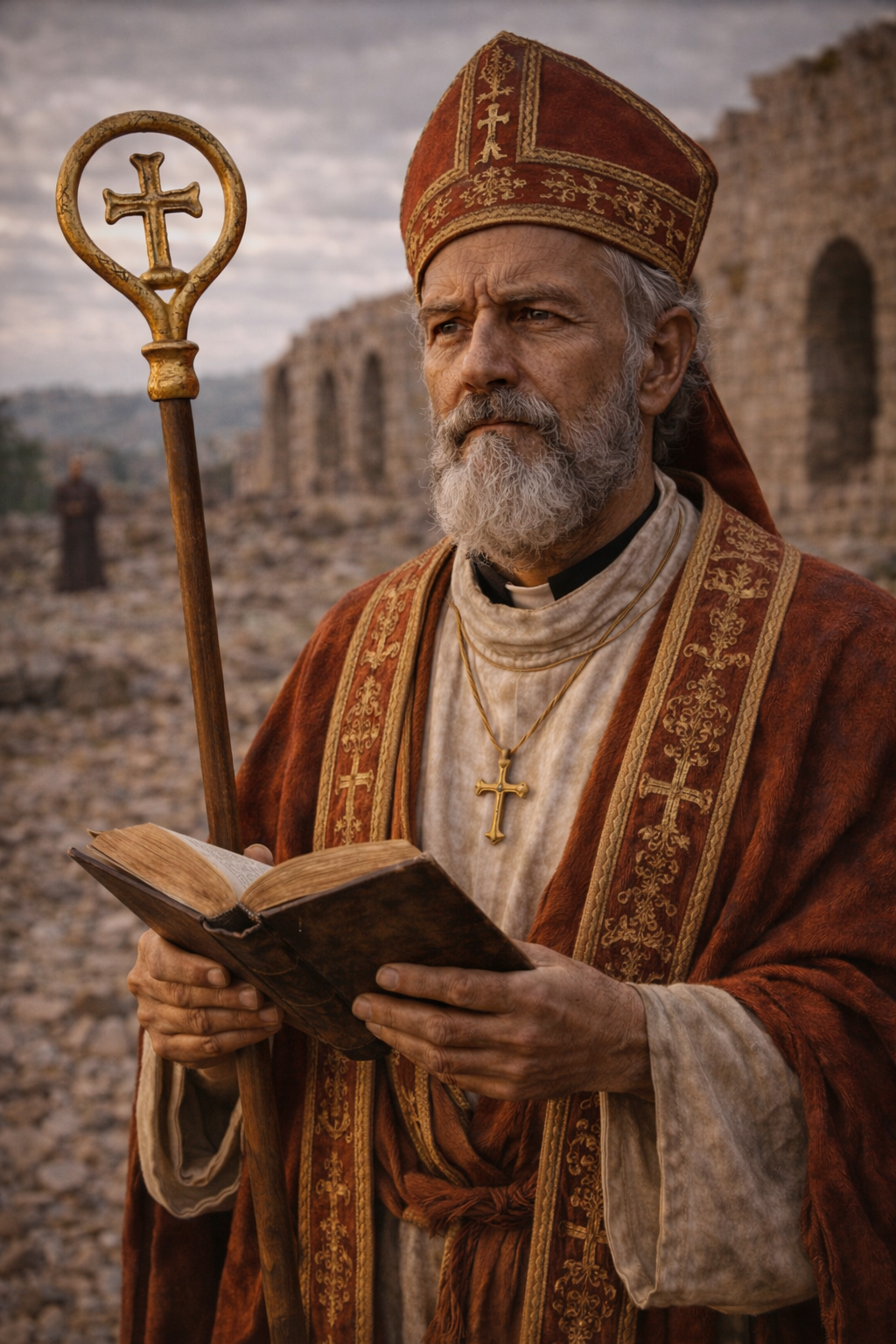
About Ambrose of Milan
Ambrose entered the church's ministry from public administration, becoming bishop of Milan in 374. His responsibilities brought him into the lives of people seeking instruction, practical help, and a hearing for their troubles. They also brought him into conflict with imperial rulers. His writings preserve both his understanding of a bishop's duties and the arguments he used when religious convictions and political authority collided.
He was born around 340 into a Christian family and received an education in Rome directed toward a civil career. Trier is the birthplace given in Benedict XVI's account, although the older Catholic Encyclopedia also records competing claims for Arles and Lyons. After training in rhetoric and law, he became a provincial governor based in Milan. His early life thus prepared him for public responsibility before he undertook formal theological study.
When Bishop Auxentius died, Ambrose intervened in the dispute over a successor. The accounts describe the assembly acclaiming him as bishop while he was still a catechumen, preparing for baptism. He received baptism before his episcopal consecration, traditionally dated to 7 December 374. The story of a child's cry prompting the acclamation is attributed to his biographer Paulinus; it is not needed to explain his subsequent responsibilities as bishop.
Ambrose later acknowledged how abrupt this transition had been. At the opening of On the Duties of the Clergy, he says that he had moved from the judgment seat into ministry and begun teaching before he had learned enough himself. He therefore describes learning and teaching as tasks that had to continue together. The admission gives his work as a teacher a more human setting than a portrait of effortless authority would allow.
Augustine offers a close view of the demands upon him in Milan. In the Confessions, he remembers crowds of people bringing their affairs to Ambrose, leaving little time for private conversation. When the bishop was free, Augustine often found him reading silently. This is a particular observer's account of a busy reader and pastor, not evidence that Ambrose invented silent reading or that nobody else in antiquity read that way.
The same book describes Monica accepting Ambrose's restriction on bringing food and wine to memorial shrines. Augustine says that she valued his guidance and that Ambrose praised her religious life when speaking with her son. Their connection was part of the setting in which Augustine listened to Christian teaching in Milan. Augustine later records his baptism alongside Alypius and Adeodatus; the biographical tradition identifies Ambrose as the bishop who baptized him.
Ambrose's teaching joined scriptural interpretation to the practices of Christian worship. On the Mysteries begins by recalling earlier instruction about conduct, drawn from biblical stories and Proverbs. He then turns to explaining baptism and other sacramental rites to those who had received them. The work preserves his effort to help a community understand the meaning he found in its worship, rather than merely to perform familiar actions without reflection.
His pastoral arguments also addressed the use of church wealth. In On the Duties of the Clergy, he defends using church vessels to help people in poverty and ransom captives. He describes vessels being broken up and melted down, with the proceeds distributed for these purposes. For him, concern for the people who needed assistance could justify relinquishing valuable objects; the possessions existed to serve the church's responsibilities, not simply to be preserved.
His opposition to imperial demands for church buildings appears in a letter to his sister. Ambrose reports refusing to surrender a basilica, the arrival of officials and soldiers, and the anxiety of the congregation. The letter presents the conflict from his own side and should be read with that perspective in mind. Augustine separately remembers the Milanese community keeping vigil and singing hymns during its conflict with the imperial court.
His interventions were not always a defense of vulnerable people. In Letter 40, Ambrose opposed an imperial order requiring a bishop to rebuild a synagogue that had been burned. He argued that making the bishop restore a Jewish place of worship would compromise Christian faith. The letter documents hostility toward Jewish worship and opposition to restitution; these actions should not be presented as a general defense of religious freedom.
After the killing of people at Thessalonica, Ambrose addressed Theodosius in another letter. He urged repentance and said that he could not celebrate the Eucharistic sacrifice in the emperor's presence under the circumstances. He describes choosing a private written appeal and explains why silence would trouble his conscience. This surviving account gives firmer evidence for his intervention than a dramatic reconstruction of a confrontation at a church door.
Ambrose died in Milan during the night of 3–4 April 397. Benedict XVI recounts Paulinus's description of his final prayer and reception of communion. The bishop's surviving works and Augustine's memories preserve a life spent teaching, reading, receiving petitioners, and confronting rulers. They also preserve difficult judgments alongside acts of care, allowing his historical significance to be considered through what he actually wrote and did rather than through unqualified praise.
Wondering how to weigh the stories and sources? Learn how to read a saint biography.
Explore similar vocations
Prayers for Ambrose of Milan
Prayer for peace — Letter 51.14
May the Lord cause all things to pass peaceably.