Biography
Amphilochius of Iconium
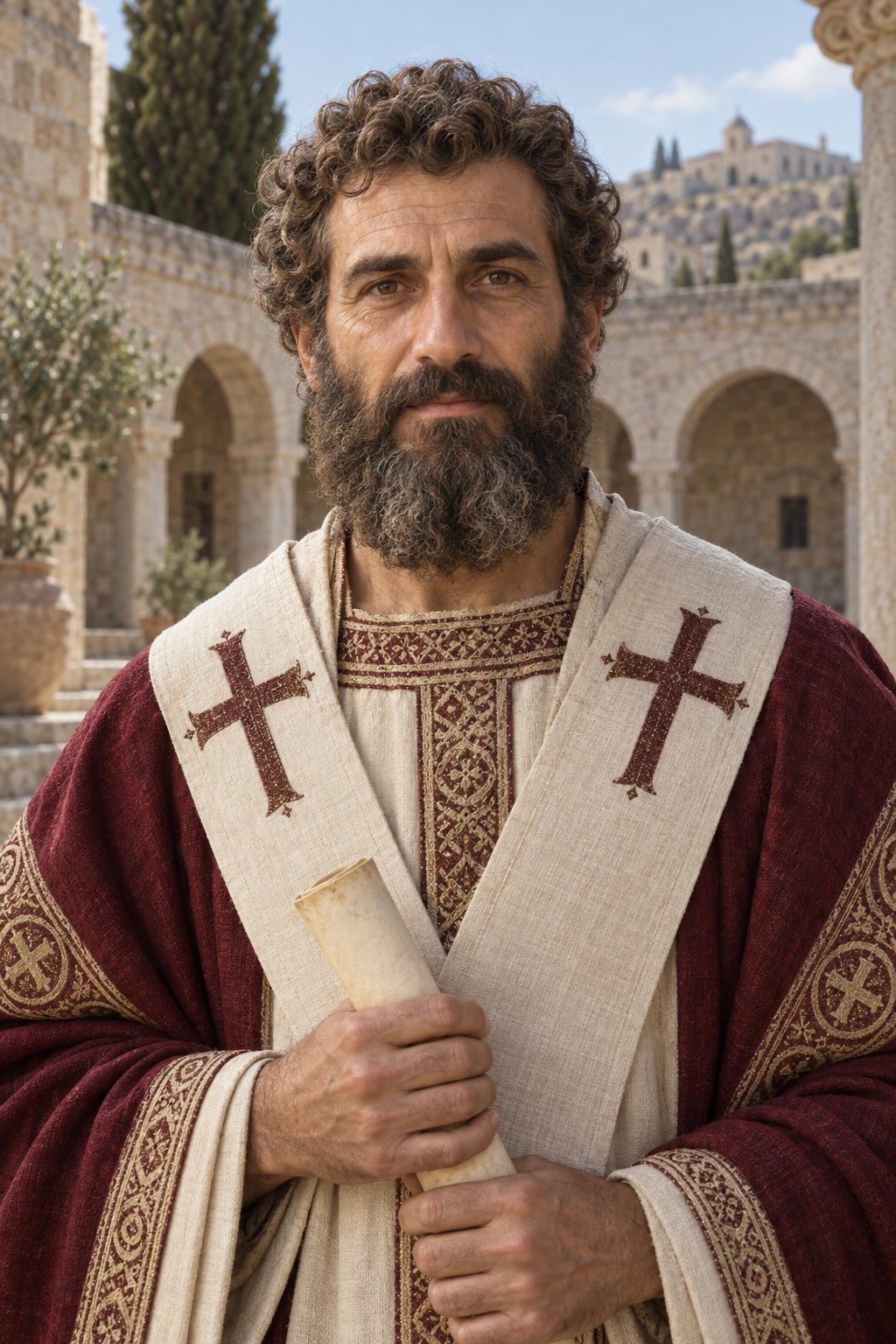
About Amphilochius of Iconium
Amphilochius began his working life as an advocate in Constantinople, before exchanging legal practice for a quieter religious life. Born around 340, he belonged to the Cappadocian world that also produced Basil of Caesarea and Gregory of Nazianzus. The precise place of his birth is uncertain.
In retirement at Ozizala, Amphilochius cultivated vegetables and remained close to Gregory. Their letters preserve a friendship conducted through gifts, requests and affectionate teasing. Gregory asked him for produce when Basil was coming to visit, then joked about the modest quantity that arrived. Religious withdrawal had not ended these ordinary exchanges between friends, or the practical business of feeding a guest.
Amphilochius also cared for his ageing father. A letter written in the name of Heraclidas invited him to visit Basil, while acknowledging that this responsibility made departure difficult. When he became a bishop around 373–374, Basil welcomed him warmly and encouraged him to resist harmful customs rather than simply follow the crowd. The new office brought him to Iconium.
He approached theological questions by asking for careful explanations. Basil's work On the Holy Spirit began in response to his request. The immediate difficulty concerned the different forms of praise used in worship and what their wording implied about the Spirit. Amphilochius wanted the matter set out in writing, both for people who objected and for others who wanted to understand. Basil praised the seriousness of his questioning: here was a reader seeking instruction, not merely looking for an opportunity to catch a speaker out. Their exchange helped turn a disagreement heard in worship into a sustained work of teaching.
His questions also reached into church discipline. In the opening of a canonical letter, Basil thanked him for sending problems that required investigation of earlier practice. Amphilochius was not expected to settle every difficult pastoral question alone; correspondence allowed the two bishops to work through them together.
By 381 his standing extended beyond Iconium. An imperial law named him among the bishops whose communion would serve as a test for possession of churches. In the Asian territories, Amphilochius and Optimus of Antioch were named together. The law required confession of the equal divine majesty of Father, Son and Holy Spirit, and excluded dissenting clergy from the buildings. This was influence with real consequences: recognition by trusted bishops helped determine which communities could retain their places of worship.
Amphilochius wrote about the Holy Spirit himself. Jerome recalled hearing him read a book that defended the Spirit's divinity and right to worship. That brief recollection preserves a moment of personal exchange between authors, as well as evidence that Amphilochius contributed his own argument rather than only prompting Basil's.
His defence of church teaching could also take an exclusionary form. Theodoret later reported that he drove the Messalians out of his diocese. The historian accused this ascetic movement of abandoning work and treating prayer as a substitute for the benefits of baptism. This hostile account should not be mistaken for the group's own description of its beliefs. It nevertheless places the bishop's opposition to the movement alongside his better-known debates over the Trinity.
A later story pictured Amphilochius confronting Theodosius by greeting the emperor while withholding equal honour from his son Arcadius. Theodoret used the episode to illustrate the claim that dishonouring God's Son dishonoured the Father. Yet Sozomen told a similar story about an unnamed elderly priest. The striking palace scene belongs to the received account of Amphilochius, not to securely established personal chronology.
He continued to help Gregory through illness and trouble. Gregory thanked him for his care, valued his letters and asked for his prayers. Another letter thanked him for intervening successfully on behalf of Bosporius, bishop of Parnassus, who had faced accusations. Amphilochius's friendships therefore involved more than shared opinions: they included support when another person's health or reputation was vulnerable.
He was still active at the Constantinople council of 394. The surviving proceedings concern a disputed bishopric and ask whether two bishops could lawfully depose another. The assembly required a fuller provincial judgement rather than leaving such a decision to so few men. Amphilochius's recorded attendance places him within this continuing work of church government, although the surviving extract does not give him an individual speech.
Amphilochius also addressed the task of choosing what to read. The poem Iambics to Seleucus, transmitted under his name and accepted in modern catalogues, warns its reader against assuming that every book called Scripture deserves trust. It sets out a list of biblical books but also acknowledges disagreement. Esther, some of the general epistles and Revelation appear within this discussion of differing judgements. The poem brings theological teaching down to a reader's practical question about books, without pretending that every Christian community had already resolved it in the same way.
His preaching also survived in a body of homilies, alongside fragments of other writings. Modern study has recovered genuine material beyond the narrow remains accepted by some older reference works. These texts preserve the work of a bishop teaching his congregation, not simply a name in other men's letters. His death is usually placed after 394 and before 403; its exact day and circumstances remain uncertain.
Wondering how to weigh the stories and sources? Learn how to read a saint biography.
Explore similar vocations
Prayers for Amphilochius of Iconium
Amphilochius of Iconium: sourced prayer excerpt
entreat Christ God