Biography
Amun of Nitria
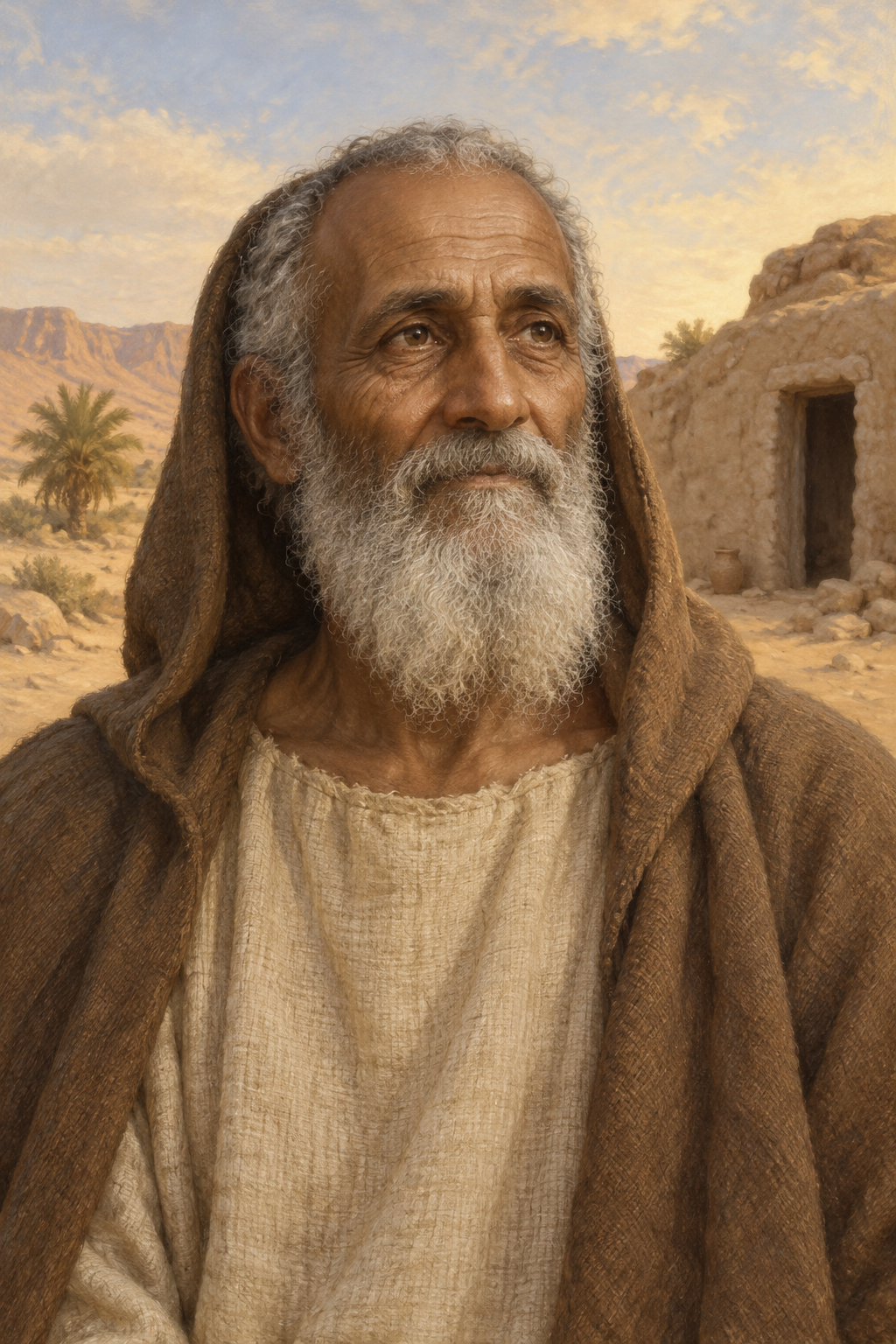
About Amun of Nitria
Amun of Nitria is remembered among the early Egyptian desert monks. Palladius preserves his story in the Lausiac History, attributing it to Arsisius, an older monk whom he had met.
In that account, Amun was orphaned and pressed by his uncle into marriage. He spoke with his wife about a life of chastity, and they agreed to share their home while sleeping separately. Their household combined prayer with ordinary work: Amun tended a garden and cultivated balsam, returning to pray and eat with her.
Palladius says that, after eighteen years, his wife proposed that they pursue their religious lives apart. Amun thanked God and left their house to her. He settled at Nitria, built two cells and continued to visit her twice a year.
An earlier witness is Athanasius’s Life of Antony. Its account calls Amun a monk at Nitria who persevered into old age and frequently visited Antony. Athanasius tells how Antony saw his soul being carried heavenward and learned of his death from a heavenly voice. The monks later compared the time with news brought from Nitria. This is a sacred narrative of Antony’s spiritual perception, not an independently verifiable account of what he saw.
The same chapter recounts Amun’s crossing the swollen river Lycus without swimming or wetting his clothes. His companion Theodorus, according to Athanasius, pressed him to explain and was asked to keep the matter secret until Amun’s death. The episode belongs to the miraculous tradition around the monk. It expresses the author’s understanding of holiness and divine help; it does not establish a physical explanation of the crossing.
Historian Darlene L. Brooks Hedstrom places the foundation traditions of Nitria and Kellia within a literature written to inspire monastic readers. She cautions that the authors supplied little architectural description, making the early settlement story dependent on scattered accounts with different purposes. She also notes that archaeological evidence for settlement at Kellia does not reach back securely to Amun’s own time. His association with these communities remains central to their memory, while the surviving evidence requires care about precise dates and buildings.
The Orthodox Church in America commemorates him on 4 October. The Catholic Church in Norway’s notice gives the same day while noting his absence from the Roman Martyrology.
Wondering how to weigh the stories and sources? Learn how to read a saint biography.