Biography
Amunia of San Millán
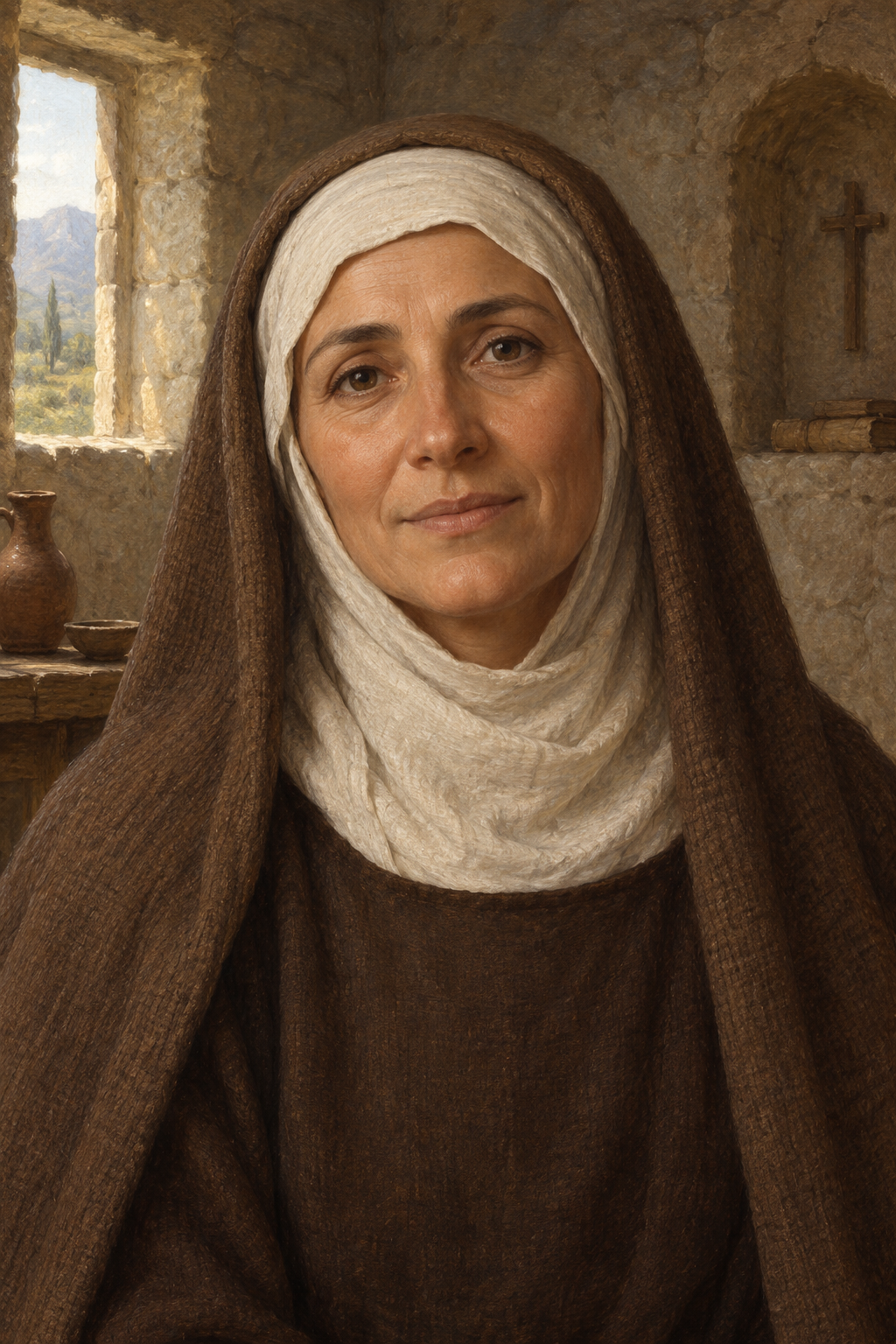
About Amunia of San Millán
Amunia of San Millán is remembered as Oria’s mother and a recluse. Berceo names her Amuña, identifies Villa Velayo as her home and García as her husband, and praises her demanding religious life.
At Oria’s final illness, the poem portrays Amunia watching over her daughter and asking about her visions. After Oria’s death, it describes a comforting dream in which mother and daughter embrace. These are scenes in their sacred narrative, not independently verified conversations or supernatural appearances.
Scholar Isabel Uría Maqua explains that Berceo’s source was a Latin life associated with the monk Munio, who knew both women. That text has not survived, making it impossible to determine precisely what the poet added or changed. She also describes missing leaves, later copies and rearranged stanzas in the surviving text. These transmission problems call for care when reconstructing a personal chronology from the poem.
Uría’s study of the two women named Oria separates the San Millán recluse from the figure in the life of Dominic of Silos. Its chronological discussion places the daughter’s death in 1070 and notes that Amunia survived her. This conflicts with modern notices assigning both deaths to 1069; Amunia’s own death year remains uncertain.
The Catholic Church in Norway commemorates Amunia on 11 March with her daughter. An Archdiocese of Fortaleza notice likewise includes both women on that day. Their shared remembrance preserves Amunia’s place as a widow and religious woman, while much of her individual life remains beyond recovery.
Wondering how to weigh the stories and sources? Learn how to read a saint biography.