Biography
Anastasia of Serbia
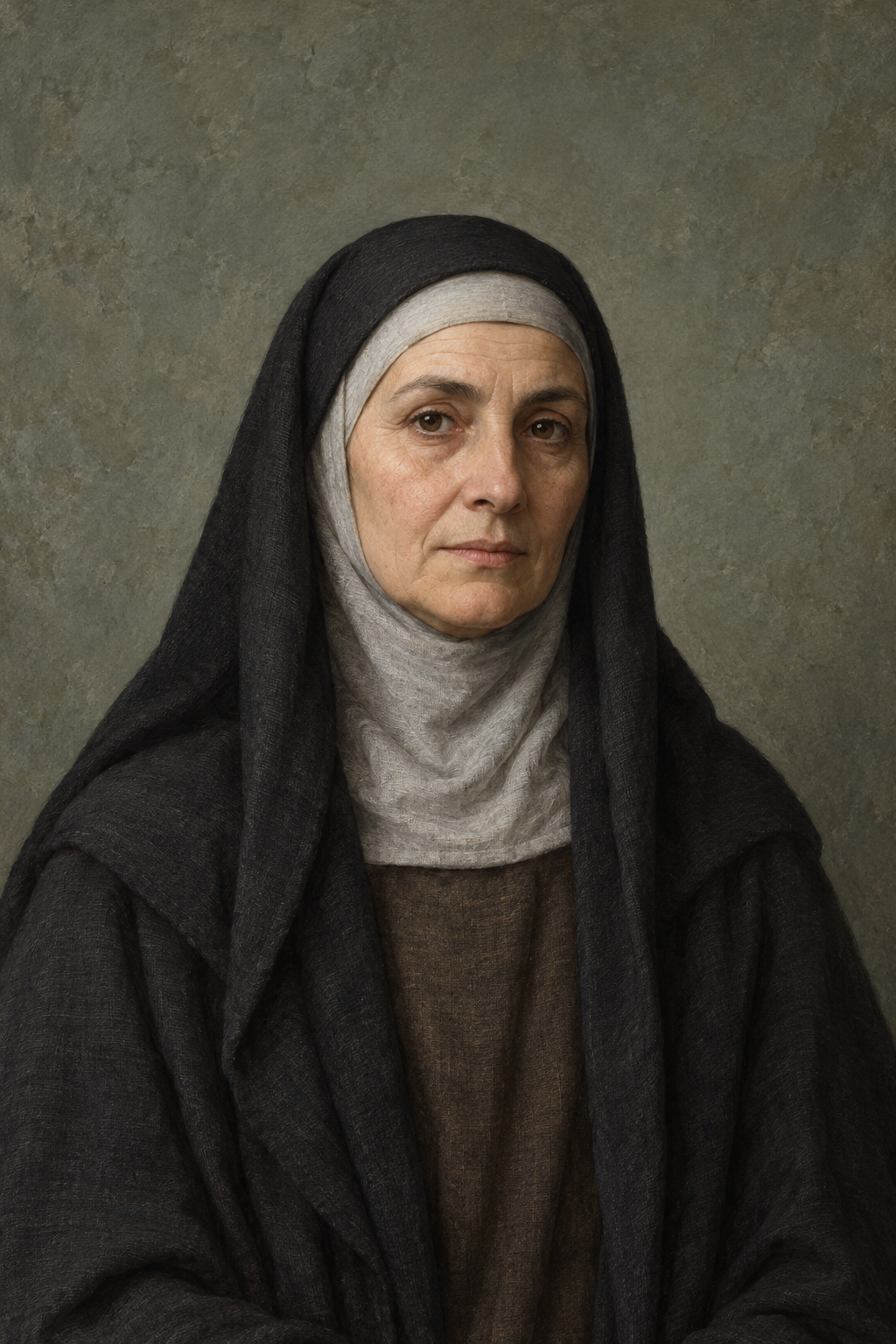
About Anastasia of Serbia
Anastasia of Serbia was known as Ana before she became a nun. She was the wife of Stefan Nemanja and the mother of Vukan, Stefan, and Rastko, later Saint Sava. Her place in Serbian Christian memory belongs both to this family and to the monastery she helped establish with her husband.
Her early life is much less certain than later retellings suggest. The historian Danica Popović notes that neither her origins nor the date of her marriage is known. Surviving accounts do, however, place her at important family and political gatherings. Stefan the First-Crowned describes his father entrusting the monastery of the Mother of God in Toplica to her care. Such testimony gives her a responsibility of her own, beyond simply appearing in a genealogy.
In 1196, Ana and Nemanja entered monastic life. He took the name Simeon and went to Studenica; she became Anastasia and went to the monastery of the Mother of God near present-day Kuršumlija. The monastery’s account presents this as a decision they made together. The change of name marked a new form of religious commitment late in her life.
The Orthodox Encyclopedia places her among the formative figures of women’s monastic life in Serbia. It associates her with the establishment of the Kuršumlija community and records her taking the veil there. The surviving outline does not provide a detailed account of her daily routine or the women who shared that life with her.
The date and circumstances of her death remain uncertain. Popović places it between 1196 and 1199, while devotional accounts commonly give 1200. Her remembrance at Studenica has material evidence as well as written tradition: excavations in 1985 uncovered a burial chamber beneath her painted image. Its position and the remains found there support the identification of the tomb with Ana Anastasia. This is an archaeological assessment, rather than a complete reconstruction of her final days.
Studenica preserves a fresco of Anastasia kneeling in prayer before the Mother of God, renewed in 1568. The monastery venerates her relics and includes her commemoration among its patronal feasts. These practices keep her memory within the place where her family’s religious and dynastic history is especially visible.
Her feast falls on June 21 in the Serbian church calendar, corresponding to July 4 in the modern civil calendar. Studenica issued a clarification in 2021 because other dates had circulated. It traced July 21 to a manuscript error and June 22 to a later calendar error. The monastery points to the earlier Hilandar manuscript tradition and explains that the Serbian church calendar corrected the latter mistake in its 2012 edition.
Her veneration also reaches beyond Serbia. The sisters of Saint Paisius Monastery in Arizona prayed at her tomb while seeking to establish their community. They subsequently chose her as patron of their first church. The published account of this choice connects a modern community of women with the memory of a medieval nun.
The Arizona monastery identifies its chapel with Anastasia, the wife of Nemanja and mother of Sava, and reports keeping a portion of her relics. This local dedication provides a specific example of her continuing patronage, without making her the patron of every mother or every monastic community.
Wondering how to weigh the stories and sources? Learn how to read a saint biography.