Biography
Anastasia Yi Bong-geum
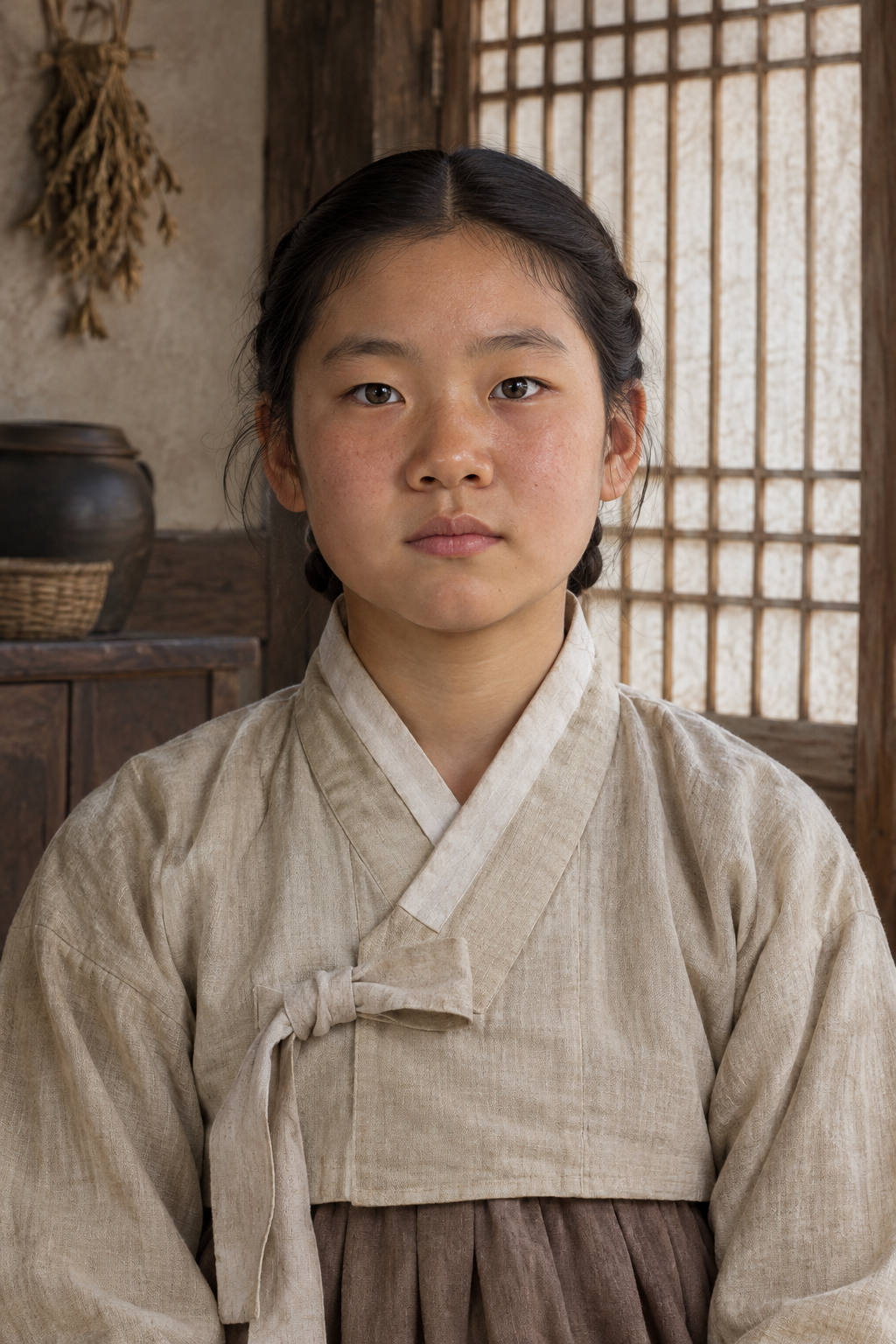
About Anastasia Yi Bong-geum
Anastasia Yi Bong-geum was born around 1827 at Jangseong in Jeolla Province. Her parents were Paul Yi Seong-sam and his wife, Anastasia Kim. The couple had left their earlier home during a persecution of Catholics. Their daughter’s given name, Bong-geum, distinguishes her from her mother, with whom she shared the Christian name Anastasia. Her mother was one of the first people to teach her the prayers and beliefs that later figured in her questioning.
The family’s move to Jangseong took place during a time of repeated searches for Catholics in Jeolla. A denunciation in Gokseong had led officials to investigate communities in a series of neighboring districts. Some of the people seized in 1827 remained in custody for years. Paul and Anastasia Kim escaped that search and were able to raise a child together. They opened their home to a missionary in the place where they had taken refuge.
By about ten, Bong-geum had learned the questions and answers of the catechism as well as the prayers Catholics said in the morning and evening. A missionary who met her considered her ready to receive her first Communion. She was still a child when she was admitted to the sacrament. The preparation remembered in her biography had begun with the kind of teaching a parent could provide at home.
Ri Gil-jae places this meeting in the Catholic settlement at Jangseong. He suggests that the visitor may have been Father Jacques Chastan. The official biography leaves the priest unnamed. Identifying the man who brought her Communion is thus less certain than the place that the visit occupied in the family’s memory. It was there that a child who had learned to pray with her mother was able to take part in the sacramental life of the Church.
In 1839 Paul was away when news reached the household that fellow Catholics had been denounced. Anastasia Kim took her daughter to Gwangju, where Protase Hong Jae-yeong sheltered them. Officers found the pair there and took them to Jeonju.
As the account of her trial relates, a magistrate questioned Bong-geum about the whereabouts of foreign missionaries. Her family had indeed received a priest. She answered that she was a child and did not know about the missionaries’ movements. The officials then offered to spare her if she would give up her faith and speak against God. The question had shifted from what she could tell them about other people to what she herself believed.
In the reply attributed to her, Bong-geum remembered the difference between her earliest childhood, when she could not yet read, and the years after she turned seven, when she had begun to worship God knowingly. She told the officials that she could not now do what they asked. The story preserves the age at which she herself was remembered to have placed the beginning of that conscious commitment.
The guards and jailers pleaded with Bong-geum to say what would secure her release. Seeing a child so young in danger of execution, they tried to persuade her to save her life. She refused.
Anastasia Kim died in prison before her daughter. Bong-geum witnessed her death. The Catholic Times account of the Jeonju prisoners describes the girl’s grief and remembers that she held to her earlier decision after losing the parent who had taught her. She did not leave the prison alive. At the order of the authorities she was strangled there during the night.
Jeonju’s prison is remembered as the place where Catholics died in different ways. The Catholic shrine guide distinguishes the mother, who died after suffering illness and injuries, from the daughter killed there by the jailers. Later accounts place Bong-geum’s death on the night between December 5 and December 6, 1839. She was about twelve. The two possible dates belong to one night in custody.
When Pope Francis beatified the Korean martyrs in 2014, Bong-geum was identified as the youngest among the 124. A Korean newspaper marked the occasion by setting her life alongside that of Pius Kim Jin-hu, the oldest person in the group. For the child from Jangseong, the detail that survives most clearly is one the authorities themselves had occasion to hear. Asked why she still worshipped God, she recalled the years when she first learned to do so.
The prison site in Jeonju was blessed as a shrine on September 3, 2014. Ten years later Park Hyo-ju paired Bong-geum’s story with that of Peter Yu Dae-cheol, a boy who died in the same persecution in Seoul. Both had learned their religion from a parent who was imprisoned for it. The remembered exchange with her mother gives Bong-geum a voice of her own among the accounts of adults who died in 1839. Jeonju had once held more than two hundred Catholics during the very persecution that had first driven her parents from home.
Wondering how to weigh the stories and sources? Learn how to read a saint biography.