Biography
André Bessette
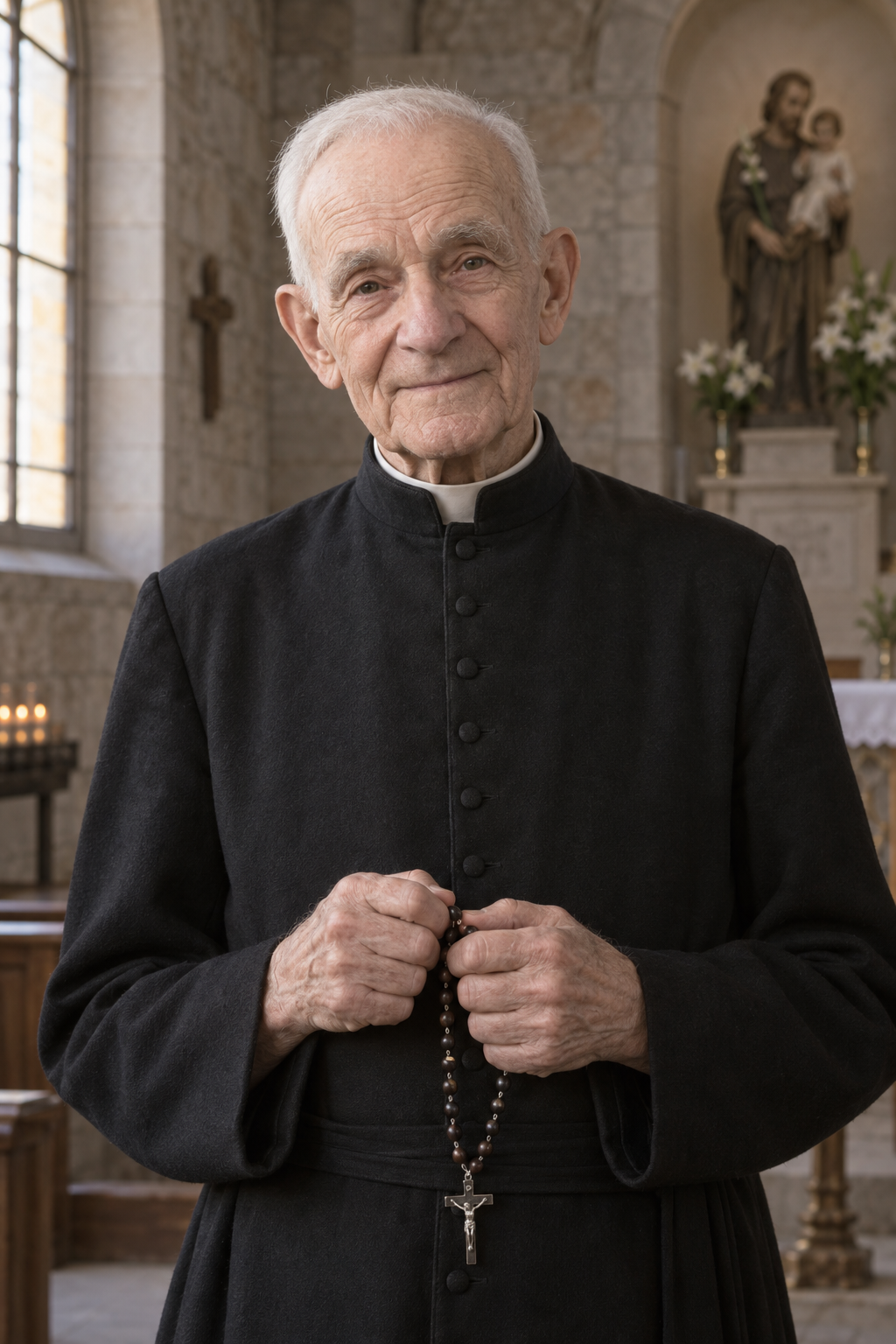
About André Bessette
Alfred Bessette was born on 9 August 1845 in the parish of Saint-Grégoire. He lost his father in a logging accident and his mother to tuberculosis while he was still a child. Relatives took him in, and he tried to earn his living through a succession of manual jobs. In the 1861 census, Alfred appears as a fifteen-year-old apprentice in the Saint-Césaire household of shoemaker Damase Phaneuf and Mathilde Dutilly.
In 1863, at eighteen, he left for New England, where he found employment working in mills. After returning to Canada in 1867, he eventually settled again in Saint-Césaire. There, Father André Provençal recognized his religious interests and recommended him to the Congregation of Holy Cross. He entered its novitiate in 1870 and received the religious name André. His health made his superiors hesitate about accepting him permanently, but he remained and made his final vows on 2 February 1874.
André spent decades serving at the door of Notre-Dame College in Montreal. Answering visitors was only part of the work: he swept floors, attended to lamps, ran errands, and visited people who were sick. These were regular duties rather than an occasional charitable project. The porter became someone to whom people brought their troubles, and he prayed with them, encouraging devotion to Saint Joseph. As accounts of healings spread, more visitors sought him out. Their accounts testify to his growing reputation; they do not make every reported recovery an independently established medical fact. The 1901 census records Brother André as a porter living with other Holy Cross religious.
The attention also brought opposition. Relatives of pupils complained about the crowds, and some feared that the college would be discredited by the extraordinary claims surrounding its porter. André continued to meet people while his superiors tried to regulate visits outside school hours. A separate waiting place helped relieve the pressure on the college. George Ham's contemporary account describes him praying with distressed visitors and sometimes weeping with them. Later, as requests arrived from farther away, secretaries read letters to him and the community included the petitioners in its prayers. Ham found that public admiration had not extinguished André's humour or his reluctance to claim healing power for himself.
In 1904, André began building a small chapel on Mount Royal. This first building was modest enough to measure only about four and a half by five and a half metres. It stood lower on the hillside than its present location. Brother Abundius Piché supplied an altar during the winter of 1906. André later stayed in a small room above the chapel, close to the place where people came to pray. The surviving room's simple furniture and personal objects recall the scale of his own accommodation beside a pilgrimage centre that would become much larger.
He did not create that centre alone. Supporters collected funds, and a lay committee helped organize the growing pilgrimage. In 1909 he became its full-time caretaker, leaving his old position at the college. The expanding welcome required more than a chapel: visitors needed somewhere to wait, obtain devotional objects, and eat. The Savage family helped run these services, including a restaurant opened in 1911. Joseph Savage's son later remembered André talking with people at the counter. The recollection places him among the workers and visitors who made the shrine function, not apart from them.
The records of his working life also preserve ordinary details that fame can obscure. By the 1931 census he was eighty-five, still within a religious household on Mount Royal. That later record lists both English and French and records his ability to read and write. The entries qualify the often repeated description of him as entirely illiterate.
His welcome could be direct and practical. He remembered people's names and enjoyed making them laugh. The Canadian bishops' account describes a man who put visitors at ease and shared their distress, yet protested when people credited him with the power to heal. For him, help came through God and Saint Joseph's intercession. Prayer continued beyond his public hours, including meditation on the suffering of Jesus and long periods before the crucifix and the Eucharist.
André kept receiving visitors as the Oratory grew. His work included evening visits to people unable to come to him, while the stream of correspondence required continuing help from secretaries. He died on 6 January 1937 at the hospital in Ville Saint-Laurent. Large crowds came to pay their respects.
The Church's later recognition followed this lifetime of service. John Paul II beatified him in 1982, and Benedict XVI canonized him on 17 October 2010. At the canonization, Benedict emphasized the charity of a brother whose limited schooling had not prevented him from responding to people in distress. His legacy includes both the Oratory and the patient attention he gave the people who came to its door.
Wondering how to weigh the stories and sources? Learn how to read a saint biography.
Explore similar vocations
Prayers for André Bessette
André Bessette: sourced prayer excerpt
help us to find the strength to love