Biography
Andrew Kim Cheon-ae
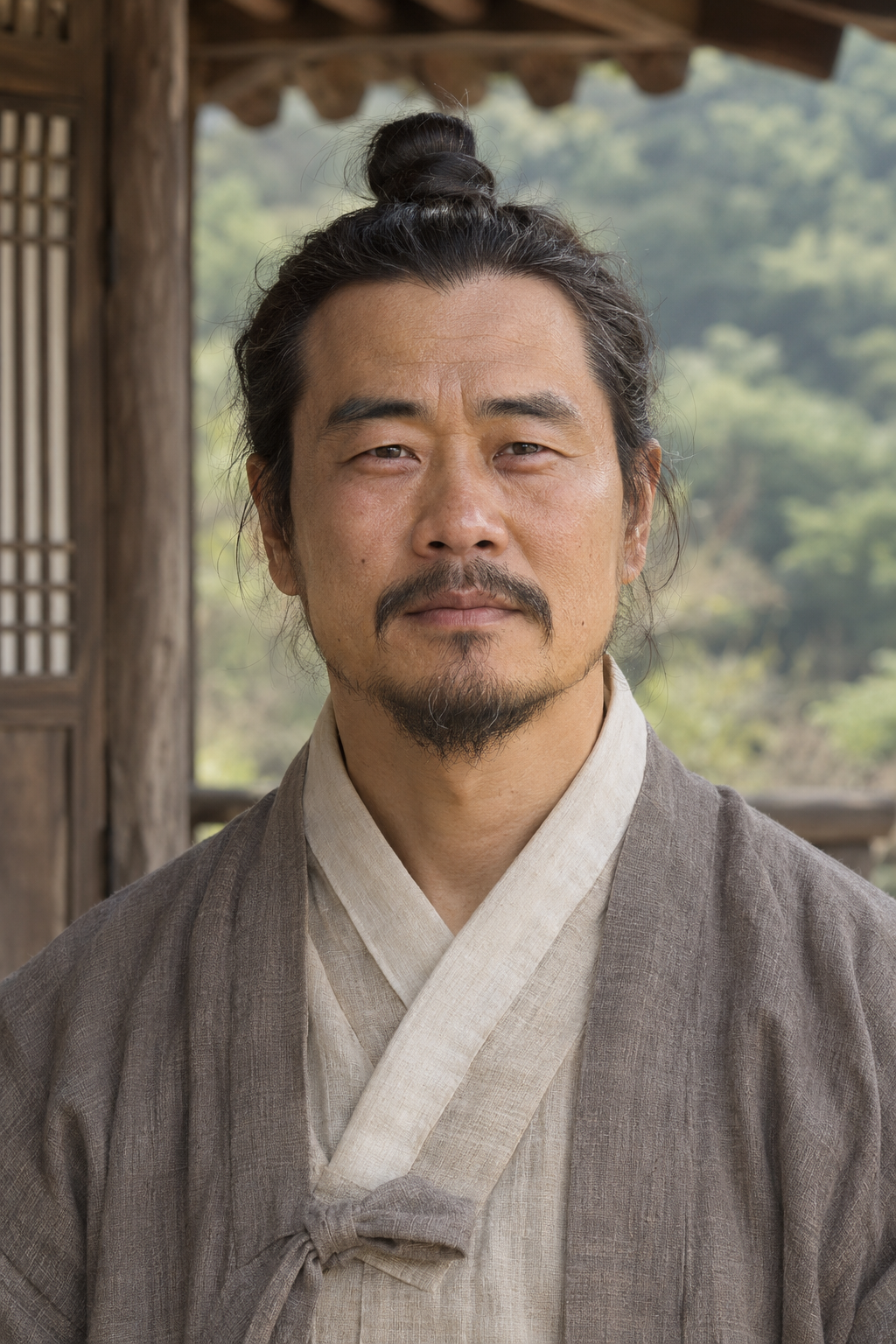
About Andrew Kim Cheon-ae
Andrew Kim Cheon-ae lived in the household of Augustine Yu Hang-geom at Chonam near Jeonju, Korea. He was enslaved there. His birthplace is unknown. Augustine taught him Catholic doctrine, and Andrew joined the religious community around the family.
The Korean Catholic Encyclopedia places his conversion soon after the Church began in Korea. He practised his faith with Augustine’s relatives and their fellow Catholics at Chonam. The village where he lived is identifiable today as part of Namgye-ri, in Wanju. It is the earliest place the sources securely associate with him.
Writing for the Catholic Times in 2024, Lee Hyeong-jun describes Andrew teaching the faith among servants, estate workers and tenant farmers. It interprets his religious life through the personal respect he received from Augustine and the shared Catholic identity that linked people across social ranks.
After Augustine’s arrest in 1801, Andrew and Augustine’s eldest son, John Yu Jung-cheol, were also taken into custody. Andrew was brought before the provincial authorities in Jeonju. Officials demanded that he abandon Catholicism and betray other believers. The official narrative says punishment did not obtain his surrender. Around July he was transferred with companions to Seoul, where questioning continued at the Ministry of Punishments.
The investigation in Jeolla had opened a second line of inquiry. Authorities wanted to know who had supported a plan to bring a Western ship to Korea. The diocesan history distinguishes Andrew and two fellow prisoners from the men accused of involvement. The distinction mattered particularly for Andrew. He had lived in the home of one of the accused and worshipped with his family, but his own case turned on his continued profession of Catholicism.
One of his companions in prison was Stanislaus Han Jeong-heum, the relative who had taught the children at Chonam. The other was Matthias Choe Yeo-gyeom, a believer from Mujang. Catholic tradition remembers the men helping each other through their imprisonment. Although the authorities handled their cases together, the eventual order was for each to be executed in his own district. This sent Andrew back to Jeonju and his companions to Gimje and Mujang.
At the Ministry of Justice, Andrew continued to defend the way he had lived. The account preserved by the diocese identifies the Ten Commandments as the point on which he refused to yield. Faced with the choice of giving them up or dying, he told his questioners that death came only once and that he was prepared to accept it.
He was condemned and returned to Jeonju for execution. The encyclopedia preserves uncertainty of a day: it dates his beheading to August 27 or 28, 1801. The religious history of the Yu family includes this enslaved man’s separate conviction and death, as well as the sufferings of its better-recorded relatives.
His remembrance is associated with Supjeongi in Jeonju. Lee’s 2024 account describes the former wooded execution area as a small surviving site surrounded by modern homes, a school and apartment buildings. A descendant of another martyr bought land there and raised a memorial before the Church took responsibility for its care. The site now preserves the memory of several periods of persecution, including the one in which Andrew died.
Wondering how to weigh the stories and sources? Learn how to read a saint biography.