Biography
Andrew Kim Gwang-ok
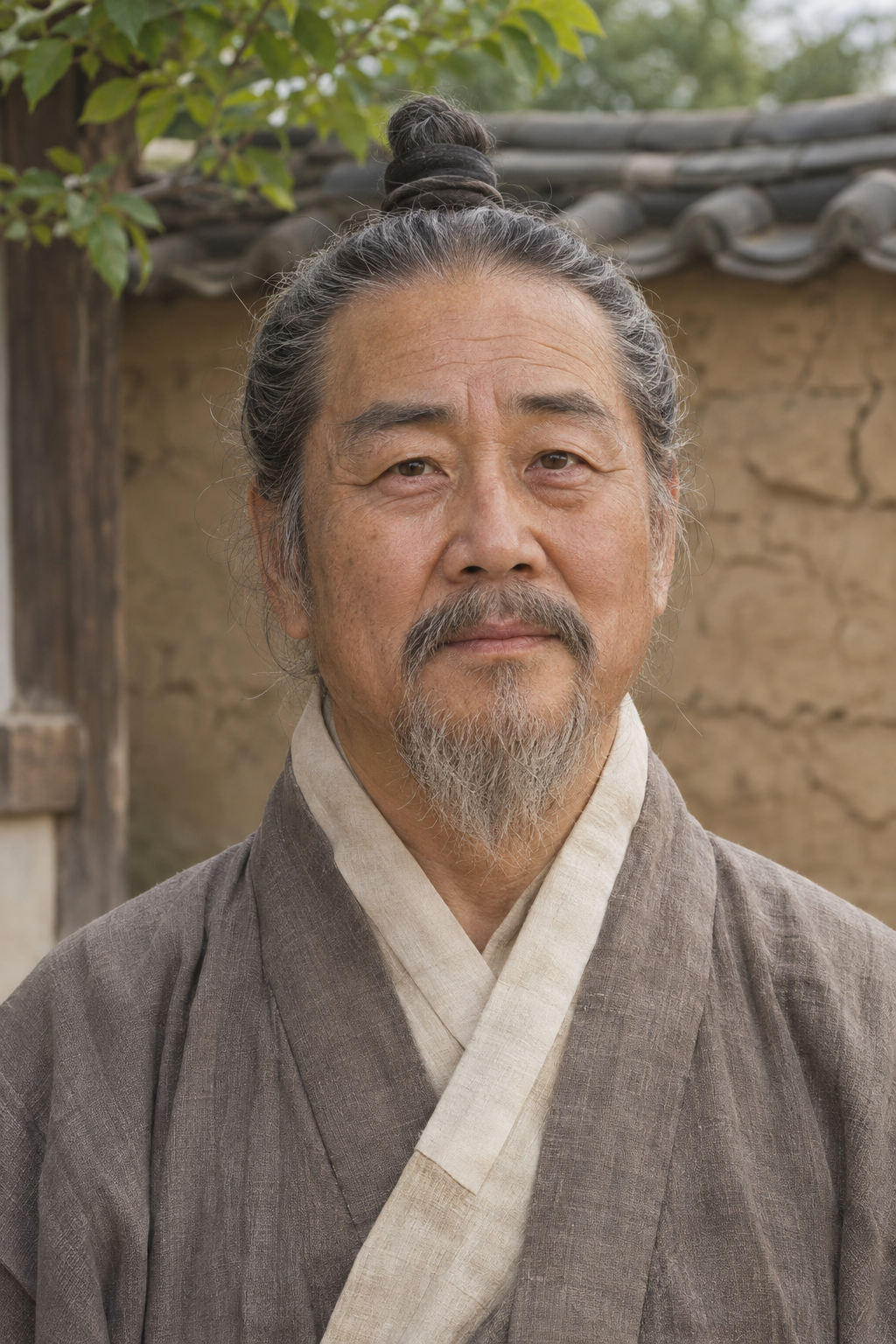
About Andrew Kim Gwang-ok
Andrew Kim Gwang-ok was already a familiar figure in Yeosaul, in the Yesan district, before he became a Catholic. He had served for many years as a local headman. The received account remembers a man whose fierce temper made people afraid of him. Around the age of fifty, he learned Catholic doctrine from Ludovico Yi Jon-chang. His neighbors were surprised by the conversion, and the account links the new faith with a lasting effort to change his conduct.
Yeosaul was a village of about a hundred households, divided between the jurisdictions of Yesan and Cheonan. About twenty households fell on the Yesan side and eighty on the Cheonan side. In his account of the village, Ri Gil-jae estimates that some eighty households professed Catholicism during the later eighteenth century. The figures describe a village where Catholics lived beside neighbours who did not share their faith. Andrew and his teacher Yi Jon-chang belonged to this same community. Ri includes Andrew’s son Francis among the believers remembered there.
Andrew practiced the religion openly. He gathered fellow Catholics for prayer and observed the Lenten fast. His religious life included acts of self-denial as well as teaching other people.
His teaching reached another member of the family, Peter Kim Jeong-deuk. Historian Cho Gwang uses that relationship as an example of the way Catholicism spread in Chungcheong: a person received instruction and then taught someone else. Cho specifically traces the sequence from Yi Jon-chang to Andrew, and from Andrew to Peter. The connection helps explain why the two men appear together in the later persecution, even though they came from different local districts.
When persecution began in 1801, Andrew and Peter withdrew to Museongsan in the Gongju area, taking religious books and objects with them. They continued their religious life in hiding, but their names were already known. Officers found and arrested them. Andrew was sent to Yesan and Peter to Hongju. Their shared refuge thus ended in separate local imprisonments before they were brought together again. The authorities did not see a retreat to the hills as an innocent precaution. Cho Gwang points out that officials in this region already associated mountain refuges with groups they feared. He finds that suspicion in the case against Peter, the relative who had gone into hiding with Andrew.
Dallet says he feared arrest would break him.
Andrew underwent repeated questioning and punishment. The Catholic Encyclopedia says he remained faithful under threats and attempts to persuade him, passed through provincial military custody and was then sent to Seoul for a death sentence. It gives alternative locations for some intermediate transfers. The Church’s current official biography also places the final sentence in Seoul and dates it to August 21, 1801.
The official biography remembers his refusal to name other believers or hand over his religious books. At the Yesan court he was questioned more than once, and his refusal brought further punishment. The account presents this as a deliberate decision to protect other Catholics while maintaining his own faith.
The Catholic accounts remember Andrew and Peter encouraging one another during imprisonment and on the return journey. When their roads divided, they said farewell in the hope of meeting again in heaven. Andrew continued toward Yesan, while Peter was taken to Daeheung. The account of their separation gave later local Catholics a particular way to remember them together: two relatives whose imprisonment had strengthened their shared religious commitment, even though they would die in different places. In the received story, they clasped hands before parting.
On the way to his execution Andrew recited the rosary aloud. At the place of execution he still had prayers left to say. Yeo Jin-cheon’s account remembers him asking the executioner to wait. He knelt, finished the prayer, and only then received the blow. Yeo dates his death at Yesan to August 25, 1801, and puts his age at about sixty. Peter was taken to a different district; that was the last day of his life as well.
His son Francis turned from traditional study to Catholic doctrine after Andrew’s conversion and later resolved to follow his father’s example. Francis later left Yesan with his family for the mountains of Yeongyang.
Oh Se-taek locates the execution in the old cattle-market area beside the Muhancheon, about three hundred metres from the former prison near the government office. The market is remembered locally; after two centuries no one can point with confidence to the spot in it where Andrew knelt.
On August 19, 2015, the diocese established Bongsusan shrine beside the former government office at Daeheung. It honours twenty-nine beatified martyrs from the Yesan area, among them Andrew and Peter. Ri Gil-jae describes a local tradition of remembering these two together in a district long associated with a story of brotherly affection. They died in different districts on the same day.
Wondering how to weigh the stories and sources? Learn how to read a saint biography.