Biography
Andrew Kim Jong-han
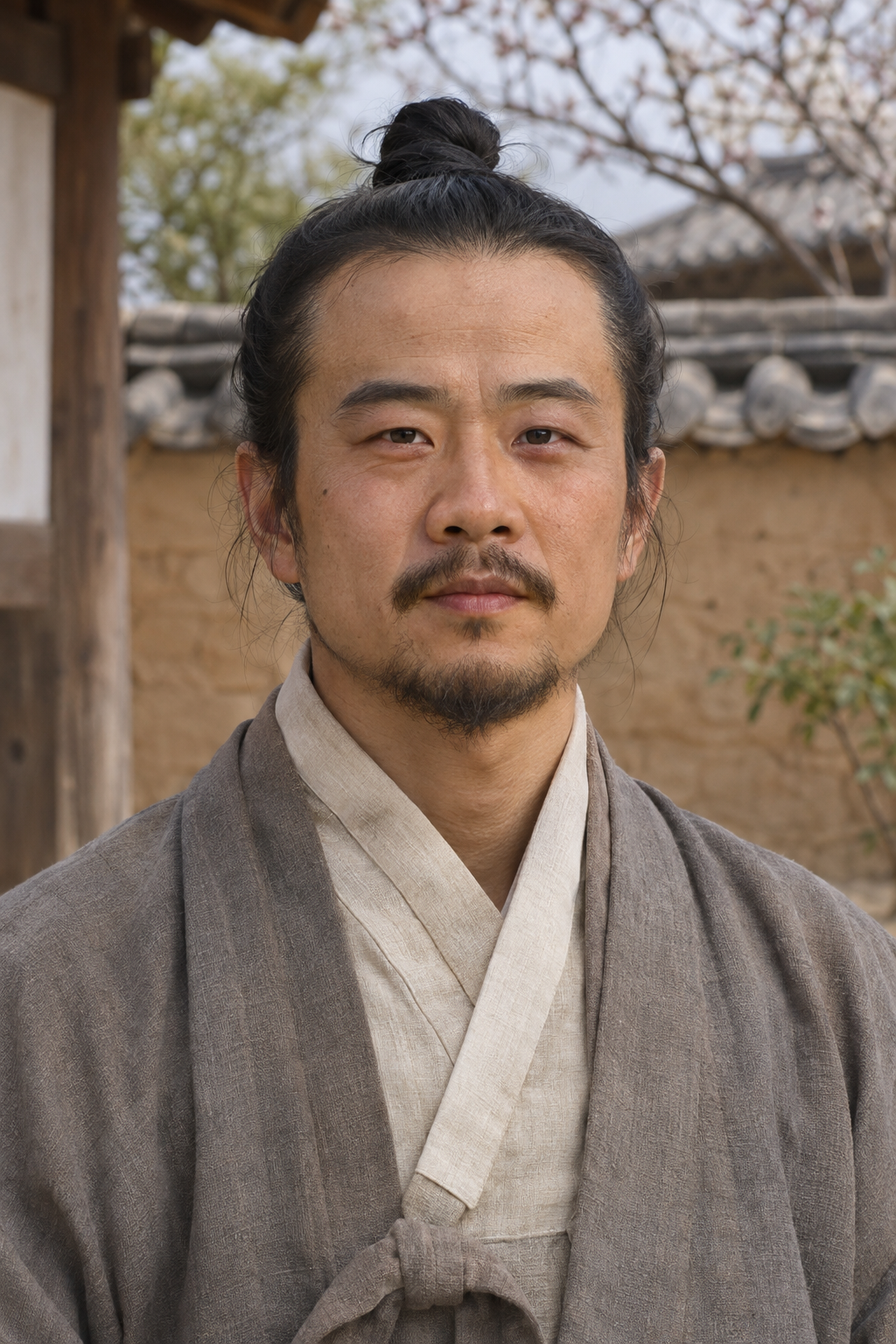
About Andrew Kim Jong-han
Andrew Kim Jong-han grew up in a family that carried Catholic teaching from one generation to another. His birthplace was Solmoe in Myeoncheon, Chungcheong-do. Fellow Catholics knew him as Gye-won, while the family genealogy recorded him as Han-hyeon. His father was Pius Kim Jin-hu, who would die in Haemi prison in 1814. Andrew’s daughter Teresa and his grandnephew, the priest Andrew Kim Dae-geon, would also become martyrs. His work was teaching and copying books for fellow believers.
The current Korean bishops’ account says that Andrew first learned Catholicism from his elder brother. The older encyclopedia entry instead attributes his initial instruction to his father. His father initially opposed the sons’ religion, but eventually accepted it. The family then suffered successive arrests and dispersals. Pius was repeatedly imprisoned, released and exiled. Andrew’s response was to move with his wife and children to a place where they could practice their faith. He had heard that Catholics were forming communities in the northern mountains of Gyeongsang-do, but their locations were kept secret. He did not find the settlements he had set out to reach.
Instead, the family settled at Uryeonbat in Yeongyang. The move meant leaving relatives and possessions behind. Cha Ki-jin’s account says that the communities Andrew had hoped to find were at Noraesan in Cheongsong and Meorusan in Jinbo, not far from the place where he finally established his household. He remained at Uryeonbat for seventeen years, living with his family and working among neighbouring Catholics.
He copied religious books during the day and distributed them to believers. At night people gathered in his house to learn the catechism. His teaching also reached people who had not become Christians. The household lived poorly: its ordinary food was millet with salt, supplemented when necessary by mountain vegetables, roots and acorns. The remembered pattern of his life joined instruction to practical charity. Although he had little, he gave help to neighbours who had still less.
Historian Kim Jin-so describes this life as the setting in which Andrew developed his religious understanding. The study emphasizes the work of learning and practicing, rather than crediting him with spectacular powers or an unexplained gift of theological knowledge. His letters were the expression of a lay Christian who had spent years reading, discussing and putting belief into action. The historian connects his spiritual thought to his daily discipline and to the assistance he gave other people.
In 1815 the Eulhae persecution reached the mountain communities. Andrew was arrested and taken to Andong. He underwent questioning and punishment there, then was transferred to Daegu. At the governor’s entrance he encountered Agatha Magdalene Kim Yun-deok, who had recanted and was being released. He urged her to return to her faith. The received account says that she went back to the authorities and again acknowledged being Catholic. Andrew was then himself subjected to renewed pressure to recant. Cha Ki-jin’s 1997 account connects the governor’s anger to Andrew’s encouragement of Agatha: he ordered harsher punishment after she returned to profess her faith.
He refused. The authorities reported his case to the royal court, but authorization for execution did not arrive immediately. He remained in custody with the other prisoners while they waited. The encyclopedia records that he used that interval to write to his brother and to fellow Catholics. The surviving texts are transmitted through later missionary collections and Dallet’s history; they are not surviving Korean autograph manuscripts. They preserve his requests for help as well as his wish to remain faithful.
Clerks also came to hear him speak about Christianity while he was imprisoned. Oh Se-taek’s account remembers him discussing his beliefs with these visitors, continuing the work of explanation he had carried on before his arrest.
Andrew’s first letter described questioning, detention and beatings. Another letter thanked his brother for winter supplies.
Writing to Christians named Yi and Yu, he asked them to shelter his wife, whom acquaintances feared helping. He promised to support their daughter, imprisoned with him. He grounded the request in mutual charity.
The letters also acknowledge grief and affection. Kim Jin-so’s study rejects an image of Andrew as a man made emotionally cold by strict discipline. He missed his family, mourned a sister-in-law and worried about the wife he could not protect himself. The study reads his appeal for assistance through his understanding of the Church as a body whose members depend on one another. His religious conviction did not remove his family’s material needs; it gave him a language in which to ask other believers to meet them.
The royal authorization finally arrived after about a year and a half in prison. The current bishops’ account places his execution at Daegu on December 19, 1816, when he was beheaded first as a recognized leader. His body was first buried near the execution ground. On March 2 of the following year, relatives and fellow believers moved it to another burial place. The older encyclopedia instead dates his death to December 26, 1816. His letters asked fellow Catholics to care for his family and for one another.
Wondering how to weigh the stories and sources? Learn how to read a saint biography.