Biography
Andrew Kim Sa-geon
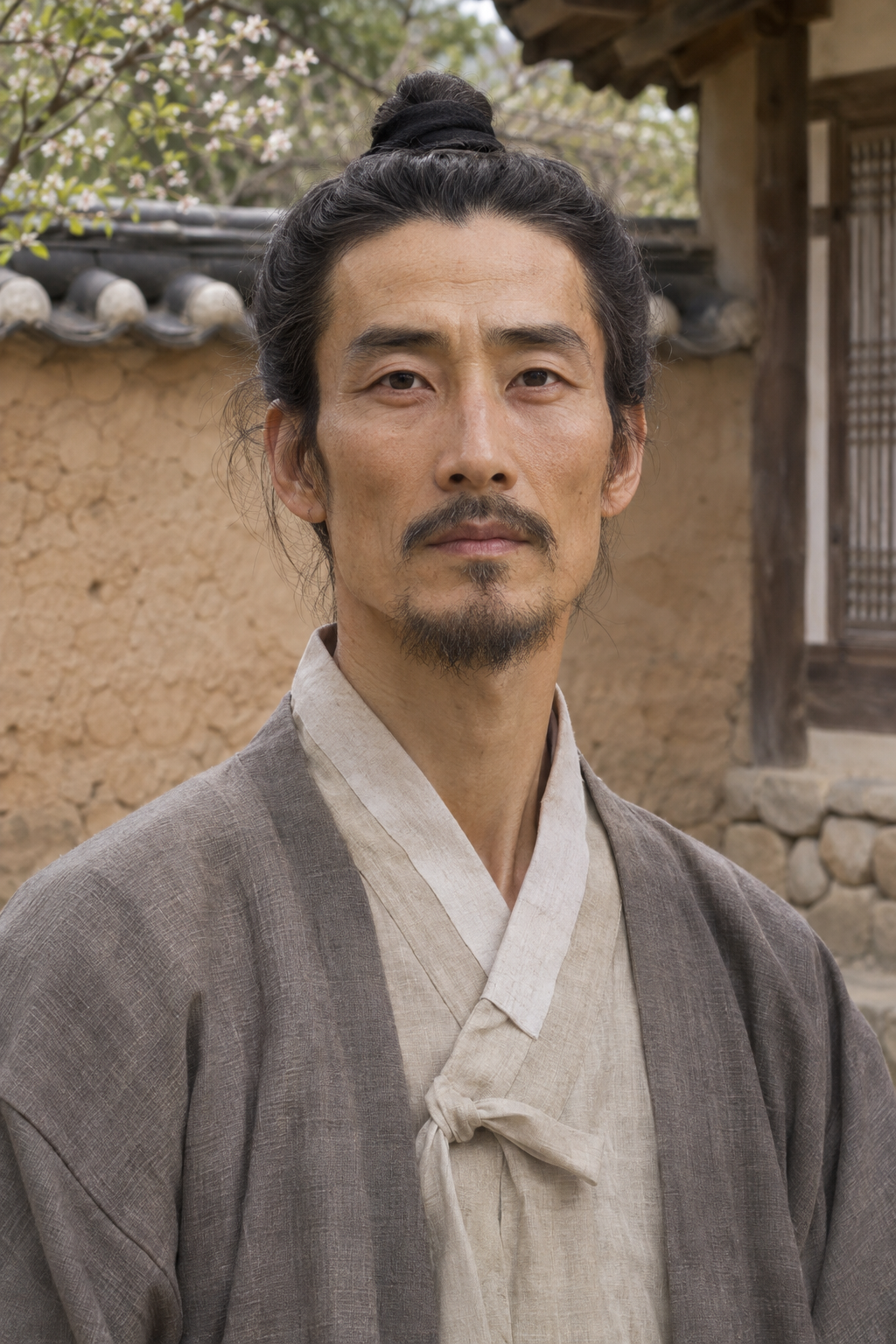
About Andrew Kim Sa-geon
Andrew Kim Sa-geon came from a Seosan chungin family. His father was Thaddeus Kim Chang-gwi and his uncle Simon Kim Gang-i. The bishops give his birth year as 1794.
After accepting Catholicism, the family moved through Gosan in Jeolla-do, Meorusan in Jinbo, and Uljin. The encyclopedia attributes their arrest in 1815 to a denunciation by someone who had been a servant in the household. Andrew was released, while his father and uncle remained prisoners. The encyclopedia explains his release by his youth; the current bishops’ account instead says that he weakened under pressure.
A 2003 Daegu bulletin feature describes a change in Andrew’s temperament. It remembers him as initially rather proud, then more gentle and humble under the influence of Catholic teaching. The writer interprets the family’s abandonment of privilege as part of the religious inheritance passed from the parents to their son. That account emphasizes the family’s example, alongside the catechism instruction recorded in the current biography. That older feature gives 1793 as his birth year and calls him eighteen at his release in 1815; those figures do not agree with one another.
Thaddeus was sent into exile at Boseong. Kang Yu-sin recounts that Andrew visited him repeatedly to offer comfort and encouragement. The three men arrested together thus faced different outcomes: the uncle’s death in prison, the father’s banishment and Andrew’s release. Andrew continued to practise his religion afterwards.
After his release Andrew visited Catholic households to teach doctrine and distribute religious books and objects. He also gave emergency baptism to children of non-Catholics when they were near death.
A historical feature on Meongemok distinguishes Andrew’s home from that of the Pak family. It places Andrew and Richard An Gun-sim at Aengmudang, identified with Aengmudong near Pyeongon-ri in Sangju. Officers also arrested Paul Pak Gyeong-hwa and his son at Meongemok. All four were taken through Sangju to Daegu. Their cases had different endings: Paul died after punishment, Richard died in prison in 1835, and Andrew Kim and Andrew Pak remained until the executions of 1839.
When the Jeonghae persecution began in 1827, Andrew expected arrest and prayed in preparation. Taken to Sangju, he refused to identify fellow Catholics and instead explained Catholic teaching and the commandments. The refusal brought severe punishment.
The Daegu feature describes him as barely able to walk when he was transferred. It explains that the objects confiscated from other Catholics were said to have come from him, which was why officials wanted to confront him at Jeonju.
The older encyclopedia gives a different conclusion to that itinerary, placing him back at Sangju and giving May 28, 1839 as the date of his execution there. The current bishops place his return, final confinement and execution at Daegu on May 26. The two published accounts cannot both be followed literally. The current official account is followed here.
Won Jae-yeon describes Andrew Kim, Andrew Pak and Andrew Yi working together in prison. They made straw sandals that visiting relatives could sell at market to obtain food. They also read and meditated on religious texts and gathered by lamplight for common prayer at night. Won recalls their explaining Catholic doctrine to jailers and other officers who showed interest. Their contact with those outside the prison thus involved both the practical work of obtaining provisions and the religious teaching Andrew had undertaken before his arrest.
Won also follows the relatives who helped maintain the imprisoned Catholics. He describes family members gathering discreetly around Daegu, including at Yeongcheon, Cheongdo and Chilgok, to support them through prolonged detention. He relates this movement to the formation of Catholic settlements and the spread of religious teaching nearby. He interprets those households as centres from which Catholics taught neighbours their religion.
Andrew remained in the Daegu prison with fellow Catholics for twelve years. His case continued from the arrests of 1827 into the persecution of 1839, alongside the cases of Andrew Pak Sa-ui and Andrew Yi Jae-haeng.
Kang Yu-sin distinguishes the decision to execute the prisoners from the earlier years of custody. The final order came during the persecution of 1839. Andrew Kim, Andrew Pak Sa-ui and Andrew Yi Jae-haeng faced that decision together. The shared Christian name by which they were remembered did not obscure their different family histories or the separate places from which they had been brought to Daegu.
Questioned again in 1839, Andrew refused to renounce his religion. He was beheaded at Daegu on May 26, 1839, and the officers gave the bodies a respectful burial.
In his study of the martyrs’ religious lives, Kang Seok-jin identifies Andrew’s refusal as an argument made in terms the Confucian authorities could understand. He places the encounter among cases in which Catholic prisoners explained the moral grounds of their convictions to their questioners. The interpretation concerns how Andrew answered the demand for betrayal, rather than an absence of fear or physical suffering.
Wondering how to weigh the stories and sources? Learn how to read a saint biography.