Biography
Andrew Pak Sa-ui
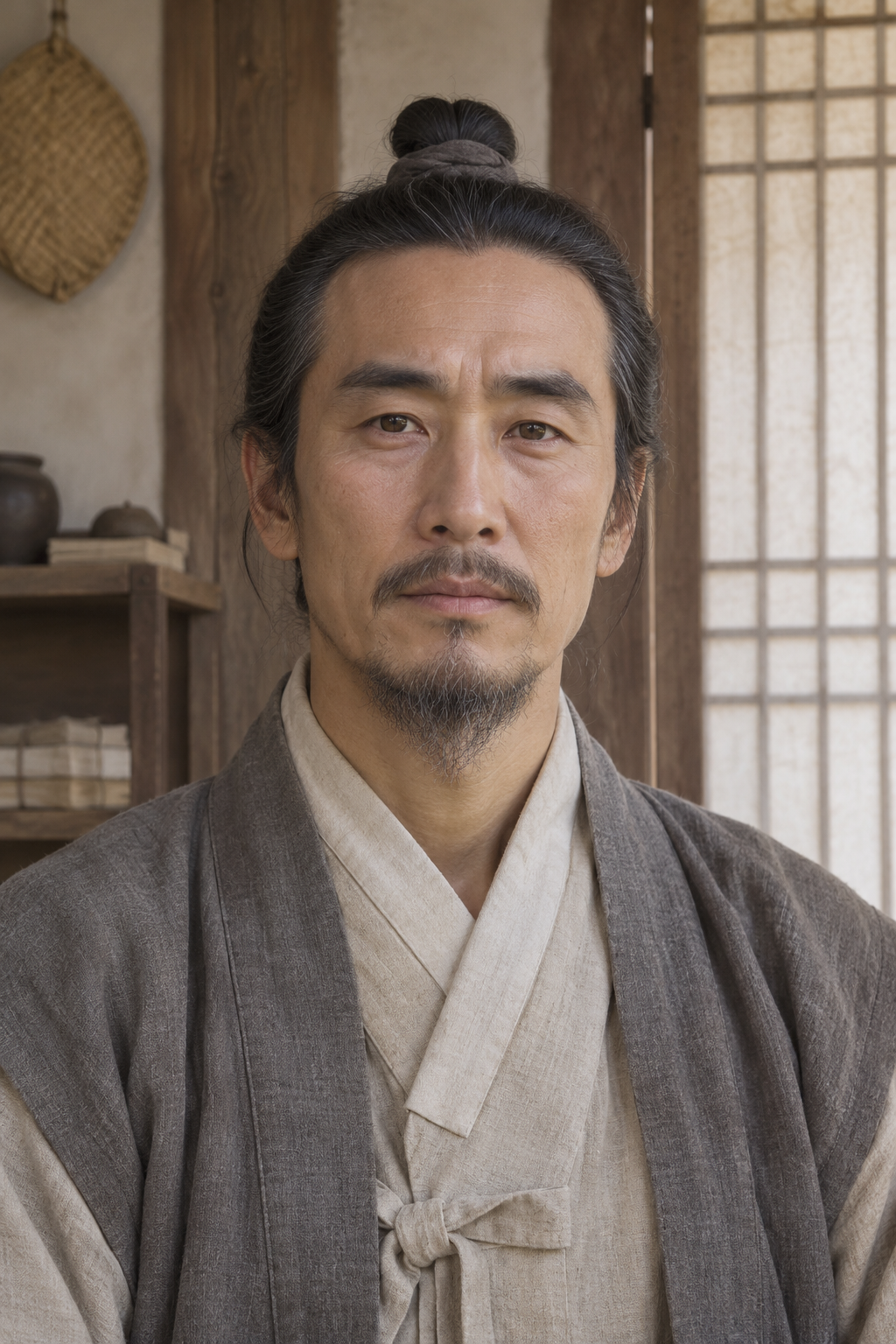
About Andrew Pak Sa-ui
Andrew Pak Sa-ui was born in 1792 into a yangban family in Hongju, Chungcheong-do. He was also called Sa-sim. His father, Paul Pak Gyeong-hwa, had accepted Catholicism before Andrew’s birth. The son grew up practising the religion his father taught him and later accompanied him through migration, arrest and imprisonment.
The Korean Catholic Encyclopedia remembers the care Andrew gave his parents when they were ill. He stayed beside them, tended them and prayed for their recovery. When his father decided to leave their earlier home to devote himself more fully to religious life, Andrew followed him to Gamagi in Danyang. There he helped people in need while continuing religious practice. The care for his parents and the care for other Catholics belonged to the same household life.
Won Jae-yeon recounts how Andrew enlarged their house to receive Catholics without a home. His father had expressed the wish for more space. While continuing his usual work, Andrew collected building timbers when he went out and brought them home until he could construct the additional rooms.
Kim Jeong-suk identifies four children in Andrew’s family: a son, Pak Yang-yeo, and three daughters. When Andrew was imprisoned, his wife, son and daughters supported themselves by selling shoes. Yang-yeo also helped maintain his father during the long confinement. One daughter, Martha, later married John Yi Yun-il, who would be executed in a later persecution. Another daughter, Magdalene, remained unmarried. Kim’s reconstruction follows the children as well as the imprisoned father.
In 1827 the family left Gamagi for Meongemok in Sangju after news of the Jeonghae persecution. They were arrested while gathered with other Catholics for the feast of the Ascension. Taken to Sangju, Andrew refused to renounce his religion despite threats and punishment. He was then transferred to the provincial administration in Daegu, where his father was also held.
The encyclopedia identifies their refuge with Meongemok in present-day Mungyeong. Kim challenges a later identification of the family’s refuge with a shrine in Chungcheong. The Cheongju account locates the shrine at Boeun. The current bishops’ life names the historical district as Sangju.
The Andong diocesan history of Sangju prison places the Pak family among Catholics brought from Meongemok, alongside prisoners from Jatgol and Aengmudong. Sangju was one stage in their case rather than their final place of confinement. The diocesan account specifically distinguishes those sent onward to Daegu or Jeonju from people who died at Sangju itself. The old Sangju prison site was declared a shrine by Bishop Kwon Hyeok-ju in August 2014.
Andrew obtained permission to face questioning beside his father.
Paul did not survive the confinement. He died after months of punishment and illness in 1827, while Andrew remained in custody. The encyclopedia records more than ten years of further imprisonment before Andrew’s execution in 1839. The father whom he had followed into the mountains and tried to support under questioning was no longer beside him during those later years.
The family’s later history connects Andrew with Catholic communities well beyond Daegu. Kim identifies the husband of another daughter as John Baptist Lee Jeong-sik of Dongnae. Through these marriages, Andrew’s children became related to families remembered in the persecutions of the 1860s. His son Yang-yeo became a regional Catholic leader. Kim traces these connections from family testimony, correcting a picture in which the martyrs appear only as isolated prisoners at their different places of death.
In 1839 the authorities questioned Andrew again about renouncing his religion. He refused. On May 26, 1839, he was beheaded at Daegu with Andrew Yi Jae-haeng and Andrew Kim Sa-geon. Officers gathered their bodies and gave them a respectful burial.
Andrew’s execution belonged to the history of Gwandukdang, the military training ground outside Daegu’s south gate that also served as an execution place. Kim Jeong-suk’s history of the site names Pak, Kim Sa-geon and Yi Jae-haeng among the Catholics killed there in 1839 after long imprisonment. The same site later became the execution place of John Yi Yun-il, the husband of Andrew’s daughter Martha. The Gwandukjeong memorial in Daegu opened in 1991 to commemorate Catholics executed at the ground and those who died in the provincial prison. John’s relics were placed beneath its chapel altar that year.
The Korean Catholic Encyclopedia tentatively places Andrew’s biography among accounts based on prison memoirs or letters. This is a proposed origin for the transmitted narrative, rather than identification of a surviving manuscript written by Andrew.
The family is commemorated at Meongemok in Boeun. The Diocese of Cheongju designated the settlement as a shrine in August 2016 and appointed a priest to care for it. The first commemorative Mass that September was held at Boeun parish church because the shrine site was not yet ready. Yu Eun-jeong’s account names both Paul and Andrew among the Catholics whose arrest gives the place its significance.
Wondering how to weigh the stories and sources? Learn how to read a saint biography.