Biography
Angela of the Cross
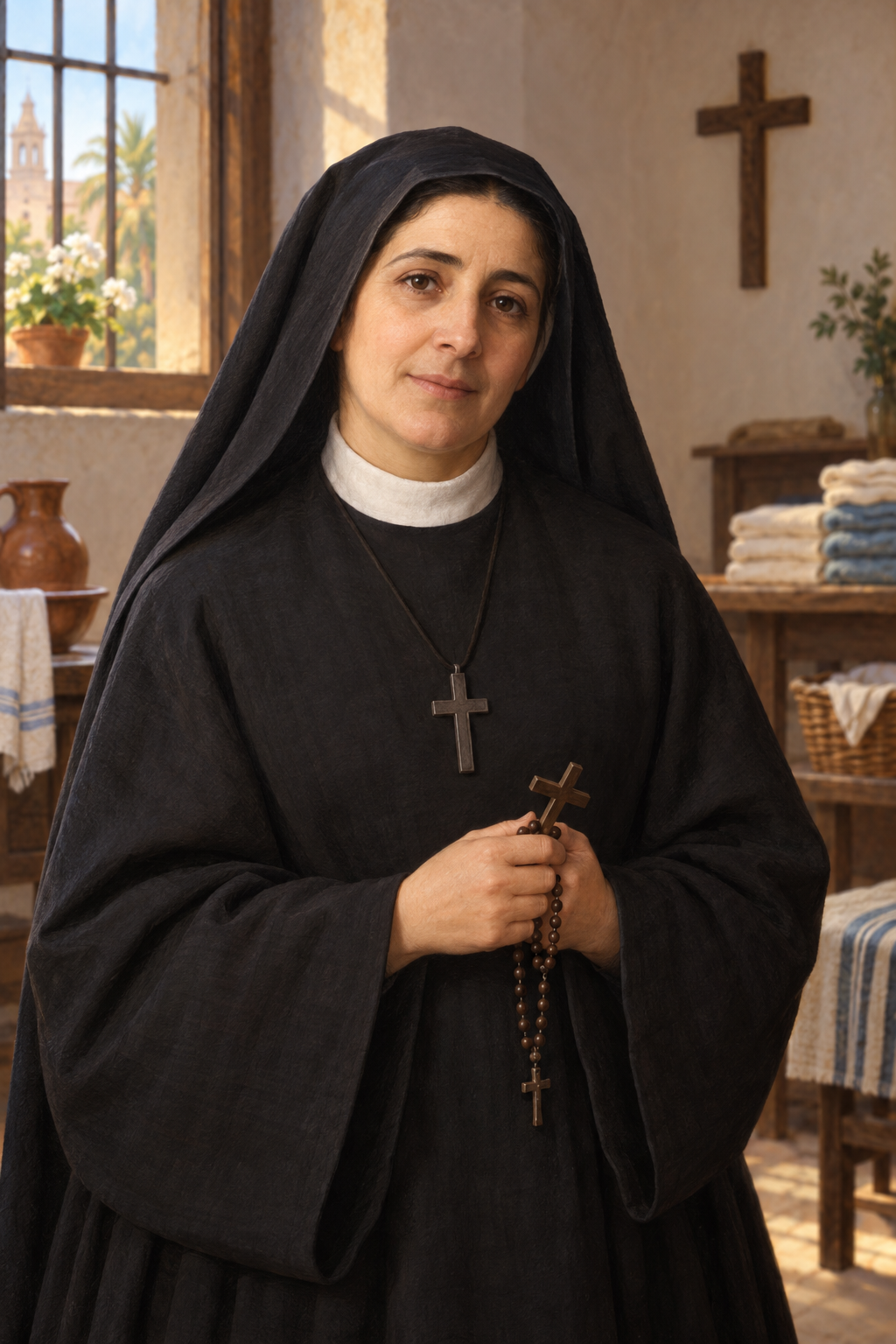
About Angela of the Cross
Angela of the Cross was born in Seville, Spain, on January 30, 1846, and received the baptismal name María de los Ángeles Guerrero González. The says she was affectionately known as Angelita. Her father worked as a cook in the convent of the Trinitarian Fathers, and her mother worked in the laundry.
The family setting matters because the source presents faith as something she learned at home. Her parents taught her prayer and Marian devotion, and the family recited the Rosary together. She made her First Communion at eight and Confirmation at nine. The page can preserve those details without exaggerating her childhood.
Her family's work also matters. The Vatican biography places her parents in humble service around a religious house, not in social privilege. Angela's later preference for poverty and hidden service should therefore be described as rooted in a concrete Seville life of work, prayer, and ordinary domestic responsibility.
Angelita had little formal education and began work as a young girl in a shoeshop. Her employer and teacher, Antonia Maldonado, prayed the Rosary with the workers and read lives of the saints. Through Antonia she met Canon José Torres Padilla of Seville, who became her spiritual director when she was sixteen.
The shoeshop scene should remain part of the profile because it shows lay work as a place of formation. Angela did not begin in a cloister or school of theology. She learned prayer, discipline, and the lives of saints while working, and that helps explain the practical character of the Company of the Cross.
Her desire for religious life met the limits of poor health. At nineteen she asked to enter the Discalced Carmelites at Santa Cruz and was refused because of health. Following Father Torres's advice, she began caring for destitute cholera patients as the epidemic spread among poor people. This service should be presented plainly, without illness spectacle.
In 1868 she tried again, entering the Daughters of Charity of Seville. Her health remained frail, and after being sent to Cuenca and Valencia without improvement, she left during the novitiate and returned home to work in the shoeshop. The profile should treat these failed entrances as discernment under limitation, not failure of vocation.
Those limits are important because the later foundation did not come from an easy path. The source shows a woman seeking religious life, being redirected by health and obedience, and still remaining available to serve. The final page can use that pattern to show patience without turning poor health into a spectacle.
On November 1, 1871, at the foot of the Cross, Angelita made a private vow to live the evangelical counsels. In 1873, during prayer, she understood a mission to be poor with the poor in order to bring them to Christ. The biography can include this spiritual experience because the Holy See source presents it as central to her foundation.
Angelita continued working in the shoeshop while, under obedience to Father Torres, she wrote a detailed spiritual diary. On August 2, 1875, three other women joined her and began community life in rented rooms in Seville. From that day they visited and assisted poor people day and night.
This beginning became the Sisters of the Company of the Cross. Under Angela, now Mother Angela of the Cross, the sisters lived a contemplative rhythm of prayer and silence when at home, while remaining ready to serve poor and dying people in their homes. That twofold pattern is the heart of the profile.
This rhythm prevents two common misreadings. The sisters were not only social workers, and they were not only hidden contemplatives. The Holy See biography shows a community that prayed in silence and then went out when poor and sick neighbors needed them. Both movements should remain visible.
The community expanded while she lived. The source records a second community at Utrera in 1877, another at Ayamonte a year later, and many more convents during her lifetime. The page can mention growth without listing every house or adding current statistics, because present-day scope is not the focus of this packet.
Father Torres died as the early work was taking shape, and Father José María Alvarez became the second director of the institute. This transition can be noted briefly to show the community's continuity, but the biography should keep Angela's own charism and service as the center rather than becoming an administrative history.
Mother Angela was known as "Mother of the Poor." This title should be used only as a received reputation from the source, not as sentimental branding. Her charity was concrete: visiting homes, caring for abandoned poor and sick people, and organizing sisters who could combine prayer, poverty, humility, and service.
Angela of the Cross died in Seville on March 2, 1932. The existing birth date, death date, birth place, and death place are supported by the Holy See biography. The source also records beatification by John Paul II on November 5, 1982, and the page title confirms canonization context for May 4, 2003.
Artwork should show a Spanish foundress in a simple dark habit with a plain cross or rosary, placed in a modest Seville service setting. It should avoid royal or ornate Spanish imagery, crowd scenes, illness spectacle, and any claim to historical likeness. The badge should preserve her face, veil, cross, and humble service setting.
Wondering how to weigh the stories and sources? Learn how to read a saint biography.